
The Essential Startup Legal Compliance Checklist for India in 2026
Navigating the complexities of business in India? This startup legal compliance checklist India for 2026 is your essential guide to staying on the right side of the law.
[GALLERY]https://res.cloudinary.com/dse9xadbu/image/upload/v1778663308/kx42ftnfwb5fs6uidkju.jpg|https://res.cloudinary.com/dse9xadbu/image/upload/v1778663309/e6u5lx2jddwbgxekx4ub.jpg|https://res.cloudinary.com/dse9xadbu/image/upload/v1778663310/rstbsh0dfqbfyx3vlcre.jpg|https://res.cloudinary.com/dse9xadbu/image/upload/v1778663311/qbhihkj2koumlihontwn.jpg|https://res.cloudinary.com/dse9xadbu/image/upload/v1778663312/qajjjuc0ff12zcwyxkqo.jpg[/GALLERY] As India’s startup ecosystem continues its robust expansion — with over 1.5 lakh DPIIT-recognised startups and record funding inflows in early 2026 — legal and regulatory compliance has emerged as the decisive factor separating thriving enterprises from those stalled by penalties or investor scepticism. For founders racing to scale, a thorough understanding of mandatory requirements is no longer optional but a strategic imperative.
This comprehensive compliance checklist, curated by our editorial team, outlines the critical legal, financial, labour, and data protection obligations every Indian startup must address in 2026. Adherence not only shields businesses from costly litigation and fines but also enhances credibility with global investors, accelerates funding rounds, and unlocks government incentives.
[H3]Choosing the Right Business Structure and Foundational Registrations[/H3] The foundation of any startup begins with selecting an appropriate legal structure. While sole proprietorships and partnerships offer simplicity, most serious ventures opt for a **Limited Liability Partnership (LLP)** or **Private Limited Company**. The latter remains the preferred choice for technology and capital-intensive startups due to its credibility, ease of equity dilution, and eligibility for foreign direct investment.
Registration with the **Ministry of Corporate Affairs (MCA)** through the streamlined SPICe+ portal now allows incorporation in under 24 hours in most cases. Post-incorporation, obtaining a **Permanent Account Number (PAN)** and **Tax Deduction and Collection Account Number (TAN)** is mandatory. Every company must also open a dedicated current bank account and file **INC-20A** (Commencement of Business) within 180 days.
Depending on operations, additional licences are essential:
- **GST registration** for annual turnover exceeding ₹20 lakh (₹10 lakh in special category states)
- **Import Export Code (IEC)** for any international trade
- **Shop and Establishment** registration for offices employing staff
- Sector-specific clearances such as RBI authorisation for fintech, FSSAI for food businesses, or TRAI compliance for telecom-related ventures
**DPIIT recognition** under the Startup India initiative continues to provide significant benefits, including a three-year tax holiday under Section 80-IAC, faster patent examination, and simplified compliance norms. With recent amendments expanding the definition of small companies, many startups now enjoy relaxed filing requirements.
[H3]Safeguarding Intellectual Property[/H3] In a hyper-competitive market, intellectual property (IP) protection is a non-negotiable asset. Startups should immediately pursue **trademark registration** for brand names, logos, and taglines through the IP India portal. Early filing prevents costly disputes and strengthens brand valuation during due diligence.
For novel inventions, processes, or software innovations, **patent registration** offers up to 20 years of protection. The government’s Startup Intellectual Property Protection (SIPP) scheme provides up to 80 per cent rebate on filing fees. **Copyright registration**, while automatic upon creation, offers stronger evidentiary value for code, designs, websites, and creative content.
Founders must ensure all employees, interns, and contractors sign comprehensive **Non-Disclosure Agreements (NDAs)** and IP assignment clauses. Regular IP audits and clear ownership documentation are strongly recommended, especially in AI, deep-tech, and SaaS sectors where intangible assets dominate valuations.
[H3]Labour Law Compliance and Workforce Management[/H3] As hiring accelerates, compliance with India’s consolidated labour codes becomes critical. The four labour codes — on Wages, Social Security, Industrial Relations, and Occupational Safety — have brought greater clarity while maintaining robust worker protections.
Key requirements include:
- Adherence to **minimum wages**, regulated working hours (maximum 48 per week), and mandated leave policies
- Registration and timely contributions under **Employees’ Provident Fund (EPF)** and **Employees’ State Insurance (ESI)**
- Constitution of an **Internal Complaints Committee** under the POSH Act for workplaces with 10 or more employees
- Detailed **employment contracts** covering roles, compensation structure, notice periods, confidentiality, and termination clauses
Startups must maintain accurate payroll records and ensure statutory deductions are deposited by the due dates. With the gig economy expanding, platforms must also navigate emerging social security obligations for contract workers.
[H3]Data Privacy Under the DPDP Act[/H3] The **Digital Personal Data Protection Act, 2023**, along with its rules notified in late 2025, has fundamentally altered how startups handle user and employee data. Every entity processing digital personal data is classified as a **Data Fiduciary** and must:
- Publish a clear, accessible **Privacy Policy**
- Obtain verifiable **consent** before collecting or processing data
- Implement reasonable security safeguards to prevent breaches
- Notify the Data Protection Board and affected individuals in case of data breaches within stipulated timelines
- Honour data principal rights including access, correction, and erasure
Penalties for non-compliance can reach ₹250 crore. Experts advise conducting a data inventory, appointing a Data Protection Officer where required, and embedding privacy-by-design principles from the product development stage.
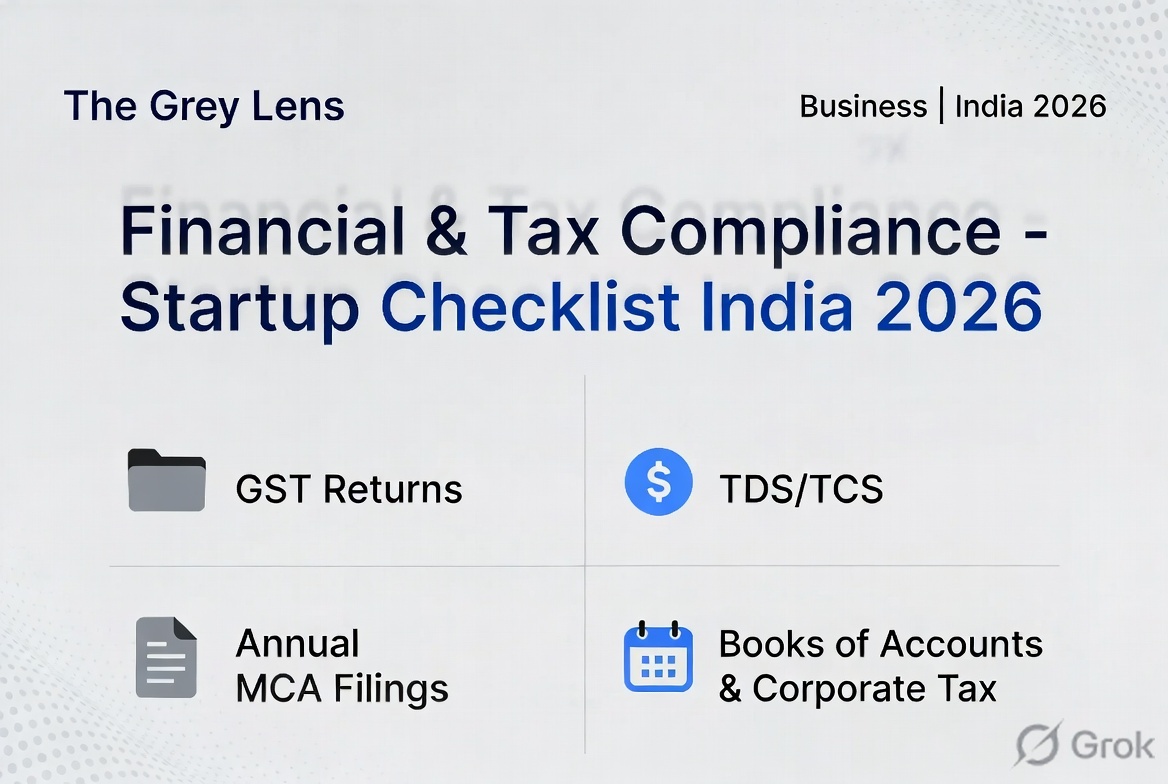
[H3]Financial Reporting and Tax Compliance[/H3] Ongoing financial discipline is vital for longevity. Startups must maintain proper books of accounts, file annual returns (AOC-4 and MGT-7) with the MCA, and comply with **GST return** filing schedules. Timely **TDS/TCS** deduction and deposit remain non-negotiable.
Corporate income tax filings, advance tax payments, and auditor appointments (where turnover thresholds are crossed) demand meticulous attention. The abolition of angel tax and extended Startup India tax benefits have eased fundraising, but transparent financial reporting is still expected by investors and regulators.
Engaging a reputable chartered accountant early helps optimise tax liabilities while ensuring full compliance with evolving regulations, including the new Income Tax Act provisions effective from FY 2026-27.
[H3]The Road Ahead: Compliance as Competitive Advantage[/H3] Legal compliance in 2026 is not merely about avoiding penalties — it is about building institutional strength. Investors, both domestic and international, now conduct deeper compliance due diligence before committing capital. Startups that treat regulatory adherence as a core business function attract better talent, secure premium valuations, and position themselves favourably for acquisitions or IPOs.
Founders are advised to:
- Create a quarterly compliance calendar
- Leverage technology solutions for automated filings and tracking
- Consult legal and financial professionals for tailored guidance
- Stay updated through official portals such as MCA, GSTN, DPIIT, and the Data Protection Board
In an ecosystem brimming with opportunity, the most successful startups will be those that combine bold innovation with disciplined governance. As India aspires to become a global startup superpower, meticulous legal compliance is the invisible scaffolding supporting that ambition.
This article is for informational purposes only and does not constitute legal advice. Entrepreneurs should consult qualified professionals for advice specific to their business. [GALLERY]https://res.cloudinary.com/dse9xadbu/image/upload/v1778662295/r3rsjqh3zd9ewopycig0.jpg|https://res.cloudinary.com/dse9xadbu/image/upload/v1778662296/eebjl8bidj98pcxnqihn.jpg|https://res.cloudinary.com/dse9xadbu/image/upload/v1778662297/wzedlruj5wyjgzqqhius.jpg|https://res.cloudinary.com/dse9xadbu/image/upload/v1778662297/fr4mlbdatxksdfpgrryp.jpg|https://res.cloudinary.com/dse9xadbu/image/upload/v1778662298/eafff6hfxr6u5bt3vhoo.jpg[/GALLERY]