
Apple Shifts Focus from Vision Pro Successors to Smart Glasses, Analyst Reports
Apple has reportedly shelved plans for a second-generation Vision Pro headset and a lighter Vision Air model, according to analyst Ming-Chi Kuo. The company is now prioritizing the development of two new smart glasses products, signaling a major shift in its wearable technology strategy.
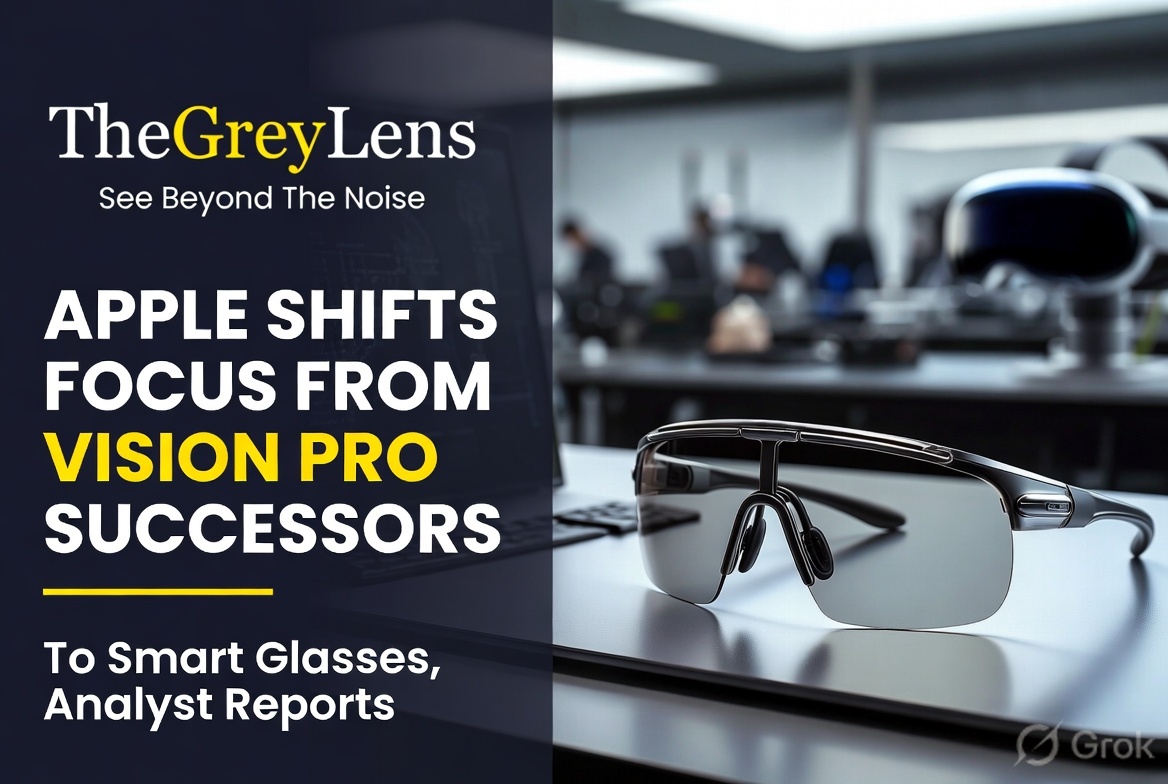
In a significant pivot for its wearable technology strategy, **Apple** has reportedly shelved plans for a second-generation **Vision Pro** headset and a lighter **Vision Air** model. Instead, the tech giant is channeling its resources into the development of two distinct smart glasses projects, according to insights from prominent analyst **Ming-Chi Kuo**. This strategic realignment, reportedly greenlit by incoming Apple CEO **John Ternus**, signals a broader industry trend toward more accessible and everyday wearable devices.\n\n [H2]The Smart Glasses Offensive[/H2] \n\nKuo's latest analysis, shared via a post on X, indicates that Apple's future in head-mounted wearables will now exclusively feature smart glasses. The roadmap, which previously outlined seven head-mounted devices in various stages of development, has been drastically consolidated. Only two smart glasses products remain active: a display-less AI-focused model slated for a **2027** release, and a more advanced augmented reality (AR) glasses model equipped with optical waveguide technology, planned for **2029** or later. The AI smart glasses are envisioned to compete directly with existing offerings like Meta's Ray-Ban smart glasses, suggesting a focus on integrating artificial intelligence into a more conventional form factor. The AR glasses, on the other hand, aim to overlay digital content onto the real world, promising a more immersive experience. This strategic shift away from high-end mixed reality headsets toward more practical smart glasses suggests Apple is aiming for a wider consumer adoption, mirroring the industry's growing interest in lightweight, all-day wearable technology.\n\n [H2]Vision Pro's Uncertain Future[/H2] \n\nThe decision to halt development on Vision Pro successors comes after the initial **Vision Pro** headset, launched at a premium price point, faced challenges in achieving mainstream adoption. Reports suggest that while a Vision Pro 2 prototype may still be in testing, the broader Vision headset category is effectively on hold, with any potential successor unlikely to emerge before the end of the current decade. This recalibration by Apple reflects a pragmatic approach to its wearable strategy, prioritizing products with greater mass-market potential. The initial Vision Pro, while lauded for its technological prowess, was often criticized for its high cost and considerable weight, factors that may have contributed to its limited appeal beyond early adopters and enterprise users. The shift to smart glasses indicates a move towards devices that are not only more affordable but also more seamlessly integrated into daily life.\n\n [H2]Industry Trends and Competitive Landscape[/H2] \n\nThis development aligns with a broader trend in the consumer electronics industry, where companies are increasingly exploring the potential of smart glasses and AI-integrated wearables. Companies like Meta have already made significant inroads in the smart glasses market, and Apple's entry, even with a delayed timeline, is expected to significantly shape the competitive landscape. The focus on AI integration across devices, from smartphones to smart speakers, underscores the growing importance of artificial intelligence in consumer technology. Google, for instance, has been aggressively integrating its **Gemini** AI model across its product portfolio, from smartphones and laptops to its new smart speaker, the **Google Home Speaker**. Amazon is also enhancing its **Alexa** assistant with generative AI capabilities, rolling out **Alexa+** across a vast majority of its devices. The consumer electronics market in **2026** continues to be defined by rapid innovation, with new product launches and strategic shifts shaping the future of personal technology. While Samsung has seen strong sales for its latest foldable phones, such as the **Galaxy Z Fold 7**, and companies like Google are refreshing their Pixel lineups, Apple's pivot signals a significant bet on the future of augmented reality and AI-driven smart glasses.\n\nThe implications of Apple's strategic shift are far-reaching. The company's move away from a direct successor to the Vision Pro, while potentially disappointing for some enthusiasts, indicates a clear focus on developing products that can achieve broader market penetration. The success of these future smart glasses will likely depend on their ability to offer compelling features, a seamless user experience, and a competitive price point. As the industry continues to evolve, all eyes will be on Apple to see how its new generation of smart glasses will redefine wearable technology in the coming years. The company's commitment to AI integration across its product ecosystem also suggests that these smart glasses will be a crucial component of its future strategy, offering a new avenue for users to interact with Apple's services and the digital world.