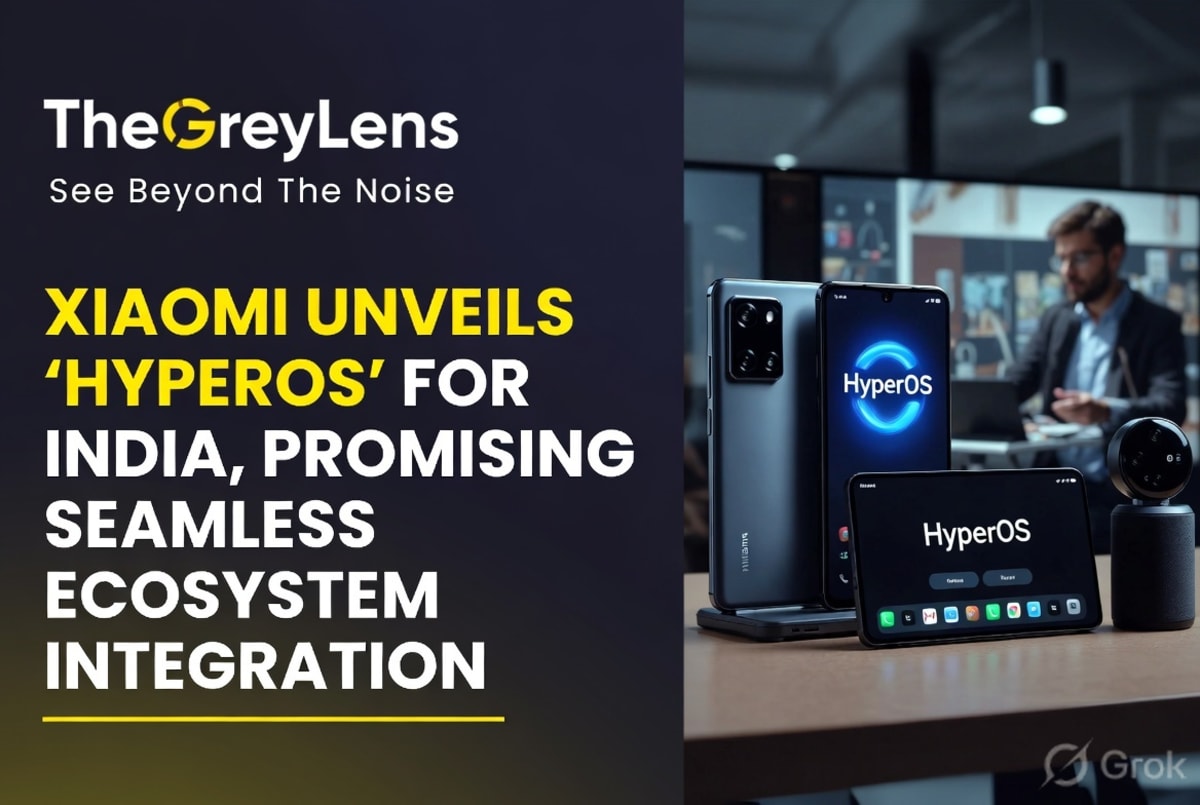
The technology giant Xiaomi has officially introduced its next-generation operating system, HyperOS, to the Indian market, marking a significant evolution in its strategy to unify its diverse product ecosystem. The announcement, made on June 1, 2026, signals Xiaomi's intent to offer a more integrated and intelligent user experience, moving beyond traditional smartphone operating systems to encompass a broader spectrum of connected devices.
A Unified Ecosystem Under HyperOS
HyperOS is designed to serve as the central nervous system for Xiaomi's expanding portfolio, which includes smartphones, smart home appliances, wearables, and even automotive technology. The core philosophy behind HyperOS is to eliminate fragmentation and create a seamless flow of information and control between different devices. This ambitious undertaking aims to provide users with a consistent interface and functionality, regardless of the specific Xiaomi product they are interacting with. The company has emphasized that HyperOS is not merely an Android skin but a fundamental reimagining of the operating system's architecture, built from the ground up to support an interconnected future. Early demonstrations showcased fluid transitions between devices, intelligent task delegation, and enhanced cross-device collaboration features that were previously siloed within individual product categories. The system's underlying architecture is reportedly optimized for low latency and efficient resource management, crucial for real-time interactions in a multi-device environment. Xiaomi executives have stated that the goal is to achieve a "smart life" that is effortlessly managed through a single, intuitive interface, reducing the complexity often associated with managing multiple smart gadgets. This strategic pivot is expected to enhance user loyalty and create new avenues for service integration within the Xiaomi ecosystem.
Rollout and Device Compatibility
The initial phase of the HyperOS rollout in India commenced with the launch of the Xiaomi 14 series smartphones. These flagship devices are the first to come pre-installed with HyperOS, allowing users to immediately experience its new capabilities. Following this, Xiaomi has outlined a phased update plan for a wide range of its existing devices. This includes popular smartphone models from the Xiaomi and Redmi lineups, as well as select smart TVs and wearables. The company has not yet released a comprehensive list of all devices slated for HyperOS updates, but industry analysts anticipate that a significant portion of their active user base will eventually transition to the new OS. The update process is expected to be managed through Xiaomi's standard Over-The-Air (OTA) update mechanism, ensuring ease of access for users. However, the complexity of migrating a vast number of devices to a new operating system presents considerable technical challenges. Ensuring stability, security, and optimal performance across such a diverse hardware landscape will be critical to the success of the HyperOS initiative. Xiaomi has reportedly invested heavily in its software development teams and testing infrastructure to address these challenges proactively. The company's previous experience with MIUI, its long-standing Android interface, has provided valuable insights into managing large-scale software deployments, but HyperOS represents a more fundamental architectural shift.
The Vision Beyond Smartphones
HyperOS's ambition extends far beyond mobile phones. Xiaomi envisions a future where HyperOS seamlessly integrates with its smart home appliances, including air purifiers, smart lights, and robotic vacuums, as well as its range of smartwatches and fitness trackers. The company has also hinted at future integrations with its burgeoning electric vehicle division, suggesting that HyperOS could eventually power the in-car infotainment systems and connectivity features of Xiaomi's upcoming automobiles. This cross-domain integration is a key differentiator that Xiaomi hopes will set it apart from competitors who often focus on individual device performance rather than holistic ecosystem synergy. The underlying framework of HyperOS is said to be modular, allowing for adaptation to various hardware platforms and form factors. This flexibility is crucial for supporting the wide array of devices Xiaomi produces and plans to produce in the future. For consumers, this could translate into a more intuitive and less frustrating experience when managing their digital lives, with fewer compatibility issues and a more consistent user interface across all their connected devices. The long-term implications for the smart home and Internet of Things (IoT) markets are substantial, as HyperOS could set a new standard for interoperability and user experience in a rapidly evolving technological landscape. The success of this initiative will hinge on Xiaomi's ability to deliver on its promise of seamless integration and to maintain a robust update schedule that keeps pace with evolving user expectations and technological advancements. The company's ability to foster a strong developer community around HyperOS will also be crucial for expanding its functionality and app ecosystem in the years to come.
Looking ahead, the successful adoption of HyperOS in India will be a critical testbed for Xiaomi's global strategy. The company will need to closely monitor user feedback, address any emerging technical issues, and continue to innovate to maintain its competitive edge. The focus will now shift to how effectively Xiaomi can deliver on the promise of a truly unified and intelligent ecosystem, and whether HyperOS can fundamentally change how consumers interact with their technology on a daily basis. The coming months will be pivotal as more devices receive the update and users begin to integrate HyperOS into their daily routines, paving the way for its wider global rollout.