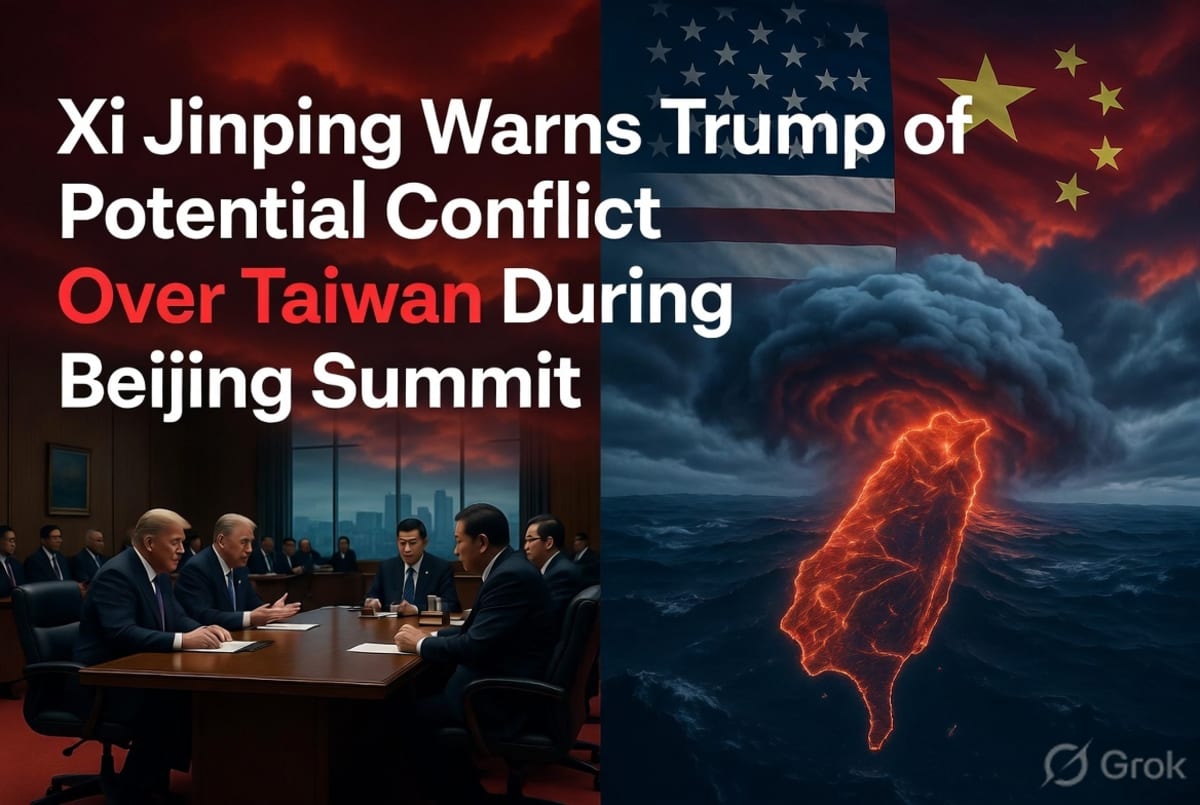
On Thursday, May 14, 2026, Chinese President Xi Jinping directly addressed U.S. President Donald Trump during a summit in Beijing, warning that the issue of Taiwan remains a critical point of contention that could lead to conflict if not handled with extreme care. The strongly worded admonition marked a significant moment in the ongoing diplomatic engagement between the two global powers.
A Tense Exchange Amidst Broader Negotiations
The summit, held at the Great Hall of the People, saw leaders from the world's two largest economies engage in discussions that spanned critical areas of bilateral relations. While the White House indicated ongoing discussions and mutual interest in extending trade agreements, along with efforts to curb the flow of fentanyl precursor chemicals into the United States and increase Chinese purchases of U.S. agricultural products, the specter of Taiwan loomed large. President Trump, who arrived in Beijing on May 13, 2026, had expressed hopes of deepening ties between the nations. However, Xi Jinping unequivocally placed Taiwan at the forefront, labeling it the "most important issue" between China and the U.S.
Taiwan: A Persistent Flashpoint
Taiwan, a self-governing democratic island, is a territory that Beijing considers its own and has vowed to reclaim, by force if necessary. The U.S. maintains a policy of strategic ambiguity but provides Taiwan with the means to defend itself. Xi's direct warning to Trump underscores the persistent friction this issue creates, despite efforts to find common ground on other economic matters. The meeting occurred against a backdrop of broader geopolitical discussions, including the ongoing war in Iran, which both leaders also reportedly touched upon, agreeing that the Strait of Hormuz must remain open.
Economic Diplomacy and Reciprocal Visits
Beyond the geopolitical tensions, the leaders also delved into economic cooperation. Discussions included expanding market access for American businesses in China and increasing Chinese investment in U.S. industries. A potential commitment from China to purchase U.S. soybeans, beef, and aircraft was also on the table, alongside the establishment of a Board of Trade to address commercial differences. Following the Beijing summit, President Trump announced that Xi Jinping would make a reciprocal visit to the White House on September 24, 2026, a date previously unannounced, signaling a continued, albeit complex, diplomatic channel.
Looking Ahead: Navigating Future Relations
The summit's outcome suggests a path forward characterized by both cooperation and significant underlying challenges. While economic ties and diplomatic exchanges are set to continue, the unresolved issue of Taiwan remains a critical determinant of the future relationship between the United States and China. Observers will be closely watching future interactions for any shifts in stance or further developments on this sensitive geopolitical matter.