The Full Picture: Where We Actually Are
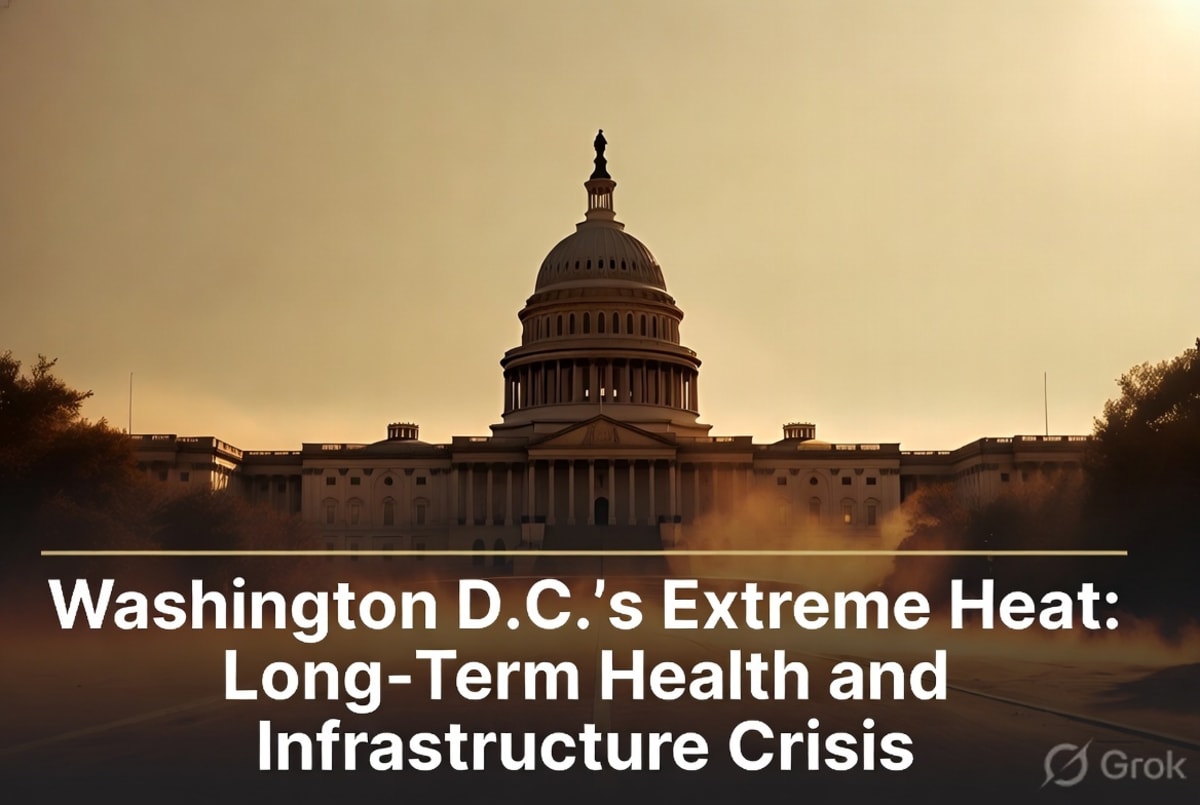
Washington D.C. is currently grappling with a heightened reality of extreme heat events, a trend that is not merely a seasonal inconvenience but a persistent and growing threat. The city has experienced an uptick in the frequency, intensity, and duration of heat waves over the past decade, pushing its infrastructure and public health systems to their limits. This is not a future hypothetical; it is the present condition. Urban heat island effects, exacerbated by dense development and a lack of green space, mean D.C. often registers temperatures significantly higher than surrounding rural areas. The immediate impact is felt in increased emergency room visits for heat-related illnesses and strain on the power grid due to soaring air conditioning demand. However, the underlying challenge is the long-term degradation of the city's ability to function and protect its most vulnerable populations under increasingly hostile climatic conditions. The current status is one of heightened alert and reactive measures, with a growing, albeit often under-discussed, need for proactive, systemic adaptation strategies.
How We Got Here
The escalating crisis of extreme heat in Washington D.C. is a consequence of decades of urban development patterns, policy decisions, and a gradual underestimation of climate change impacts. Post-World War II suburbanization led to increased impervious surfaces and a denser urban core, intensifying the urban heat island effect. Decisions regarding land use, zoning, and the prioritization of development over green infrastructure have compounded the issue. For years, the focus on immediate urban needs often overshadowed long-term environmental resilience. Key moments include significant heat waves in the late 20th and early 21st centuries that provided early warnings, yet comprehensive, sustained policy responses lagged. The scientific consensus on accelerating climate change, particularly the intensification of heat extremes, began to solidify in the 2000s, but translating this understanding into robust, city-wide adaptation plans has been a slow and often politically fraught process. The current situation is the culmination of these historical trajectories, where the cumulative effects of development and climate change are now manifesting as undeniable, high-impact heat events.
The Players And Their Interests
The landscape of Washington D.C.'s heat crisis involves a complex web of actors with intersecting and often conflicting interests. The District of Columbia government, led by the Mayor's office and various agencies like the Department of Energy and Environment (DOEE) and the Department of Health, has a primary interest in public safety, infrastructure stability, and maintaining the city's livability. Residents, particularly low-income communities and the elderly, are the most directly impacted, prioritizing immediate relief, access to cooling centers, and long-term protection from health risks. Utility companies, such as Pepco, are concerned with grid reliability during peak demand and the potential for infrastructure damage from extreme heat. Developers and real estate interests may prioritize economic growth and development, sometimes at the expense of green space or climate-resilient building practices, although some are beginning to incorporate sustainability. Environmental advocacy groups push for aggressive climate mitigation and adaptation policies, often clashing with development interests. Finally, federal agencies with a presence in D.C. have their own infrastructure and employee safety concerns, adding another layer of complexity.
The Data People Are Not Talking About
While headlines focus on daily temperatures, critical data points reveal the deeper, long-term impacts of D.C.'s extreme heat. Firstly, the number of days exceeding 95°F (35°C) in D.C. is projected to more than triple by mid-century under a high-emissions scenario, reaching an average of 30-40 days per year, up from around 10 currently. Secondly, D.C. has seen a 70% increase in the number of cooling degree days since the 1950s, indicating a significantly higher demand for air conditioning. Thirdly, studies show that low-income neighborhoods in D.C. experience significantly higher land surface temperatures due to a lack of tree canopy and green space, creating 'heat islands' that disproportionately affect vulnerable populations. Fourthly, the economic cost of heat-related illnesses and deaths in urban areas is estimated to be in the billions annually nationwide, a figure that D.C., as a dense urban center, is heavily exposed to. These data paint a stark picture of escalating risks that demand immediate and sustained attention beyond immediate weather forecasts.
The India Dimension
While Washington D.C.'s heat crisis might seem geographically distant, its implications resonate deeply with India, a nation acutely vulnerable to extreme heat. Both are large, densely populated urban centers facing similar challenges of urban heat island effects, aging infrastructure, and significant populations exposed to heat-related health risks. India, however, often experiences heat waves with greater human mortality due to lower average incomes, limited access to air conditioning, and a larger informal workforce operating outdoors. The data and adaptation strategies being developed or considered in D.C.—such as improved cooling center networks, green infrastructure initiatives, and building code adaptations—offer potential lessons for Indian cities like Delhi, Mumbai, and Kolkata. Conversely, the sheer scale of India's heat challenges, including widespread impacts on agriculture and water resources, provides a stark, large-scale case study of what D.C. and other developed cities could face if adaptation measures are insufficient. The shared experience of escalating heat extremes underscores the global nature of climate impacts and the need for international knowledge exchange on resilience strategies.
What Happens Next
The trajectory for Washington D.C.'s extreme heat situation hinges on immediate and future policy actions. In the short term, expect continued reliance on cooling centers, public health advisories during heat events, and potential strains on the power grid. Pepco is already investing in grid modernization, which will be crucial. Looking ahead, the District government is expected to further implement its climate resilience plans, focusing on expanding tree canopy, promoting cool pavements, and updating building codes for better insulation and cooling efficiency. Decisions made in the next 1-3 years regarding funding for green infrastructure projects and equitable distribution of resources will be pivotal. The effectiveness of DOEE's outreach programs to vulnerable communities will also be a key indicator. Failure to act decisively could lead to more frequent infrastructure failures, increased heat-related mortality, and a decline in the city's overall livability, making sustained adaptation a critical imperative.
Washington D.C.'s struggle with extreme heat is a microcosm of a global urban challenge, but the capital city's response carries unique weight. The current approach remains largely reactive, a pattern that is unsustainable and will increasingly strain public resources. The real crisis isn't just the heat itself, but the inertia in implementing comprehensive, long-term adaptation strategies that prioritize equity. We must move beyond incremental changes; D.C. needs a 'Manhattan Project' for urban cooling and resilience. This means a radical increase in funding for green infrastructure, mandated retrofitting of public buildings for extreme heat, and a fundamental re-evaluation of development practices to ensure every new construction actively combats the urban heat island effect. The data clearly shows the disproportionate impact on lower-income communities; any solution that doesn't aggressively address this gap is a failure by definition. The city's leaders must treat heat resilience not as an environmental issue, but as a core component of public safety, economic stability, and social justice. The time for small steps is long past; bold, systemic transformation is the only path forward. What should readers do? Advocate for these systemic changes at the local level and support organizations working on urban resilience and climate justice.
- Escalating frequency & intensity of heat waves
- Projected tripling of 95°F+ days by mid-century
- Disproportionate impact on low-income neighborhoods
- Need for systemic adaptation over reactive measures
- Equity as a non-negotiable component of resilience
- Urgent call for increased funding & policy reform