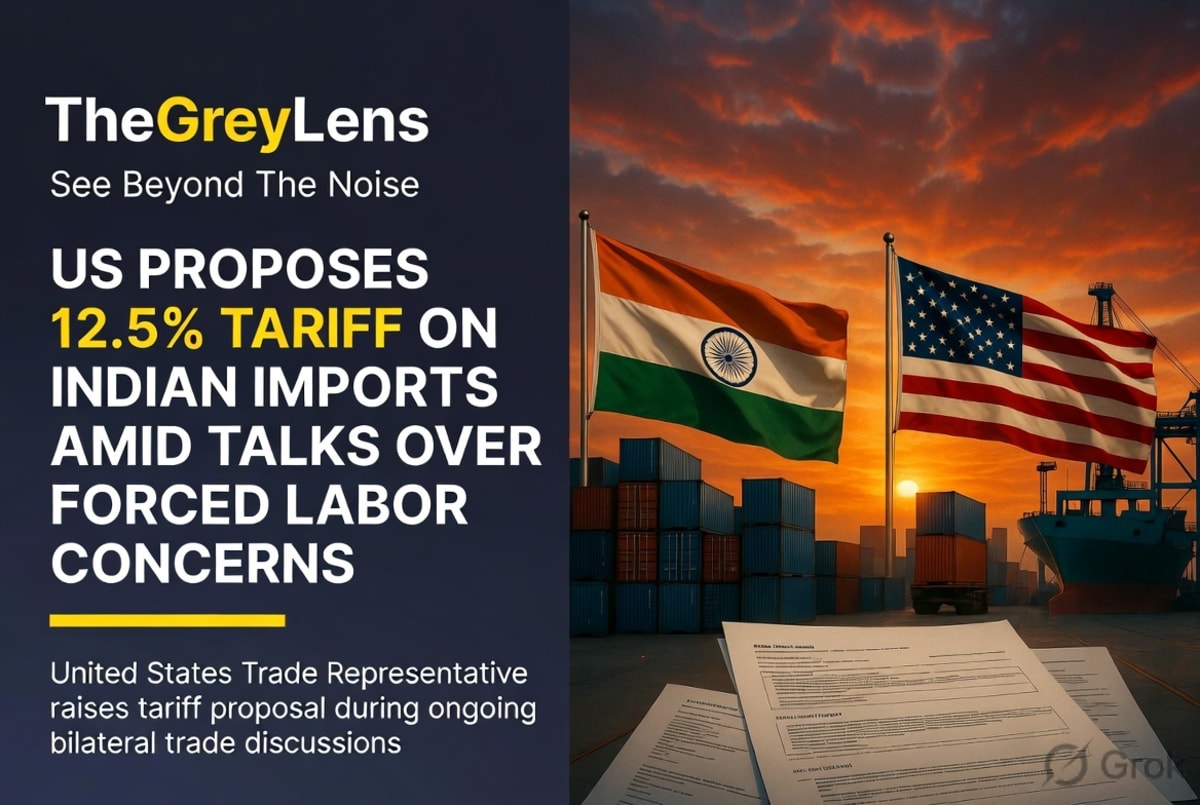
The United States has put forward a proposal to impose an additional 12.5% tariff on imports from India, a move that has complicated ongoing trade negotiations between the two economic powerhouses. The U.S. Trade Representative's Office (USTR) cited India's alleged inadequacy in enforcing prohibitions against the import of goods produced with forced labor as the primary reason for the proposed duties. This development comes at a critical juncture, with both nations reportedly close to finalizing a phase-one trade agreement.
Forced Labor Allegations Spark Trade Tensions
The USTR's proposal, detailed in a 92-page report, criticizes India for not implementing effective measures to prohibit the import of products made with forced labor. U.S. officials, including Assistant U.S. Trade Representative Brendan Lynch, who is leading a delegation in New Delhi for trade talks, have emphasized the importance of addressing forced labor in trade policies. The U.S. views such practices as creating a competitive disadvantage for American workers and industries. This investigation, launched under Section 301 of the U.S. Trade Act of 1974, has identified approximately 60 economies, including India, as falling short in their safeguards against forced labor imports. While some nations may face a 10% tariff if they demonstrate partial enforcement, India, along with other major economies, is slated for the higher 12.5% rate due to a perceived lack of such measures. The USTR has opened a public comment period on the proposed measures, with a hearing scheduled for July 7.
Trade Deal Nears Finalization Amidst Tariff Clouds
Despite the new tariff proposal, India's Commerce Minister Piyush Goyal stated on Tuesday that the two countries are close to finalizing the first phase of a bilateral trade agreement, with approximately 99% of issues reportedly resolved. A new U.S. delegation arrived in New Delhi for three days of talks aimed at concluding this agreement. The proposed tariffs, however, now cast a significant shadow over these negotiations. Previously, an interim trade deal announced on February 9, 2026, had reduced tariffs on Indian exports to the U.S. to 18% from a high of 50%. This progress was further complicated when the U.S. Supreme Court ruled reciprocal tariffs imposed by the Donald Trump administration as illegal. The Section 301 probe, initiated in March 2026, was already a known factor in the trade talks, but the proposal to impose duties on such a broad range of countries underscores the U.S. administration's strategy to leverage trade policy for addressing its concerns, especially after the Supreme Court ruling invalidated previous tariff measures. Experts suggest that Indian exporters, particularly in labor-intensive sectors like textiles, apparel, and leather goods, may face increased scrutiny and higher costs due to these potential additional tariffs.
Broader Economic Context and Indian Response
The proposed tariffs come at a time when India's economy is demonstrating resilience, with the World Bank raising its growth forecast for FY 2026-27 to 6.6%, driven by strong domestic demand and export growth. The OECD also revised its forecast for India upwards to 6.3% for 2026. However, global factors such as rising crude oil prices due to geopolitical tensions in the Middle East and currency pressures are creating a complex environment for the Reserve Bank of India (RBI). The RBI's Monetary Policy Committee (MPC) is currently in session, with most analysts expecting the repo rate to remain unchanged at 5.25%. India's retail inflation has seen a slight uptick, reaching 3.48% in April 2026, with projections suggesting it could climb to 5% in FY27, driven by food and energy prices. Simultaneously, India is set to overhaul its inflation measurement system, introducing a new Producer Price Index (PPI) and a revised Wholesale Price Index (WPI) with a 2022-23 base year, effective June 15, 2026. This move aligns India with international standards and aims to provide a more comprehensive view of price pressures. India's Commerce Ministry has responded to the U.S. tariff proposal by stating that it is not final and will undergo a public consultation process. Officials also argue that the USTR's findings may be open to challenge, as the investigation appears to focus on import controls rather than the practices within Indian exports themselves. The USTR has invited public comments on the proposed measures until July 6, with a hearing scheduled for July 7. The final decision is anticipated to have significant implications for global trade flows and U.S. relations with key partners, including India.
Looking ahead, the focus will be on the outcome of the ongoing trade negotiations between India and the U.S. and the final decisions regarding the proposed tariffs. The RBI's monetary policy announcement on June 5 will also be closely watched for any signals on managing inflation and supporting economic growth amidst global uncertainties. The successful resolution of trade disputes and the continued implementation of sound economic policies will be crucial for India's sustained growth trajectory.