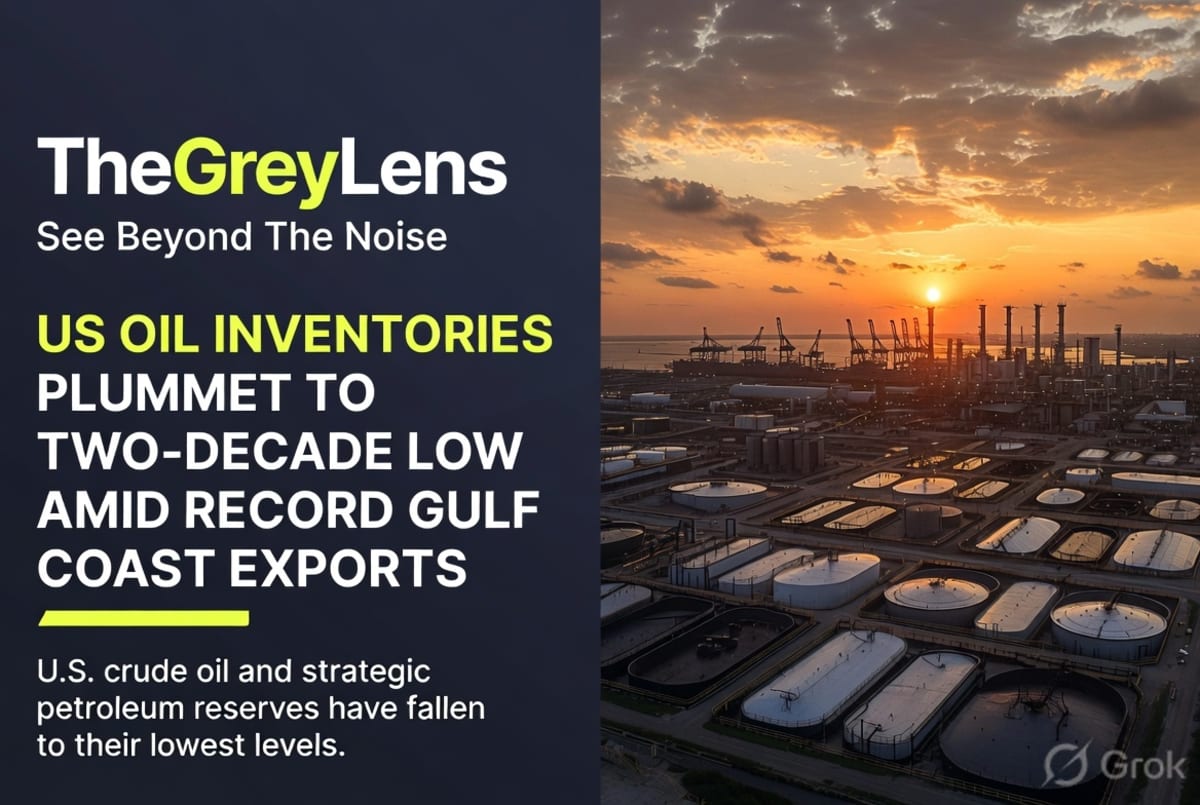
The United States is experiencing a dramatic drawdown in its oil reserves, with combined crude oil inventories and strategic petroleum reserves hitting a combined low not seen in more than two decades. This sharp decline is largely attributed to a surge in U.S. petroleum product exports, particularly from the Gulf Coast, which have reached unprecedented levels. As of the week ended June 1, 2026, commercial crude oil stockpiles fell by 8 million barrels to a 22-year low of 434 million barrels. Concurrently, the U.S. Strategic Petroleum Reserve (SPR) also decreased by 8 million barrels in the same week, reaching a 28-month low of 357 million barrels.
Record Exports Fueling Inventory Depletion
U.S. crude oil exports have been a significant driver of this inventory contraction. In the seven days ended June 1, 2026, U.S. crude oil shipments surged to 5.9 million barrels per day, a substantial increase from 4.4 million barrels per day in the preceding week. This follows an all-time high of 6.0 million barrels per day reached in the week ended May 15, 2026. For context, before the conflict with Iran escalated in February 2026, U.S. crude oil exports averaged 4.16 million barrels per day. This dramatic increase in export demand is putting immense pressure on domestic supply, leading to the rapid depletion of stockpiles.
Refineries Operate at Peak Capacity Amidst Supply Concerns
To meet the robust global demand and capitalize on prevailing high prices, several major refineries along the Gulf Coast have postponed scheduled maintenance. Refineries such as PBF Chalmette in Louisiana and TotalEnergies Port Arthur in Texas, key gasoline producers, are operating their units beyond their planned service windows. This strategy aims to maximize production and profits while prices remain elevated. Consequently, U.S. refineries operated at an intense 94.7% of capacity in the latest reported week, significantly exceeding the typical seasonal average of 90% to 92%. This high operational tempo is processing approximately 16.9 million barrels of crude oil daily.
Despite the robust refinery output, U.S. gasoline inventories are critically low. For the week ended June 1, 2026, only 215 million barrels of gasoline were held in commercial inventories, marking the lowest level for this time of year since June 2014. While average U.S. gasoline prices have seen some relief, dropping from $4.48 a gallon to $4.22 a gallon by Friday, June 6, 2026, the low inventory levels suggest continued price sensitivity and potential vulnerability to supply disruptions.
Global Demand and Strategic Reserve Drawdowns
The surge in U.S. oil exports is partly driven by international demand, with other countries aggressively sourcing finished products from U.S. regional refineries. This global pull on American petroleum products contributes to the strain on domestic supplies. The Trump administration's decision to waive Jones Act restrictions on energy cargoes has also been cited as a factor enabling more efficient and extensive export operations, thereby exacerbating the drawdown of U.S. energy markets.
The administration's efforts to manage energy prices have included disbursing 172 million barrels of oil from the nation's reserve stockpile as part of a larger 400-million-barrel emergency release coordinated by the International Energy Agency. However, experts like David Smith suggest that draining the emergency reserves “doesn't solve the problem, it” merely provides temporary relief without addressing underlying supply and demand dynamics.
Looking ahead, the energy market faces a confluence of factors that could impact supply and prices. Historically, summer driving demand typically peaks in mid-August, coinciding with increased tropical storm activity and greater operational stress on refinery infrastructure. This seasonal pressure, combined with existing vulnerabilities in energy supply chains, could amplify concerns about market stability. The continued high export rates and low inventory levels suggest that the U.S. energy market will remain a critical focus in the coming months, with potential for continued price volatility.