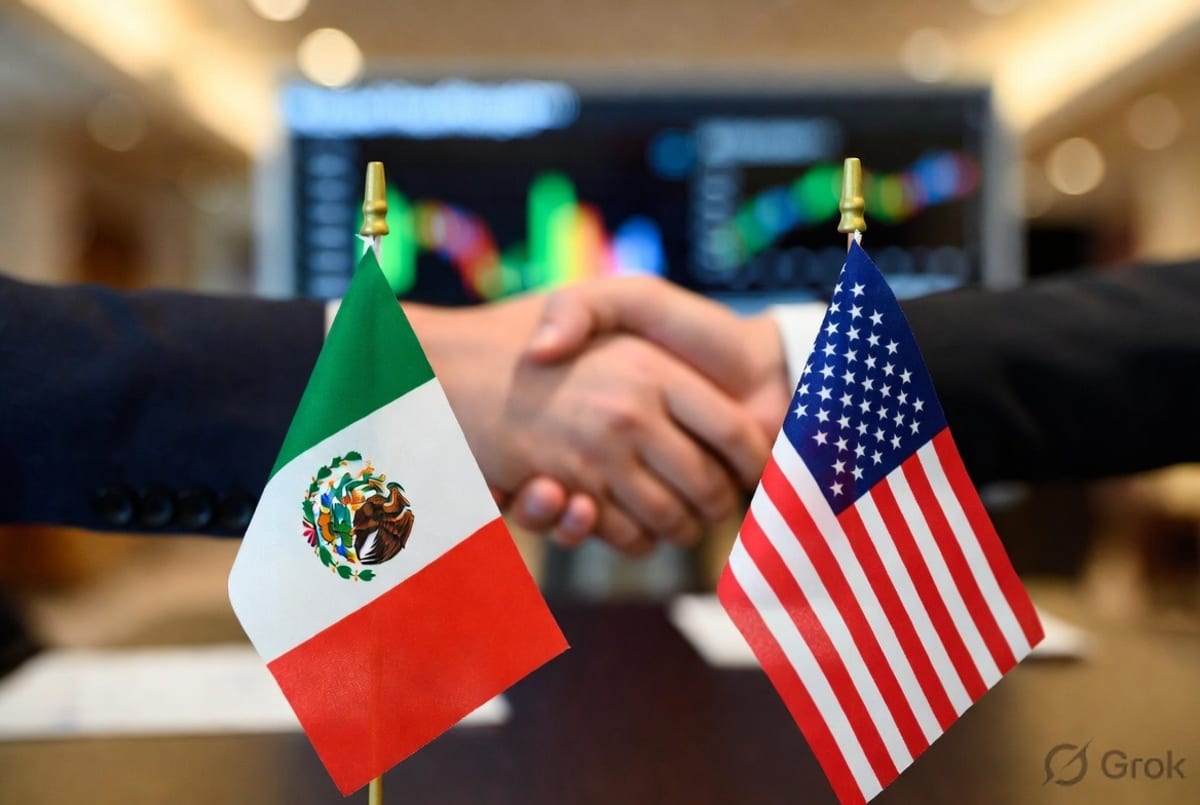
WASHINGTON D.C. – The United States and Mexico concluded their first bilateral round of talks concerning the United States-Mexico-Canada Agreement (USMCA) on May 29, 2026, in Mexico City. The discussions, part of a joint review mandated for the trade pact, centered on critical issues such as automotive rules of origin, steel and aluminum trade, and economic security. A primary objective for the U.S. delegation was to address the persistent trade deficit with Mexico and bolster American supply chains. Negotiators also explored enhancing regulatory compatibility in sectors including medical devices, pharmaceuticals, and cosmetic products. Further rounds of discussions are scheduled for June and July, with the next meeting set for Washington D.C. on June 16-17. These trade negotiations are taking place against a backdrop of significant economic challenges, including elevated inflation and growing global uncertainty.
Inflationary Headwinds Intensify Amidst Global Supply Disruptions
The U.S. economy is currently contending with a notable surge in inflation, with the annual rate reaching 3.8% for the twelve months ending in April 2026. This represents the highest level since May 2023 and a notable increase from the 3.3% recorded in March. The acceleration in prices is largely attributed to the ongoing conflict in the Middle East, which has disrupted global energy supplies and driven up costs. Energy prices, in particular, have seen a significant jump, with gasoline prices increasing by 28.4% and fuel oil by 54.3% year-on-year. This inflationary pressure is impacting household incomes and could potentially restrain consumer spending and overall economic growth. The Federal Reserve's preferred inflation gauge, the Personal Consumption Expenditures (PCE) price index, also saw an increase, rising 3.8% in the twelve months through April, the largest increase in three years. Economists are closely watching these trends, with financial markets anticipating the Federal Reserve will maintain its benchmark interest rate within the 3.50% to 3.75% range well into 2027, as the central bank navigates the complex interplay of supply shocks and underlying inflation.
Manufacturing Sector Shows Resilience Amidst Broader Economic Crosscurrents
Despite the inflationary pressures, the U.S. manufacturing sector has demonstrated a degree of resilience. Preliminary data for May 2026 indicated a strengthening of manufacturing activity, with the S&P Global US Manufacturing PMI rising to 55.3, up from 54.5 in April. This marks the strongest expansion in the manufacturing sector since May 2022. Output growth within manufacturing has been particularly robust, experiencing its fastest pace in over four years, and job creation in the sector has reached its highest level since June 2025. New orders, while showing a slight slowdown, remain strong, with preliminary data suggesting the second-fastest growth in four years. This sustained demand is partly fueled by precautionary stockpiling by clients concerned about the ongoing Middle East conflict and its potential impact on supply chains. Input inventories have also seen a significant increase, contributing to the upward revision of the PMI. However, the broader economic picture is more mixed. While manufacturing shows strength, the services sector has experienced a slowdown, with business activity growth remaining modest. The Flash US Composite PMI Output Index, which covers both manufacturing and services, held steady at 51.7 in May, indicating that the improved performance in manufacturing was counterbalanced by a sluggish service sector. Surging input costs, driven by war-related supply constraints and rising energy prices, have also contributed to a further increase in selling price inflation, reaching its highest point since August 2022.
USMCA Review and the Evolving Landscape of Trade Policy
The ongoing joint review of the USMCA signifies a critical juncture for North American trade relations. The U.S. Trade Representative's office has emphasized the importance of strengthening American supply chains and reducing trade deficits as key objectives. The discussions on automotive rules of origin, steel, aluminum, and economic security are particularly significant given their potential to reshape trade flows and investment within the region. Beyond the USMCA, the broader landscape of U.S. trade policy is also evolving. There is a discernible shift towards more targeted trade measures, moving away from broad-based tariffs towards instruments like export controls and licensing requirements, especially in areas deemed critical for national security and technological leadership. This strategic adjustment reflects a complex geopolitical environment and a desire to address specific trade challenges and dependencies. The U.S. is also engaging in bilateral trade discussions with other partners, such as the recent updates to the EU-Mexico trade agreement, which aims to further lower tariffs and enhance investment. The ongoing negotiations and evolving trade strategies underscore the dynamic nature of global commerce and the United States' efforts to adapt its policies to current economic and geopolitical realities. Looking ahead, the next rounds of USMCA negotiations, coupled with continued monitoring of inflation and global economic stability, will be crucial for shaping the economic trajectory of the United States and its trading partners.