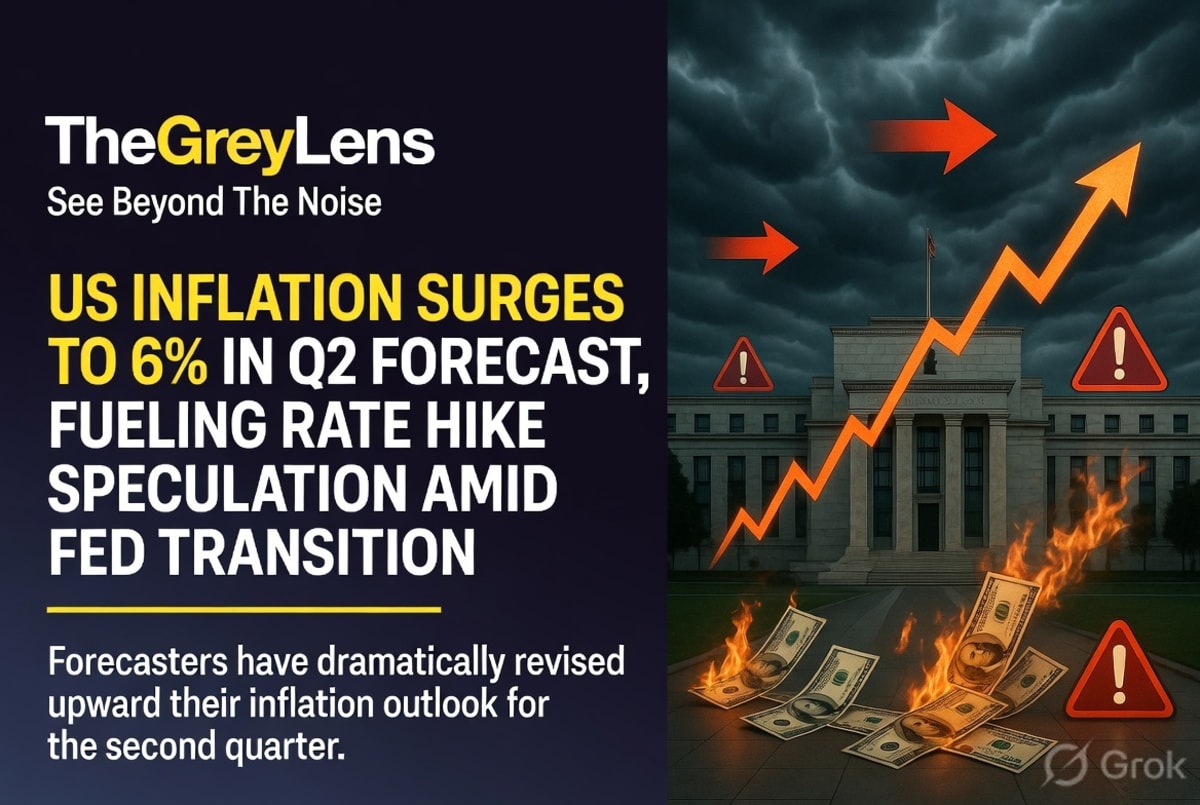
The United States is facing a significant economic challenge as inflation is now projected to surge to 6% in the second quarter of 2026, a dramatic upward revision from earlier forecasts. This alarming development, detailed in the latest Survey of Professional Forecasters by the Federal Reserve Bank of Philadelphia, has sent ripples through financial markets and intensified discussions about the Federal Reserve's next monetary policy moves. The revised outlook, which also places core Personal Consumption Expenditures (PCE) inflation at 3.4% for the quarter, significantly exceeds the Federal Reserve's target of 2% and is creating considerable uncertainty as the central bank navigates a leadership transition.
Geopolitical Shocks and Economic Fallout
The primary catalyst for this stark reassessment of inflation prospects appears to be the recent U.S. and Israeli military strikes against Iran. These actions have directly impacted global energy markets, leading to a sharp increase in oil prices. This surge in energy costs is a major contributor to the elevated headline inflation figures, with some reports indicating that energy prices alone accounted for over 40% of the April CPI gain. Beyond energy, other sectors are also showing persistent inflationary pressures. The Producer Price Index (PPI) for April reported a 6% annual increase, the highest since 2022, indicating rising costs for businesses that could eventually be passed on to consumers. Similarly, food prices have climbed, and shelter costs, which had shown signs of moderation, have ticked back upwards. For the full year 2026, forecasters now anticipate headline CPI to reach 3.5%, with core inflation at 2.9%, both substantially higher than previous projections.
Rate Hike Speculation and Fed Leadership Transition
The escalating inflation figures have dramatically shifted market expectations regarding the Federal Reserve's interest rate policy. The CME FedWatch Tool now shows a 45% probability of a 25-basis-point rate hike by the end of 2026, a significant increase from a mere 1% just a month prior. Some market indicators suggest probabilities as high as 60% for a rate increase by the January 2027 Federal Open Market Committee (FOMC) meeting, with a nearly 50% chance of a hike as early as December 2026. This heightened probability of rate hikes is occurring precisely as the Federal Reserve is undergoing a critical leadership transition. Jerome Powell's term as Fed Chair has concluded, and Kevin Warsh is set to take the helm. This change in leadership, coupled with the persistent inflation challenge, introduces a layer of policy uncertainty. While the Fed has maintained a steady interest rate range of 3.50%-3.75% in recent meetings, the prospect of rate hikes, rather than cuts, is now a prominent market consideration. The incoming Chair, Warsh, faces the immediate challenge of addressing these inflationary pressures while navigating the complexities of his new role and potential shifts in the Fed's policy communication strategies.
Market Reaction and Future Outlook
The divergence between rising inflation fears and the continued strength in equity markets, with indices like the S&P 500 and Nasdaq Composite reaching new record highs, presents a complex landscape for investors. While some analysts believe this resilience is driven by factors such as artificial intelligence infrastructure spending and robust corporate earnings, the underlying economic pressures are undeniable. The implications for the housing market are also significant, as elevated inflation and the prospect of higher interest rates could keep mortgage rates high. Looking ahead, economists expect inflation to persist into the third quarter of 2026 before moderating, with headline CPI projected to ease to 2.5% and core inflation to 2.7% by year-end. However, even these forecasts remain above the Fed's long-term target. The market will be closely watching the Federal Reserve's upcoming meetings and the communication from the new Chair, Kevin Warsh, for any signals on how the central bank intends to balance the fight against inflation with broader economic stability and growth objectives.