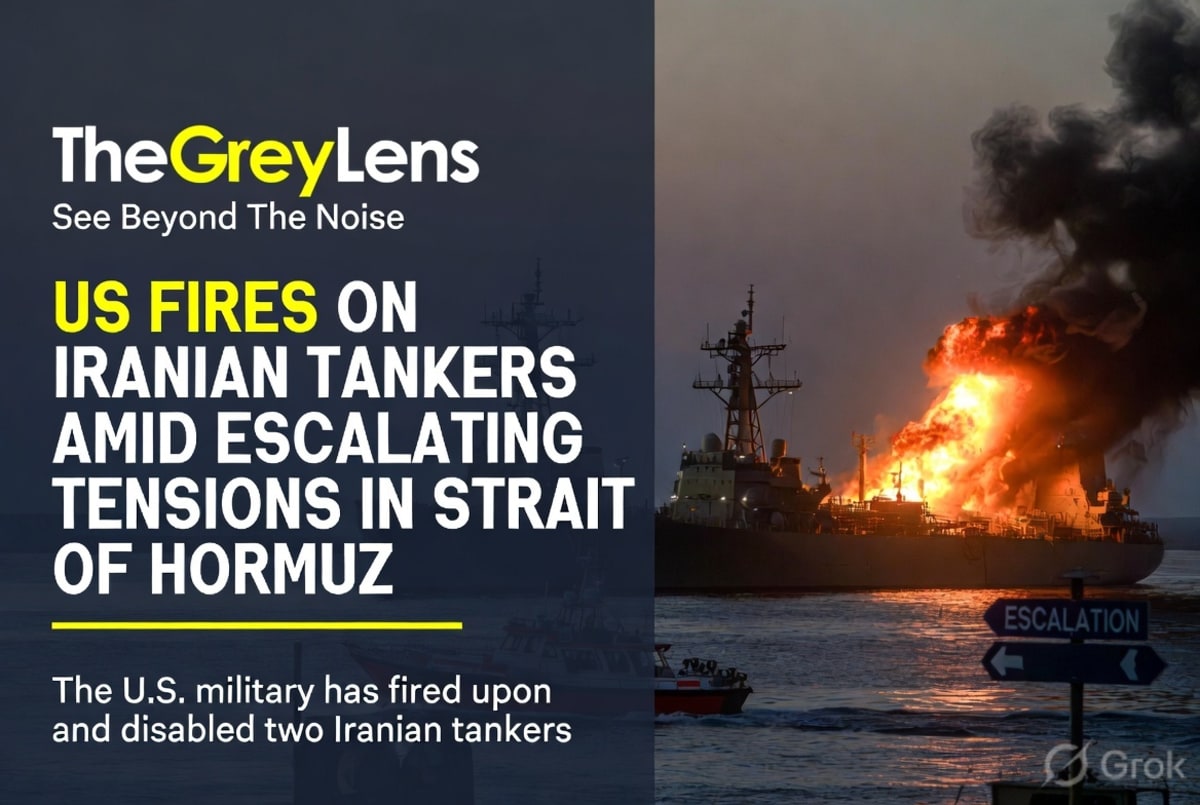
In a significant escalation of already strained relations, the United States military announced it had fired upon and disabled two Iranian tankers in the strategic Strait of Hormuz. The operation, which occurred within the past 24 hours, was reportedly in response to perceived threats and actions by the Iranian vessels, according to U.S. defense officials. The incident has sent ripples through global markets and intensified concerns about the stability of the Middle East, a region vital to the world's energy supply.
Maritime Confrontation in a Vital Waterway
The Strait of Hormuz, a narrow waterway connecting the Persian Gulf to the Gulf of Oman, is a critical transit point for a significant portion of the world's oil. Any disruption or conflict in this region has the potential to dramatically impact global energy prices and supply chains. U.S. officials stated that the decision to fire on the tankers was made under duress, asserting that the vessels posed an imminent threat to U.S. naval assets operating in the vicinity. While details remain sparse, the engagement marks a dangerous new chapter in the ongoing geopolitical standoff between Washington and Tehran.
Iran's Condemnation and Warning
Following the U.S. military's actions, Iran swiftly condemned the incident, denouncing it as an act of aggression. Iranian state media reported that the country's naval forces were on high alert and issued a stern warning to the United States, vowing to retaliate and hold Washington accountable for the "illegal" attack. The Iranian foreign ministry stated that such actions would only serve to further destabilize the region and undermine any prospects for de-escalation. The rhetoric from Tehran suggests a potential for a tit-for-tat response, raising fears of a wider conflict that could draw in other regional and international powers. The incident also comes at a time when diplomatic efforts to de-escalate tensions between the U.S. and Iran have been ongoing, making this confrontation particularly concerning.
Global Market Reaction and Future Outlook
News of the confrontation in the Strait of Hormuz has already begun to impact global oil prices, with benchmarks showing an upward trend amid fears of supply disruptions. Traders and analysts are closely monitoring the situation for any signs of further escalation, which could lead to more significant price volatility. The U.S. military's actions, while framed as defensive, have undoubtedly heightened regional risks. The coming days will be crucial in determining whether this incident leads to a sustained period of heightened tension or if diplomatic channels can be effectively utilized to prevent further conflict. The international community is watching closely, urging restraint from both sides to avoid a broader conflagration that could have far-reaching economic and security consequences.