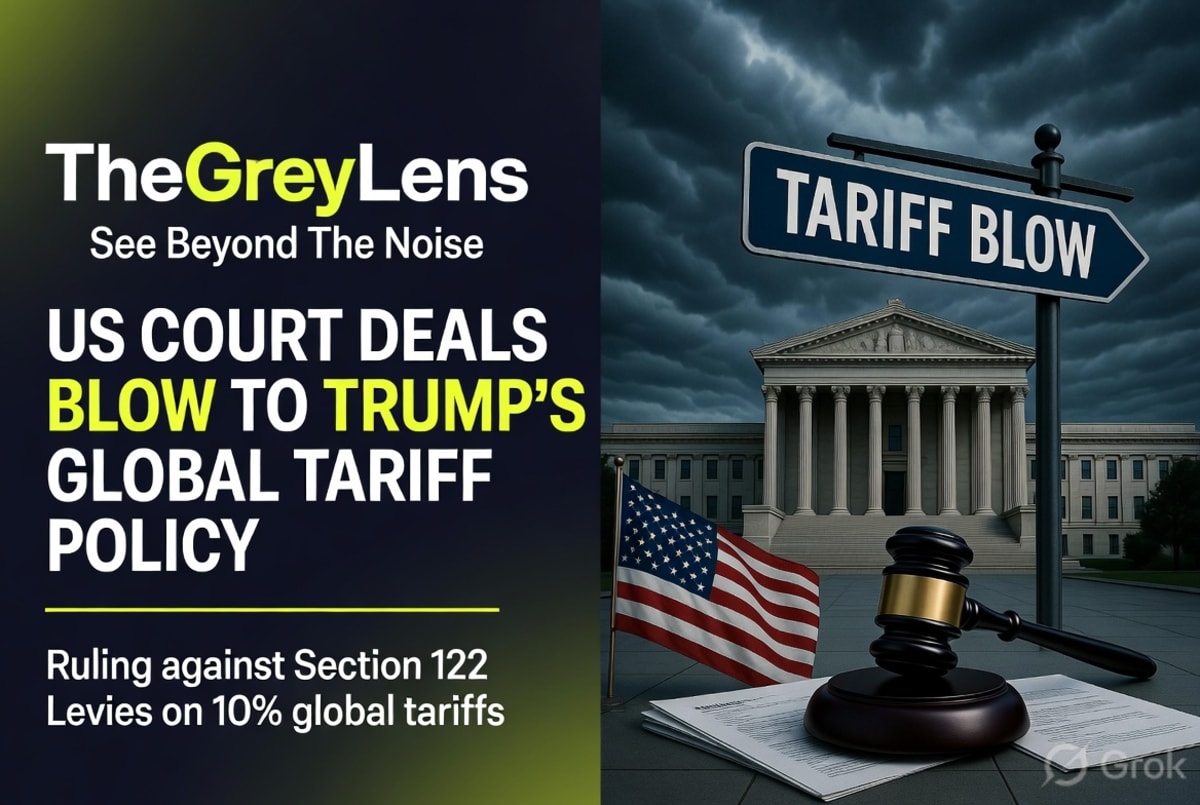
WASHINGTON D.C. – A federal court has delivered a significant blow to the Trump administration's trade policies, ruling that the 10% global tariffs enacted under Section 122 of the Trade Act of 1974 were unlawful. The decision by a split three-judge panel of the U.S. Court of International Trade (CIT) sided with plaintiffs, including small businesses and the state of Washington, who challenged the legality of the levies. This ruling represents a notable setback for President Trump's broader strategy of imposing widespread tariffs, especially following a previous Supreme Court decision that invalidated other import taxes.
The court's decision, issued on Thursday, found that the administration had not adequately justified the tariffs based on "large and serious" balance-of-payments deficits, as contemplated by Congress in the 1974 Trade Act. The CIT stated that the temporary tariffs were "unlawful" and harmful to businesses. This legal challenge was initiated after President Trump cited the nation's trade deficit as justification for the tariffs, which took effect on February 24, 2026.
Limited Immediate Impact on Most Businesses
Despite the court's strong stance against the tariffs, the practical implications for the majority of U.S. businesses may be limited in the short term. The Section 122 tariffs were already scheduled to expire in late July 2026, and the Trump administration has indicated plans to replace them with new import taxes levied under different legal authorities. Furthermore, the court's ruling specifically grants relief to the named plaintiffs in the lawsuit, leaving the collection of tariffs from other importers to continue unless further legal action is taken. Some experts suggest that the administration is likely to appeal the ruling.
This latest legal defeat for the administration's tariff agenda follows a February Supreme Court ruling that struck down earlier tariffs imposed under the International Emergency Economic Powers Act (IEEPA). The U.S. government is reportedly facing an estimated $175 billion in tariff refunds owed to importers due to that previous ruling, with a portal now established for claims.
Broader Trade Policy Investigations Underway
While the Section 122 tariffs face judicial invalidation, the U.S. Trade Representative (USTR) is actively pursuing other avenues for imposing import duties. The USTR has launched two significant investigations under Section 301 of the Trade Act of 1974. These investigations focus on issues such as excess production capacity by other nations and the widespread use of forced labor by U.S. trading partners. Public hearings and consultations are currently underway for these probes, which are expected to lead to the imposition of new tariffs before the Section 122 tariffs officially expire. Unlike Section 122, Section 301 does not impose similar limitations on the duration or magnitude of tariffs, suggesting that future trade measures could be more far-reaching and long-lasting.
Legal and trade experts note that this latest court ruling could further constrain the White House's ability to unilaterally impose import levies. The strategy of using existing laws in novel ways has now faced two major legal setbacks, raising questions about the administration's approach to trade policy. While the Section 122 tariffs were a temporary measure, the ongoing Section 301 investigations signal a continued focus on using tariffs as a tool to address perceived trade imbalances and unfair practices.
The future trajectory of U.S. trade policy remains a key area to watch, particularly as the administration seeks to leverage other legislative tools to achieve its objectives. The interplay between judicial review, executive actions, and international trade dynamics will continue to shape the economic landscape. Stakeholders are advised to monitor developments related to the Section 301 investigations, which are poised to introduce new tariff measures in the coming months.