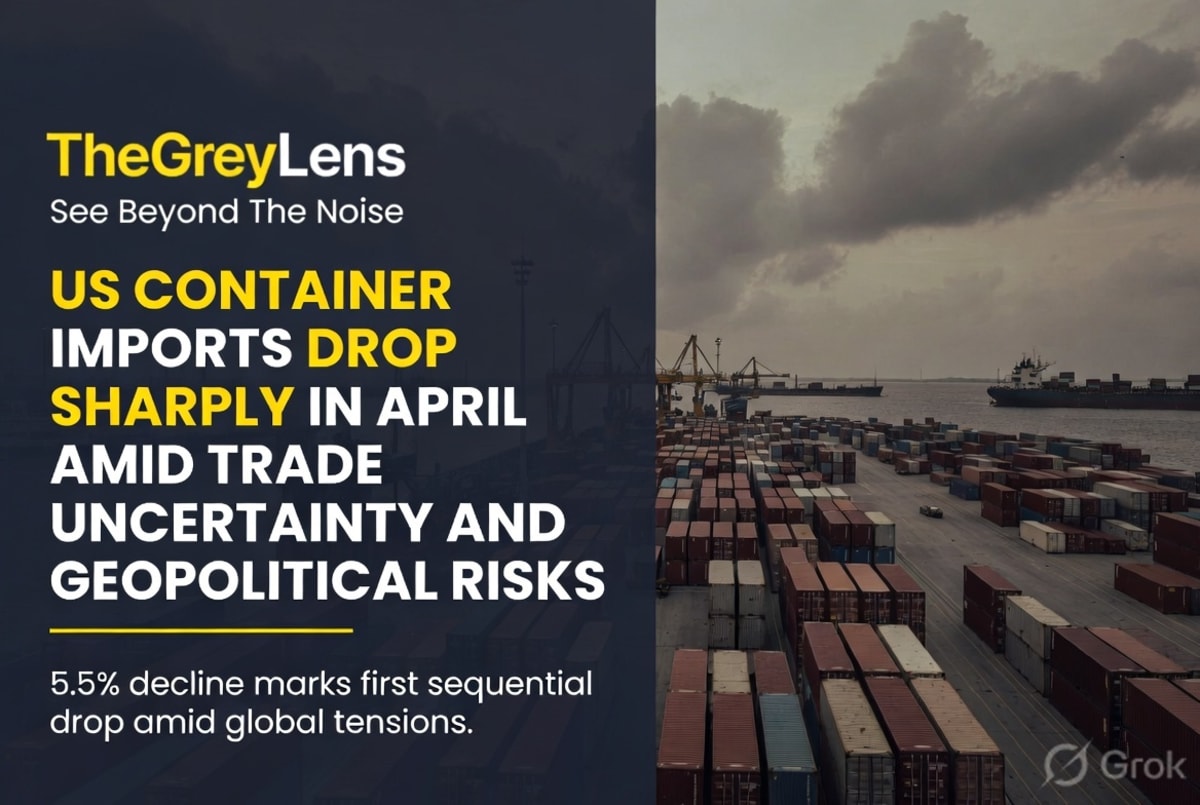
U.S. container imports saw a substantial decrease of 5.5% in April, signaling potential headwinds for the American economy as importers grapple with a complex interplay of trade policy uncertainty and heightened geopolitical risks. The figures, released by supply chain technology provider Descartes Systems Group, indicate a notable slowdown in the flow of goods into the United States.
Trade Policy Shifts and Geopolitical Tensions Impact Import Volumes
The decline in containerized import volumes is directly linked to U.S. President Donald Trump's evolving trade policies, which have created a climate of uncertainty for businesses. Furthermore, the closure of the Strait of Hormuz—a critical shipping corridor for global energy supplies—following U.S.-Israeli strikes on Iran has added another layer of complexity and risk to international trade routes. These factors combined have contributed to a slowdown in the movement of goods, with U.S. seaports handling 2,277,965 twenty-foot equivalent units (TEUs) last month. This figure represents a 3.2% decrease from March levels and marks the first sequential drop in import volumes for the month of April since 2022.
Despite the recent dip, Descartes noted that last month's container import volumes remain approximately 19% higher than pre-pandemic levels recorded in April 2019, suggesting a continued underlying resilience in demand. However, for the year 2026 to date, U.S. containerized imports are down 5%. Notably, imports originating from China experienced a more pronounced year-on-year decrease of 15.3% in April, reaching 680,778 TEUs.
Tariff Refunds and Persistent Cost Pressures
Importers are anticipated to receive a short-term boost to their cash flow as the U.S. Customs and Border Protection agency is scheduled to issue the first tariff refunds starting May 12. This development is a consequence of a recent U.S. trade court ruling that deemed certain temporary global tariffs unjustified. However, Descartes cautioned that policy uncertainty and persistent cost pressures are likely to remain significant challenges for businesses, particularly as "replacement tariffs remain in effect."
Economic Indicators and Future Outlook
The dip in import volumes serves as a key indicator of the U.S. economy's health, with rising volumes typically correlating with economic strength and falling volumes suggesting weakness. The latest jobs report indicated that employers added 115,000 new jobs in April, a figure that exceeded expectations and eased concerns about a cooling labor market. The unemployment rate remained stable at 4.3%. Average hourly earnings also saw a modest increase, aligning with the Federal Reserve's inflation targets. Despite these positive employment figures, the decline in container imports highlights the ongoing economic strain caused by trade policy shifts and international conflicts. The expiration of temporary tariffs in July and the ongoing legal challenges surrounding trade policy will be crucial factors to monitor in the coming months.