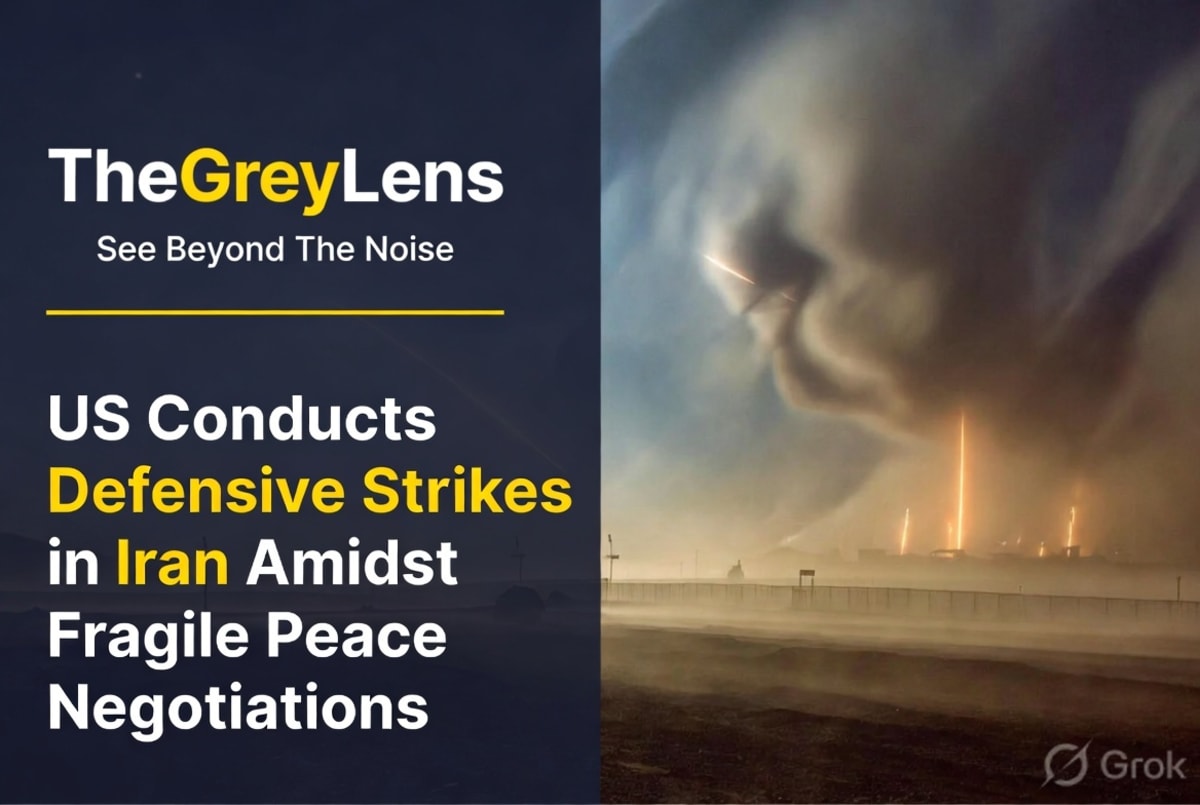
The United States military conducted defensive strikes against missile launch sites and mine-laying vessels in southern Iran on Tuesday, May 26, 2026. These actions were described by a U.S. military spokesperson as a response to Iranian actions, with Iranian media reporting explosions in the port city of Bandar Abbas. The strikes occurred amidst ongoing diplomatic efforts to negotiate a potential ceasefire in the protracted U.S.-Iran war, with Iranian negotiators traveling to Qatar for discussions. The U.S. military stated that the strikes were in \"self-defense,\" targeting sites deemed a threat to maritime navigation. Simultaneously, Iranian state media reported the shooting down of a U.S. Reaper drone that allegedly entered Iranian airspace. These conflicting accounts and actions have introduced significant volatility into the delicate peace negotiations. Despite the military engagements, top negotiators from Tehran have continued their discussions in Qatar, aiming to resolve points of contention in the ongoing conflict. Iran's Foreign Ministry spokesperson indicated that while progress has been made, a deal is not imminent. The situation has also impacted global markets, with oil prices rising over 3% following the U.S. military operations in Iran.
Escalating Tensions Amidst Peace Talks
The U.S. military stated that the strikes were in \"self-defense,\" targeting sites deemed a threat to maritime navigation. Simultaneously, Iranian state media reported the shooting down of a U.S. Reaper drone that allegedly entered Iranian airspace. These conflicting accounts and actions have introduced significant volatility into the delicate peace negotiations. Despite the military engagements, top negotiators from Tehran have continued their discussions in Qatar, aiming to resolve points of contention in the ongoing conflict. Iran's Foreign Ministry spokesperson indicated that while progress has been made, a deal is not imminent. The situation has also impacted global markets, with oil prices rising over 3% following the U.S. military operations in Iran.
Domestic Repercussions and Political Maneuvering
Domestically, the ongoing conflict and its potential resolution continue to be a significant focus for the Trump administration. President Trump has been actively engaged in discussions surrounding the war, including meetings with his Cabinet. He has also projected confidence in reaching a deal to end the war, with a focus on reopening the Strait of Hormuz and diminishing Iran's nuclear capabilities. However, concerns have been raised by some of his backers that any premature closure of the conflict could embolden Iran's hard-line leadership. The political landscape also saw a notable event as U.S. Senator John Cornyn became one of several Republicans to lose a primary election after falling out of favor with President Trump. This outcome underscores the president's significant influence within the Republican party and his capacity for retribution against dissenters. In other domestic news, authorities confirmed one death and nine unaccounted for following a chemical tank implosion at a pulp and paper mill in Washington state. The recovery efforts at the Nippon Dynawave Packaging Co. in Longview have been hampered by the presence of a dangerous liquid in the unstable tank.
Broader Geopolitical and Economic Ripples
The events in the Middle East are sending ripples across the global stage. The ongoing conflict and the U.S. military's actions in Iran have created an atmosphere of uncertainty that is affecting international markets. The Strait of Hormuz, a critical chokepoint for global oil supply, remains a focal point of tension, with both sides reporting on maritime activity and control. The U.S. Central Command has reported redirecting numerous commercial ships, while Iran's Islamic Revolutionary Guard Corps Navy has also reported on vessel passage. Beyond the immediate conflict, broader geopolitical considerations are at play, including efforts to normalize relations between Israel and several Arab nations as part of the U.S. negotiations. The international community is closely watching the developments, particularly as they relate to global energy security and the broader stability of the Middle East.
The coming days will be critical as the U.S. and Iran navigate the complexities of ongoing peace talks amidst heightened military activity. The outcome of these negotiations will not only determine the future of the U.S.-Iran war but also have significant implications for regional stability and the global economy. Observers will be watching for any further military escalations or breakthroughs in the diplomatic channels.