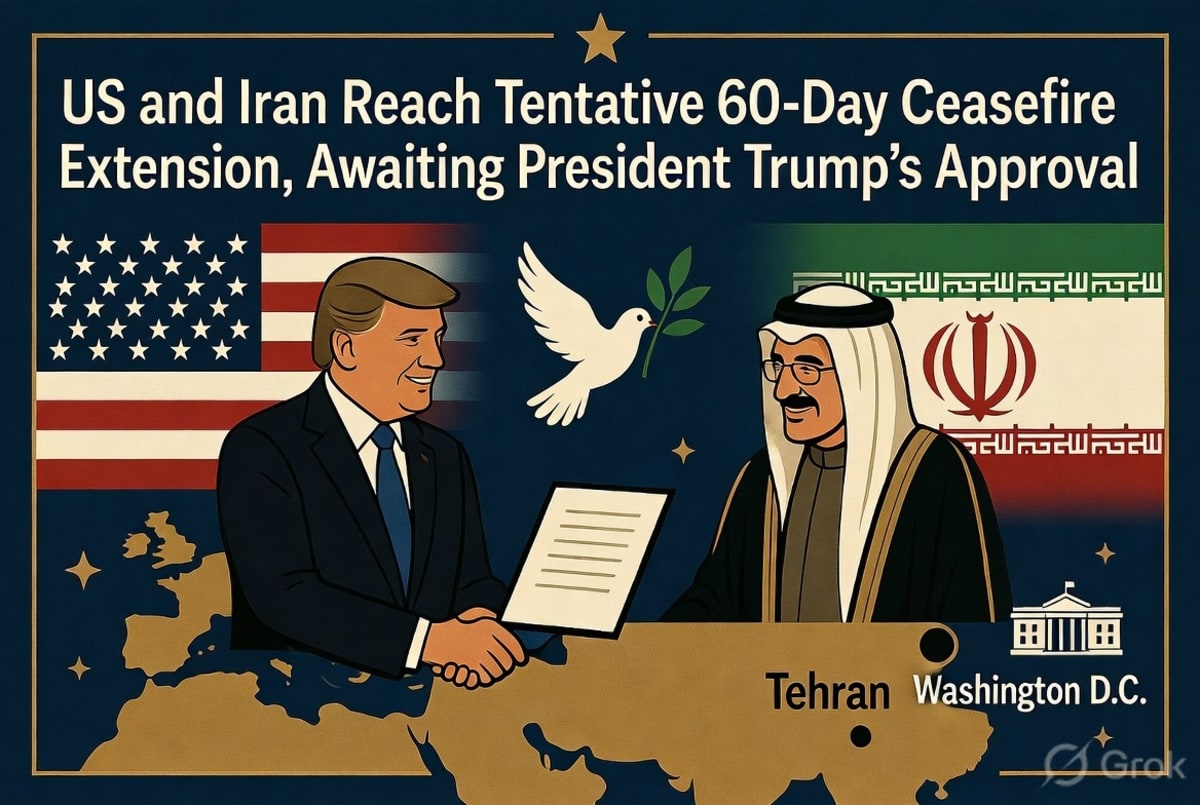
In a significant diplomatic development, the United States and Iran have reached a tentative agreement to extend their existing ceasefire for an additional 60 days. This breakthrough, if finalized, could signal a potential de-escalation in the ongoing conflict that has gripped the region for three months. The agreement also paves the way for further discussions concerning Iran's controversial nuclear program.
Ceasefire Extension Hinges on Presidential Approval
The proposed extension comes after a period of intense negotiations and following recent exchanges of fire between the two nations, which had raised concerns about the stability of peace efforts and the critical Strait of Hormuz. While a person familiar with the matter confirmed the preliminary deal to Axios, the ultimate decision rests with President Donald Trump, who has been briefed on the proposal but has not yet given his final assent. According to a U.S. official, the President has requested a few days to consider the terms before making a definitive commitment.
Treasury Secretary Scott Bessent addressed the impending decision, stating that while progress has been made, the core demands from the U.S. remain in place. These "three red lines," as outlined by the administration, include the reopening of the Strait of Hormuz, Iran's surrender of highly enriched uranium, and a commitment to ending its pursuit of nuclear weapons. The market has reacted positively to the news, with stocks holding at record highs and oil prices falling on the optimism surrounding a potential resolution.
Strait of Hormuz Remains a Key Point of Contention
The strategic Strait of Hormuz, a vital chokepoint for global oil shipments, has been a central focus of the tensions between the U.S. and Iran. Recent weeks have seen clashes in the waterway, including the Pentagon reporting that U.S. jet fighters destroyed Iranian speedboats accused of attempting to block vessels. The U.S. maintains that international vessels are guaranteed the right of transit passage, a stance that Iran has contested, asserting its territorial waters authority.
Despite the apparent progress in ceasefire negotiations, Iran has not yet publicly confirmed its willingness to restrict its nuclear program. U.S. and Iranian officials have indicated that the current discussions do not necessarily extend to Iran's ballistic missile program or its support for proxy groups. The details of the memorandum of understanding are still being finalized, with the U.S. side verifying many of the reported terms, while Iran has acknowledged that a deal is nearing completion.
Economic Implications and Market Reactions
The prospect of a renewed ceasefire and de-escalation in the Strait of Hormuz has had a noticeable impact on global markets. Stock markets, particularly in the U.S., have seen a surge, with indices like the S&P 500 and Nasdaq reaching record highs. This rally is attributed, in part, to the optimism surrounding the tentative U.S.-Iran deal, which has eased concerns about potential disruptions to oil supplies. Oil prices have subsequently fallen as traders react to the improved outlook.
Beyond the immediate geopolitical implications, the U.S. Treasury Department has been actively involved in economic discussions. Secretary Bessent's participation in the Reagan National Economic Forum and his promotion of the "Trump Accounts Tour" highlight the administration's focus on economic security and the "America First" agenda. The Treasury also recently announced new immigration fee requirements, effective May 29, 2026, which will impact asylum applications and other related forms.
Looking ahead, the focus remains squarely on President Trump's decision regarding the ceasefire extension. Lawmakers are awaiting his final word, with Vice President JD Vance previously stating that while progress has been made, the president's ultimate approval was uncertain. The outcome of these negotiations will not only shape the geopolitical landscape of the Middle East but also continue to influence global economic stability and market sentiment.