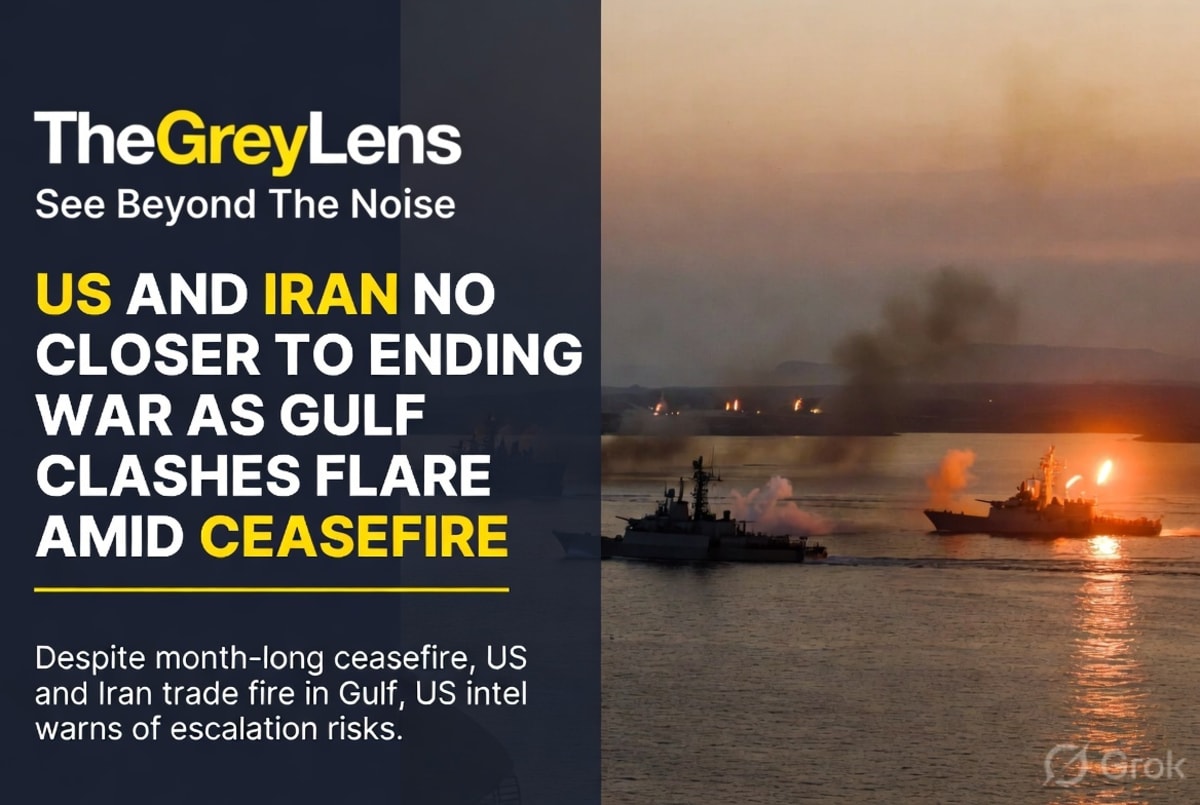
The United States and Iran remain distant from an end to their protracted war, as recent days have seen significant flare-ups in the Gulf, even amidst a fragile ceasefire. The clashes, particularly in and around the Strait of Hormuz, have cast doubt on diplomatic efforts to achieve a negotiated settlement between the two nations. Adding to the complexity, a confidential CIA analysis indicates that Iran possesses the resilience to withstand a U.S. naval blockade for at least three to four months before facing severe economic hardship, according to sources familiar with the document. This assessment raises questions about the leverage President Donald Trump holds over Tehran in a conflict that has proven increasingly unpopular with both voters and U.S. allies.
Tense Standoffs Test Ceasefire
Sporadic clashes have continued between Iranian forces and U.S. vessels in the critical Strait of Hormuz, as reported by Iran's semi-official Fars news agency. While an Iranian military source suggested a calming of the situation, warnings of potential further clashes persist. The U.S. military stated that it had struck two Iran-linked vessels attempting to enter an Iranian port, forcing them to retreat. These incidents mark some of the most significant escalations in the region since the ceasefire commenced a month ago. The United Arab Emirates also came under renewed attack on Friday, further heightening regional tensions.
Diplomatic Maneuvers and Economic Pressures
Washington has been awaiting Tehran's response to a U.S. proposal aimed at formally ending the war, a precursor to discussions on more contentious issues, including Iran's nuclear program. Secretary of State Marco Rubio expressed optimism on Friday that a response was imminent, though an Iranian foreign ministry spokesperson indicated that Tehran was still deliberating. In parallel with diplomatic overtures, the U.S. has intensified sanctions against Iran. Days before President Trump's scheduled meeting with Chinese President Xi Jinping, the U.S. Treasury announced sanctions targeting ten individuals and companies, some based in China and Hong Kong, for allegedly aiding Iran's military in acquiring materials for its drones. The Treasury Department has signaled its readiness to impose secondary sanctions on foreign financial institutions, including those connected to China's independent oil refineries, if they support illicit Iranian commerce.
Geopolitical Implications and Future Outlook
The ongoing conflict has had a significant impact on global energy markets, with Tehran having largely restricted non-Iranian shipping through the Strait of Hormuz since the war began. Prior to the conflict, the strait was a vital artery for one-fifth of the world's oil supply. The U.S. blockade on Iranian vessels, imposed last month, has added another layer of pressure. However, the CIA assessment suggesting Iran's ability to endure the blockade for several months complicates the strategic calculus for the Trump administration. As the U.S. and Iran appear no closer to resolving their conflict, the coming weeks will be critical in determining whether the current tenuous ceasefire can hold or if further escalation is inevitable. The geopolitical implications, including potential impacts on global trade and energy security, remain a significant concern.