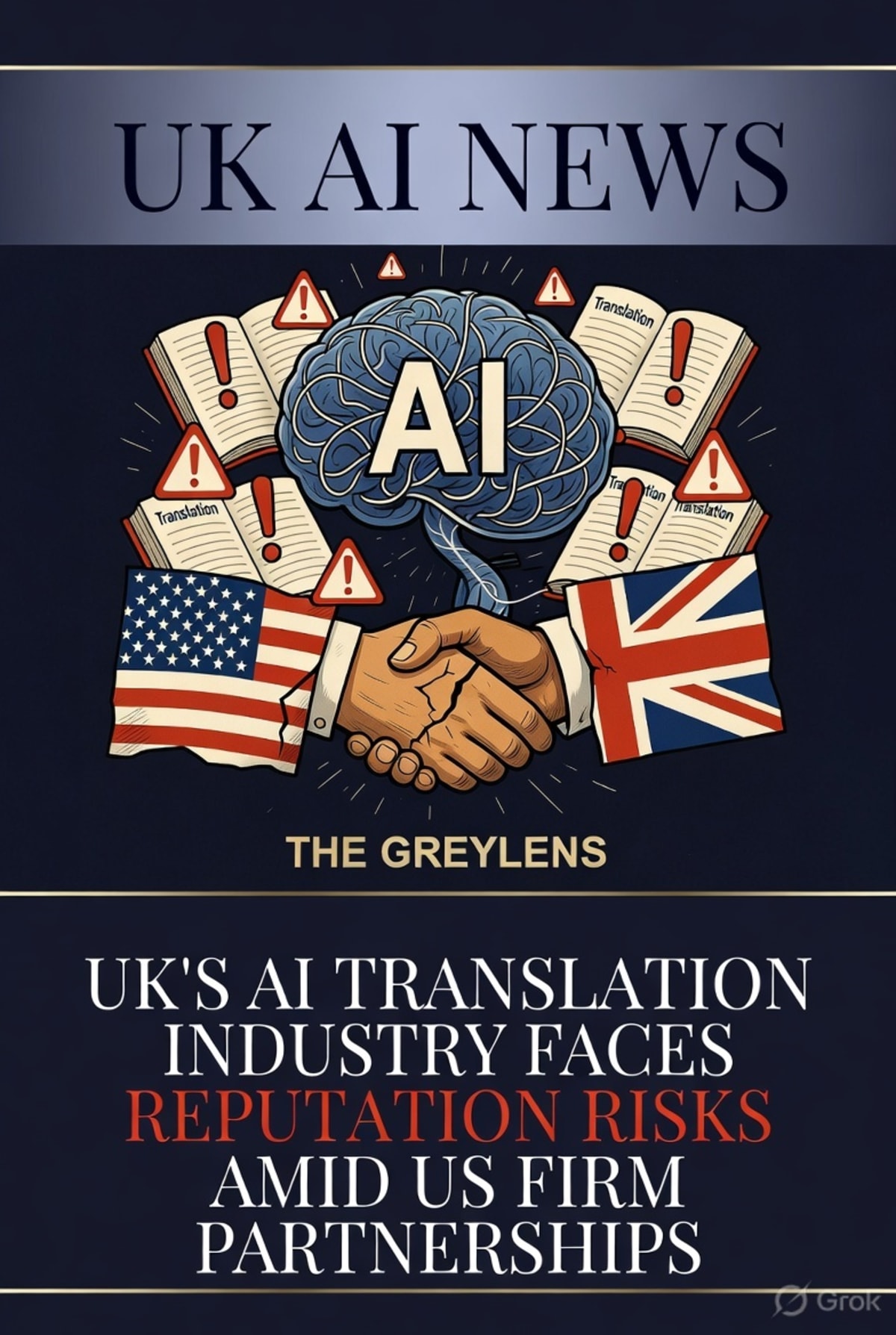
The UK's burgeoning AI translation industry is facing significant reputational challenges, primarily stemming from partnerships between European firms and major US technology companies. Concerns are mounting that these collaborations could undermine the continent's competitive edge and foster a dependency on Silicon Valley's digital infrastructure, according to industry observers. This situation risks eroding trust among European businesses and governments increasingly focused on digital sovereignty.
European AI Translation's Dependence on US Infrastructure
A key point of contention is the decision by leading European AI translation startup DeepL to partner with Amazon Web Services (AWS). While DeepL, headquartered in Cologne, Germany, is renowned for its high-quality machine translation that often surpasses competitors like Google Translate, its move to utilize AWS infrastructure has raised alarms. DeepL has been a significant success story in the European AI landscape, reportedly achieving revenues of $185.2 million last year and serving entities ranging from governments and courts to half of the Fortune 500 companies. However, the company's announcement that it would "no longer process data exclusively on our own servers" and was entering into a partnership with AWS has prompted criticism. Critics argue that this reliance on US cloud providers intensifies Silicon Valley's dominance over essential digital infrastructure. This is particularly sensitive in the current geopolitical climate, with concerns over the independence and data security practices of US tech firms.
Concerns Over Digital Sovereignty and Competitive Edge
Industry figures, including Jörg Weishaupt, CEO of Portuguese software business Malogica Group, and Marco Trombetti, co-founder and CEO of Translated, a Rome-based competitor, have voiced their apprehension. Weishaupt expressed his displeasure, stating that such partnerships boost "Silicon Valley's monopoly over digital infrastructure." He further noted a significant movement towards "sovereignty in Europe at the moment," driven by geopolitical tensions, which makes companies hesitant about American tech lock-ins. Trombetti echoed these sentiments, emphasizing that "Europe needs to be absolutely independent in terms of infrastructure." He likened digital infrastructure to the "road network of today" and warned against paying "a toll for every transaction," which could stifle innovation and growth. There is a palpable fear that European AI translation companies, which have thrived due to Europe's inherently multilingual market, could lose their unique advantage by becoming overly reliant on US-controlled cloud services. This dependence could impact everything from pricing and access to technical standards, and ultimately, the control over the most valuable layers of AI development.
Navigating the Future of AI Translation in Europe
The debate highlights a broader challenge for Europe's AI sector: balancing the need for scalable infrastructure with the imperative of maintaining digital sovereignty. While DeepL has offered a data residency option to reassure customers that their data will not leave Europe, some question the long-term reliability of such assurances. The strategic risk lies in not having credible alternatives to US-controlled compute and cloud infrastructure. As AI translation technologies advance, particularly with the rise of real-time voice and sensitive document translation, the control over the underlying infrastructure becomes increasingly critical. The situation underscores the complex interplay between technological advancement, economic competitiveness, and national security in the rapidly evolving field of artificial intelligence.
What happens next will likely involve increased calls for European investment in indigenous cloud infrastructure and a more robust debate about the long-term implications of partnerships with US tech giants. The ability of European AI firms to maintain their innovative edge while safeguarding their digital independence will be a key determinant of the region's future in the global AI landscape.