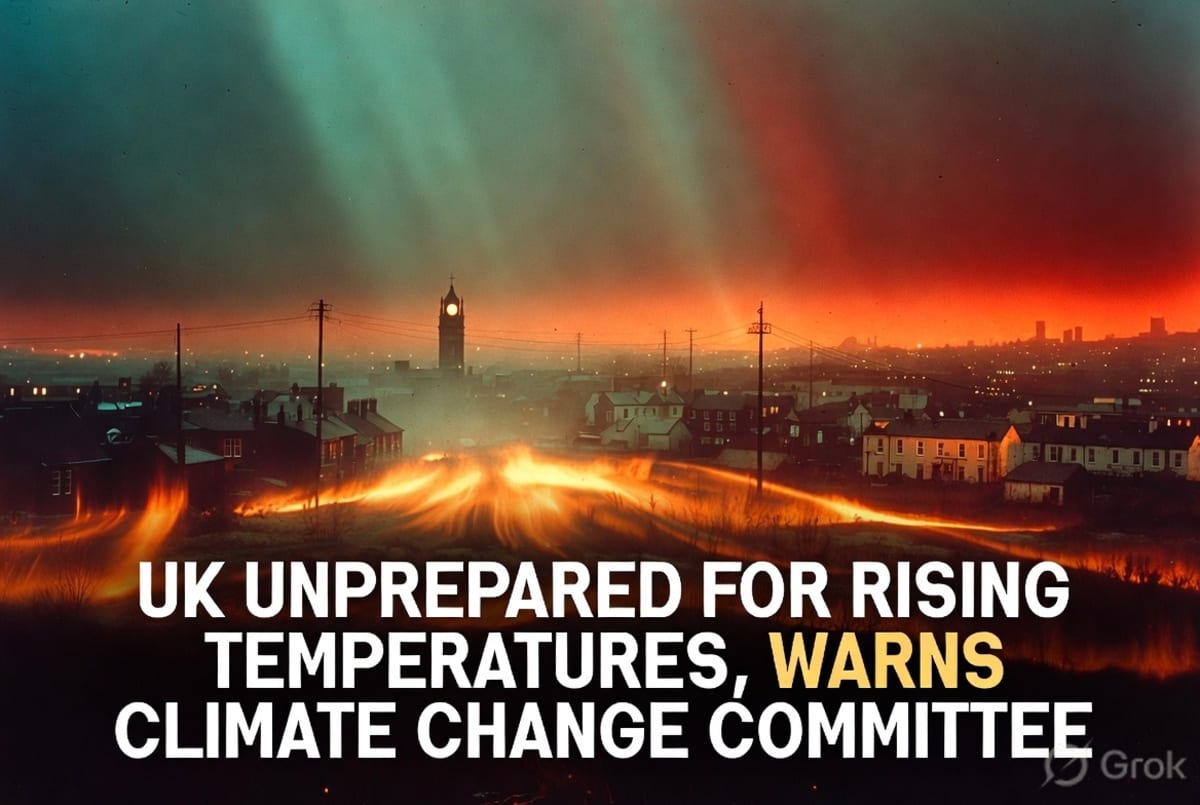
The United Kingdom is ill-equipped to handle the escalating reality of climate change, particularly rising temperatures, according to a stark new report released by the Climate Change Committee (CCC) on Friday, May 22, 2026. The committee's findings assert that Britain's infrastructure and societal norms are fundamentally misaligned with the current and future climate, leading to the conclusion that the nation is "built for a climate that no longer exists."
Urgent Need for Adaptation Measures
The report underscores the growing pressure that hotter summers will exert on the UK's infrastructure, healthcare systems, and working environments. A key recommendation put forth by the CCC is the introduction of a legal maximum working temperature. Currently, employers are mandated to maintain a "reasonable" workplace temperature, but no specific upper limit is legally defined, despite the increasing frequency and intensity of heatwaves. The committee argues that this lack of a defined limit leaves workers vulnerable to the health risks associated with overheating.
Furthermore, the CCC calls for the wider implementation of cooling measures in critical settings such as hospitals, care homes, and schools. These environments, the report warns, are particularly susceptible to the adverse health and safety impacts of rising temperatures, which could be exacerbated by more frequent and severe heat events. The committee's assessment points to a significant deficiency in the UK's climate adaptation planning, suggesting that the government's preparedness for future climate conditions is insufficient. This necessitates more immediate action to bolster resilience across the nation's buildings, infrastructure, and public services.
Economic and Societal Impacts of Climate Inaction
The CCC's findings contribute to an ongoing and intensifying national conversation about the UK's response to climate change and its multifaceted impacts. The report's critique of the pace of adaptation planning suggests that a more proactive and robust strategy is required to mitigate the risks posed by a warming planet. The economic implications of failing to adapt are considerable, with potential for disruption to various sectors, increased strain on public services, and a decline in quality of life for citizens. The committee's assessment highlights that the UK's current infrastructure, from buildings to transportation networks, was largely designed for a historical climate and may struggle to withstand the more extreme weather patterns now becoming the norm.
The report emphasizes that with heatwaves becoming more frequent and intense, the UK's vulnerability to the impacts of climate change is a growing concern. The committee's direct criticism of the government's adaptation efforts suggests a need for a significant shift in policy and investment priorities. This includes not only physical infrastructure but also public health strategies and emergency preparedness protocols. The CCC's call for a legal maximum working temperature, if adopted, would represent a significant regulatory change aimed at protecting the workforce from the dangers of extreme heat.
Looking Ahead: Policy and Investment Imperatives
The CCC's report serves as a critical alert, urging policymakers and stakeholders to prioritize climate adaptation alongside mitigation efforts. The committee's recommendations are expected to fuel further debate and potentially influence future government policy and investment decisions. As the UK navigates the challenges of a changing climate, the imperative for robust and forward-thinking adaptation strategies becomes increasingly evident. The report's stark warning about being "built for a climate that no longer exists" signals a critical juncture, demanding a comprehensive re-evaluation of how the nation prepares for and responds to the undeniable realities of global warming.