Widespread Strikes Threaten European Travel
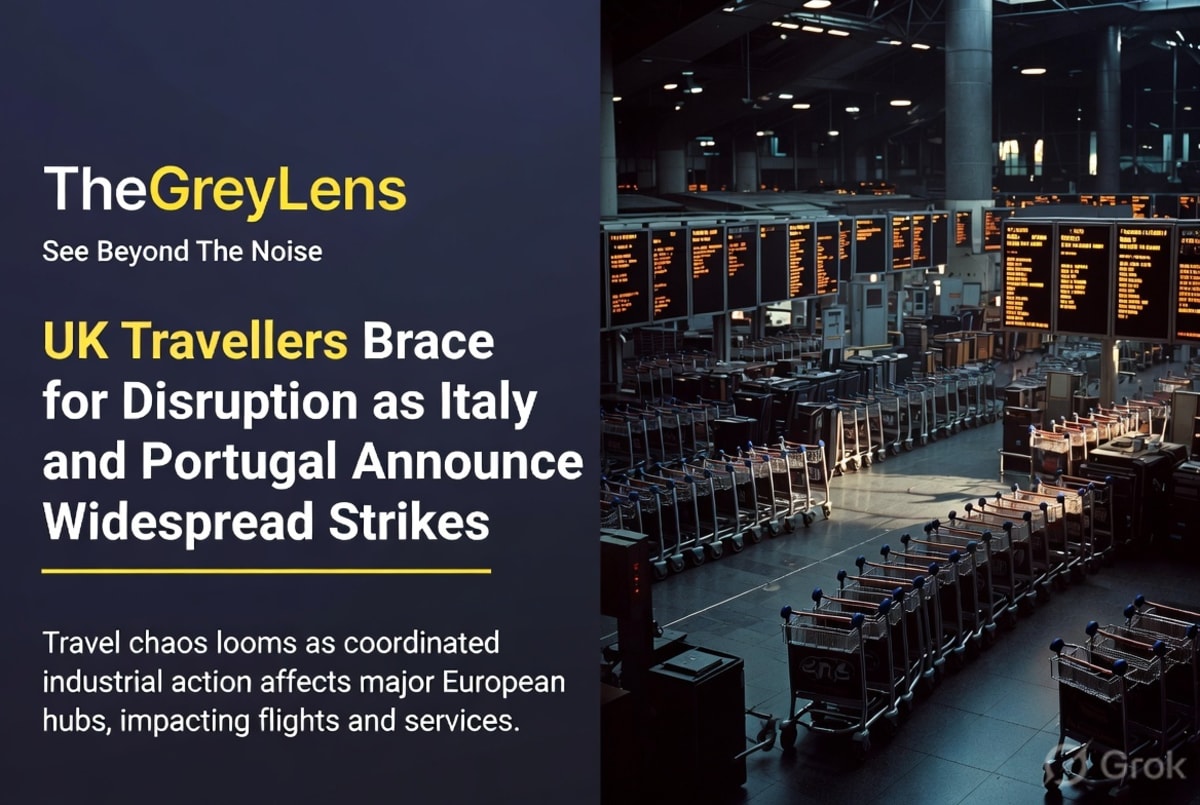
Thousands of UK travellers planning trips to Italy and Portugal are facing potential chaos as both countries are set to experience extensive transport strikes on Friday, May 29, 2026. The industrial action, involving various transport unions, is anticipated to cause significant cancellations and delays across rail networks, airports, and local public transport systems. Airlines such as EasyJet have already issued warnings to passengers about potential flight disturbances, while TAP and SATA are offering complimentary rebooking options for affected travellers.
Impact on Italian and Portuguese Transport Networks
The 24-hour strike in Italy, commencing at 9 pm on Thursday, May 28, and concluding at 9 pm on Friday, May 29, will affect a broad spectrum of transport services. Major rail operators including Trenitalia, Trenord, and Italo are participating, leading to fears of severe disruptions on key routes connecting major cities like Rome, Milan, Venice, Florence, Bologna, and Naples. While the Italian Ministry of Transport has outlined 'guaranteed' services during peak commuter hours, significant impacts are still expected outside these protected windows. Italy's Civil Aviation Authority (ENAC) has confirmed that flights are protected during specific operating periods (7 am-10 am and 6 pm-9 pm), but passengers are strongly advised to contact their airlines directly for the most up-to-date information.
In Portugal, similar industrial action by cabin crew and ground personnel is set to cause flight cancellations and considerable upheaval. While specific details on the duration and extent of the Portuguese strike are still emerging, EasyJet has alerted passengers to potential issues, and TAP and SATA are facilitating free rebooking for those affected. Travel experts also caution that these strikes could trigger broader disruptions across European airline networks due to knock-on effects on aircraft scheduling and increased demand for rebookings.
UK Travel and Cost of Living Measures
Beyond the immediate concerns of European strikes, UK travellers and residents are also navigating a landscape of evolving travel costs and government support measures. Recent government announcements include a consultation on suspending tariffs for over 100 everyday essentials, aiming to lower costs for consumers. Furthermore, Chancellor Rachel Reeves has introduced a 'Great British Summer Savings' scheme that includes a temporary reduction in VAT for attractions and children's meals in restaurants, alongside free bus travel for children aged 5-15 throughout August in England. Mileage rates for those using their own vehicles for work have also been uprated, offering some relief to motorists.
However, the broader economic climate continues to present challenges. Concerns about political instability and potential rises in inflation have contributed to a weakening of the pound against the euro and dollar, potentially making overseas travel more expensive for Britons. This, coupled with ongoing debates about jet fuel costs affecting airline pricing, means that budget-conscious travellers may find their options increasingly constrained. Despite these factors, there is also a notable trend of Britons opting for domestic 'staycations' in 2026, with many citing the cost of living and fears of travel disruption abroad as key reasons for choosing to holiday within the UK.
The coming days will be crucial for travellers to stay informed about specific flight and train status updates. Passengers are urged to monitor airline and rail operator communications closely and to have contingency plans in place to mitigate potential disruptions. The ongoing industrial actions in Italy and Portugal, combined with the general economic pressures, underscore the need for diligent travel planning in the current climate.