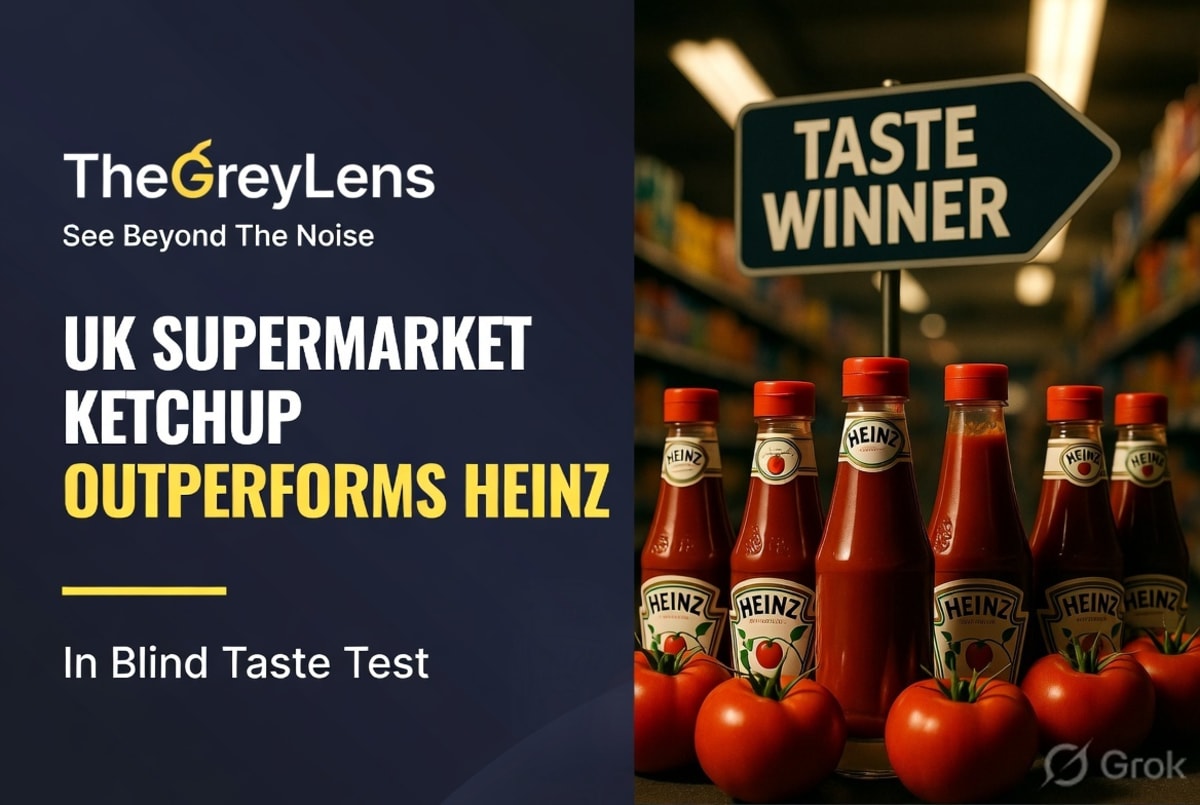
A blind taste test conducted by the consumer group Which? has revealed that Asda's Classic Tomato Ketchup has been named the best in the UK for 2026, offering a quality comparable to the long-standing market leader, Heinz, but at a fraction of the cost. The rigorous testing involved a panel of 72 individuals who assessed eight different brands of ketchup based on their taste, smell, texture, and appearance.
Taste Test Results and Price Comparison
Asda's Classic Tomato Ketchup achieved a score of 77% in the taste test. Panelists noted its well-balanced tanginess, sweetness, and strength of flavour. Notably, the Asda product contained less sugar and salt per 100g compared to the Heinz version. This finding is particularly significant given the ongoing cost-of-living pressures faced by UK consumers. Asda's ketchup is priced at £1.39 for a 970g bottle, while Heinz's offering costs £3 for a 460g bottle, making the Asda option considerably more economical.
Heinz Tomato Ketchup also performed well in the taste test, scoring equally with Asda. Reviewers highlighted its good texture and appealing appearance, alongside its familiar taste. However, the higher salt and sugar content in the Heinz product was a point of comparison against other tested brands. The study underscores a growing trend where supermarket own-brand products are increasingly meeting or exceeding the quality expectations previously associated with premium or established brands.
Broader Culinary Trends and Economic Factors
The revelation comes amidst a backdrop of evolving consumer behaviour in the UK food industry. Reports for 2026 indicate a strong consumer focus on value and affordability, with many looking for ways to manage rising food bills. Analysis suggests that UK food prices could be up to 50% higher by November 2026 compared to mid-2021, driven by factors such as climate change, global supply disruptions, and volatile energy markets. In this economic climate, the performance of supermarket own-brands in taste tests is a significant indicator of consumer priorities.
Furthermore, culinary trends for 2026 highlight a blend of nostalgia and a demand for functional, nutritious foods. While consumers seek comfort and familiarity, they are also increasingly health-conscious, examining ingredients and nutritional content. The preference for well-balanced flavours and carefully considered ingredients, as noted in the ketchup test, aligns with these broader culinary shifts. The economic pressures are also amplifying trends like flexitarianism, as consumers opt for more cost-effective protein sources.
The Future of Condiments and Consumer Choice
This consumer-driven preference for value-for-money without compromising on taste is likely to influence product development and marketing strategies across the food industry. Asda's success in this blind taste test suggests that consumers are becoming more discerning and less swayed by brand name alone, actively seeking out quality products that offer better value. The ongoing competition between major supermarkets and established brands will likely intensify, with more emphasis placed on taste, quality, and price point. The findings from Which? provide a clear indication that even staple condiments like tomato ketchup are subject to rigorous consumer evaluation, with supermarket own-brands emerging as strong contenders in the UK market for 2026.