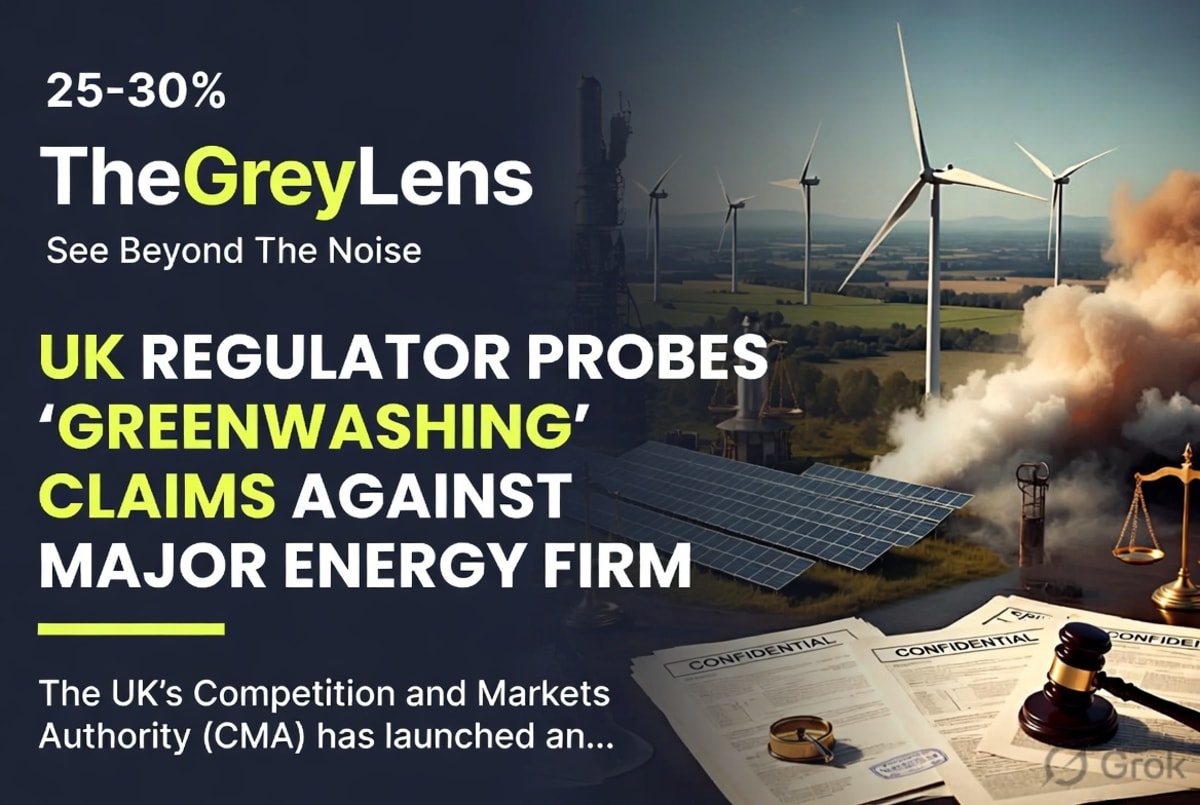
The UK's primary competition watchdog, the Competition and Markets Authority (CMA), has initiated a formal investigation into Ecotricity, a prominent player in the UK's renewable energy sector. The investigation centres on claims that the company may have engaged in "greenwashing" through its marketing and advertising of its green energy products. This move by the CMA signals a heightened focus on environmental marketing practices within the energy industry, an area that has seen significant growth and increasing consumer interest.
The CMA's probe will scrutinise whether Ecotricity's public statements and promotional materials accurately reflect the environmental credentials of its energy offerings. Specifically, the investigation will examine whether the company has made misleading claims about the proportion of its energy derived from renewable sources or the overall environmental benefits of its tariffs. This comes at a time when consumers are increasingly seeking to align their energy consumption with environmental values, making accurate and transparent marketing crucial.
Scrutiny on Green Claims Intensifies
The investigation into Ecotricity is part of a broader effort by the CMA to ensure that businesses are not misleading consumers about the environmental benefits of their products and services. In recent years, the market for 'green' goods and services has expanded rapidly, leading to a rise in what is often termed "greenwashing" – the practice of making unsubstantiated or exaggerated environmental claims. The CMA has previously issued guidance on environmental claims, emphasizing the need for such claims to be accurate, clear, and capable of being substantiated. This latest investigation suggests the authority is now moving from guidance to enforcement, particularly in sectors where environmental impact is a key purchasing decision.
Sources close to the CMA indicated that the decision to investigate Ecotricity was prompted by a significant number of consumer complaints and concerns raised by environmental groups. While the specific details of the allegations remain confidential pending the outcome of the investigation, the focus is understood to be on the company's marketing of its electricity tariffs, which are often promoted as being 100% renewable. The CMA will be examining the supply chain and the sourcing of energy to determine if these claims hold up under scrutiny. This includes looking at whether all electricity supplied under these tariffs is genuinely generated from renewable sources and whether any offsets or other mechanisms used are robust and transparent.
Ecotricity, founded by Dale Vince, has long positioned itself as a pioneer in the green energy movement in the UK. The company champions the use of wind and solar power to generate electricity and has been a vocal advocate for a faster transition to a low-carbon economy. Its marketing has consistently highlighted its commitment to renewable energy and its efforts to combat climate change. However, the CMA's investigation will seek to verify the accuracy of these widely disseminated claims. The company has stated it will cooperate fully with the CMA's investigation and is confident that its marketing practices are transparent and compliant with regulations.
Broader Implications for the UK Energy Market
This investigation carries significant implications for the wider UK energy market, which is undergoing a substantial transformation towards decarbonisation. Numerous energy providers are actively marketing renewable tariffs to consumers, and the integrity of these claims is paramount for maintaining consumer trust. If the CMA finds evidence of greenwashing, it could lead to stricter regulatory oversight, increased compliance costs for energy companies, and potentially a re-evaluation of how renewable energy is marketed and certified in the UK. The outcome could also influence consumer behaviour and investment decisions within the sector.
Experts in environmental law and consumer protection have noted that such investigations are a necessary step in ensuring a level playing field for businesses genuinely committed to sustainability. "Consumers are increasingly sophisticated and want to make informed choices," stated Dr. Eleanor Vance, a senior research fellow at the Environmental Policy Institute. "When companies make environmental claims, they must be able to back them up with solid evidence. A lack of transparency can erode public trust not only in individual companies but in the entire green energy sector."
The CMA has a range of enforcement powers at its disposal, including the ability to require companies to change their marketing practices, issue public apologies, and in some cases, impose significant fines. The authority can also seek undertakings from companies to prevent future breaches of consumer law. The duration of such investigations can vary, but the CMA typically aims to conclude its inquiries within a reasonable timeframe, often several months to over a year, depending on the complexity of the case.
For Ecotricity, the investigation represents a critical juncture. The company's brand is built on its strong environmental credentials, and any finding of misleading marketing could have a substantial impact on its reputation and customer loyalty. The company has a history of challenging established norms within the energy sector, and its response to this investigation will be closely watched. Reports suggest that the CMA will be examining the company's power purchase agreements, its investment in new renewable generation capacity, and its use of renewable energy certificates (RECs) to substantiate its claims.
The Path Forward for Green Marketing Standards
The CMA's action against Ecotricity serves as a clear signal that the era of vague or unsubstantiated environmental claims is drawing to a close. As the UK strives to meet its ambitious net-zero targets, the role of businesses in promoting genuine sustainability becomes increasingly important. The investigation will likely lead to a more rigorous examination of environmental marketing across the energy sector and potentially other industries as well. Consumers can expect greater clarity and accountability from companies making green claims in the future.
Looking ahead, the CMA is expected to continue its work in monitoring and enforcing environmental marketing standards. This could involve further investigations, updated guidance for businesses, and increased collaboration with other regulatory bodies and consumer advocacy groups. The ultimate goal is to foster a market where genuine environmental efforts are rewarded and where consumers can confidently choose products and services that align with their values. The outcome of the Ecotricity investigation will undoubtedly shape the landscape of green marketing in the UK for years to come, setting a precedent for how environmental claims are made and verified in a rapidly evolving market. The company has committed to providing all necessary information to the CMA and is reportedly reviewing its marketing materials in light of the probe. The investigation is ongoing, and further updates are anticipated as the CMA progresses with its review.