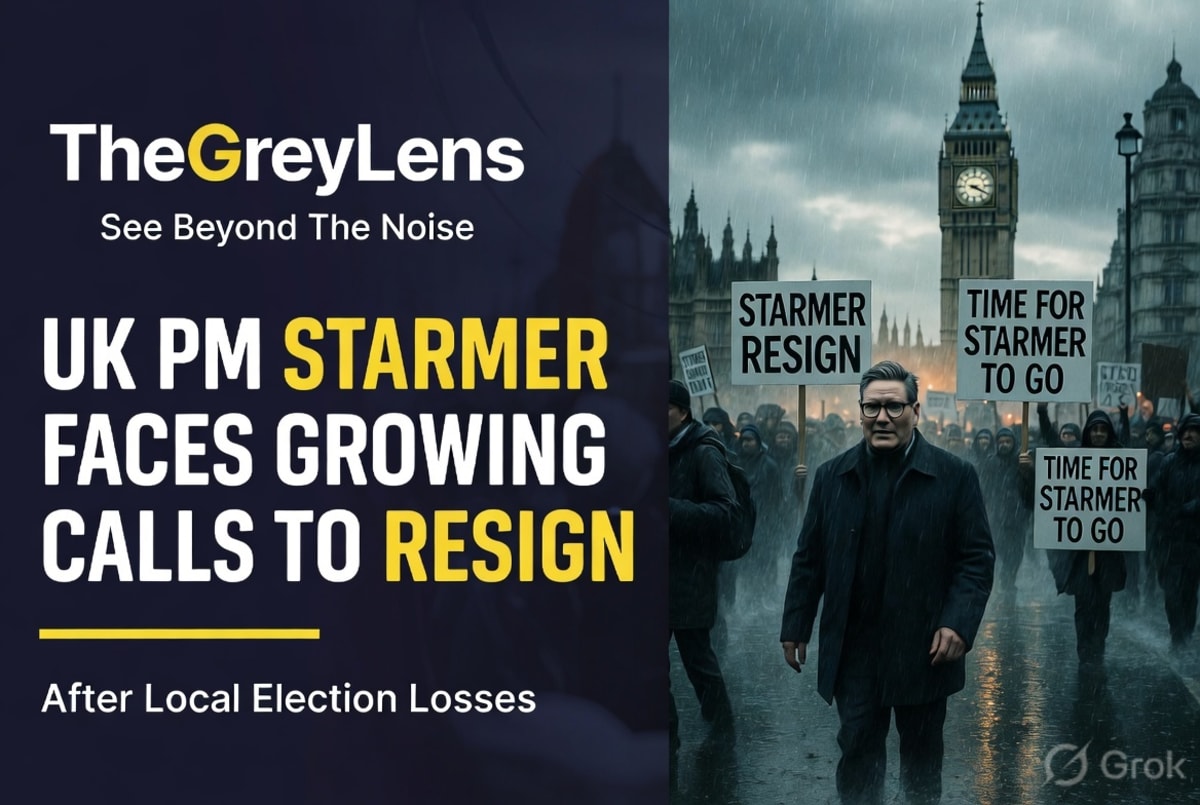
Prime Minister Keir Starmer is facing mounting pressure to step down after the Labour Party suffered significant defeats in recent local and regional elections. The calls for his resignation have escalated, with several senior cabinet ministers reportedly urging him to consider setting out a timeline for his departure. Among those reportedly expressing this sentiment are Shabana Mahmood, the Interior Minister, and Yvette Cooper, the Foreign Secretary.
The pressure intensified following a disastrous showing in local elections across England, where Labour lost nearly 1,500 council seats and control of around 40 local councils, including traditional strongholds. This electoral setback has led to a significant number of Labour Members of Parliament publicly demanding Starmer's resignation or a clear plan for his exit. Reports indicate that over 70 Labour MPs have joined the chorus of dissent.
Adding to the internal turmoil, four government aides have resigned from their positions, citing a loss of confidence in Starmer's leadership. Joe Morris, a parliamentary private secretary to Health Secretary Wes Streeting, stated that it is \"now clear that the prime minister no longer has the trust or confidence of the public to lead this change.\" Similarly, Tom Rutland, an aide to Environment Secretary Emma Reynolds, expressed that Starmer has \"lost authority\" within the parliamentary Labour Party and the country, and \"will not be able to regain it.\" Melanie Ward, an assistant to Deputy Prime Minister David Lammy, and Naushabah Khan, a Cabinet Office aide, have also resigned, echoing the calls for \"new leadership.\"
In an attempt to quell the discontent, Starmer delivered a speech promising sweeping changes and vowing to \"prove doubters wrong.\" He pledged to make the party \"bolder and better\" and to face \"big challenges,\" including forging closer ties with the European Union. However, his address appeared to do little to stem the tide of resignations and calls for his departure.
While some within the party, such as Attorney General Richard Hermer and Minister for Housing Steve Reed, have urged Starmer to continue the fight, a significant faction within the cabinet and parliamentary party believes a change in leadership is necessary. Some lawmakers have suggested that Starmer should set a resignation timetable by September, indicating a desire for an \"orderly transition of power.\"
The current political climate suggests that Starmer's leadership is precarious. The coming days will likely see further internal deliberations as the party grapples with its electoral performance and the growing demand for new leadership. The next cabinet meeting is anticipated to be a crucial juncture in determining the path forward for the Labour Party.