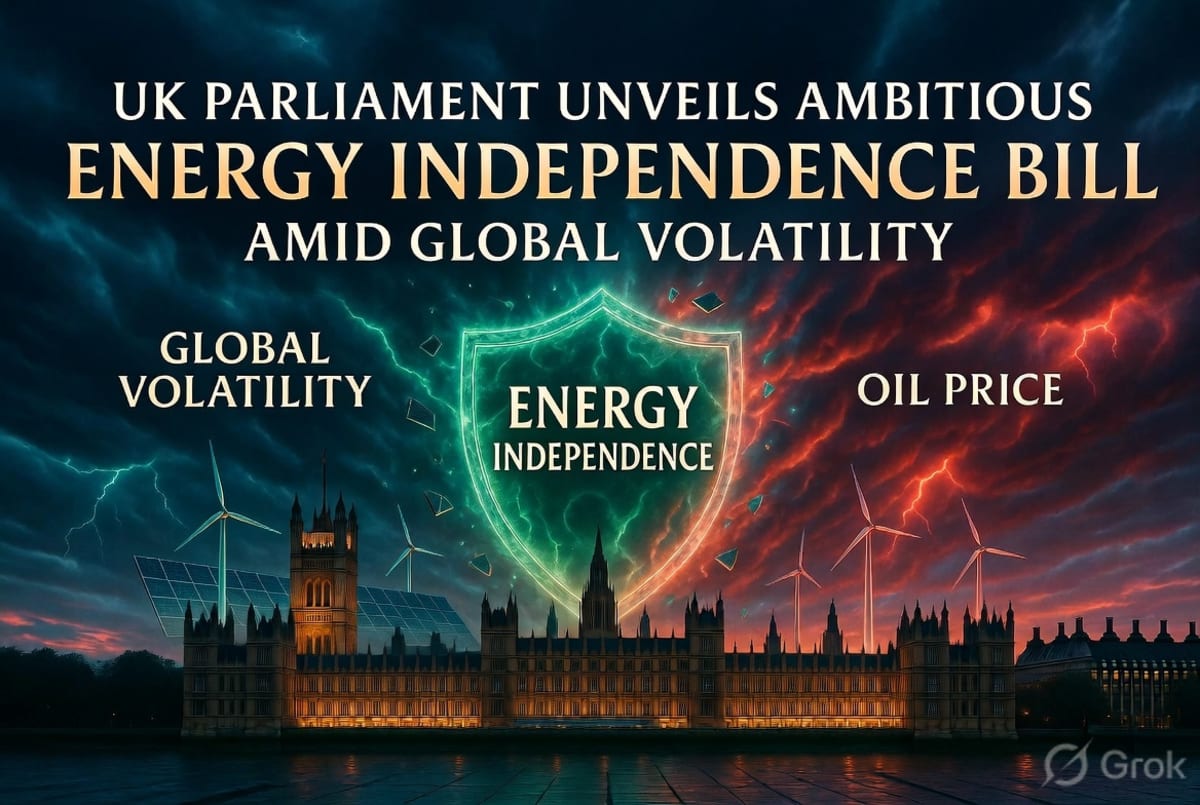
London, UK – In a move signaling a strategic pivot towards energy self-sufficiency, the UK government has announced plans to introduce a comprehensive Energy Independence Bill. Unveiled during the State Opening of Parliament on May 13, 2026, by King Charles III, the legislation is poised to reshape the nation's energy landscape and enhance its security in an increasingly volatile global climate. The King articulated that "energy independence must be a long-term goal of national security," underscoring the administration's commitment to reducing reliance on fossil fuels and bolstering the UK's ability to produce clean, homegrown energy.
Scaling Up Domestic Energy Production
The core of the Energy Independence Bill lies in its ambitious target to significantly expand domestic energy generation, with a pronounced focus on both nuclear and renewable sources. This initiative is framed not only as an environmental imperative but also as a critical component of national security, designed to insulate the UK from external energy shocks, such as those recently experienced due to conflicts in the Middle East. "Increased production of clean British energy will help to ensure that enemies of the United Kingdom cannot attack the economic security of the British people," the King stated in his address. The proposed reforms are expected to streamline regulatory processes and potentially unlock private capital for major energy infrastructure projects. The government also intends to reform water systems, consolidating regulatory responsibilities to enhance infrastructure resilience.
Regulatory Overhaul and Consumer Protection
Beyond boosting generation capacity, the government's agenda includes a significant overhaul of energy market regulation, with a particular emphasis on consumer protection. The bill is anticipated to grant the energy regulator, Ofgem, expanded authority to oversee third-party intermediaries, such as brokers and consultants. This move comes in response to reports of malpractice, including opaque pricing and misleading sales tactics. Furthermore, the legislation is set to incorporate reforms to the nuclear sector, drawing on recommendations from the Fingleton review. The government's commitment to sustainability also extends to environmental protection, with plans to continue prohibiting the sale of peat and peat-containing products and setting restoration targets for peatlands.
Economic and Security Imperatives
The timing of the Energy Independence Bill is particularly salient, coming in the wake of global geopolitical instability that has highlighted the vulnerabilities inherent in international energy supply chains. The government's strategy emphasizes that "every element of the nation's energy, defense and economic security will be tested" in the current global climate. By prioritizing homegrown energy, the UK aims to not only safeguard its economic stability but also to strengthen its position on the world stage. Energy Secretary Ed Miliband commented that "our clean power mission is the only way to bring down bills for good and take back control of our energy." The bill represents a proactive approach to securing long-term energy resilience, protecting households from the volatility of global energy prices, and fostering economic growth through investment in new energy technologies and infrastructure. The government's broader legislative agenda, as outlined in the King's Speech, also includes measures related to small business protections, competition reform, and electoral reforms, indicating a comprehensive approach to national governance.
The introduction of the Energy Independence Bill signifies a determined effort by the UK government to secure its energy future. As the nation navigates a complex international landscape, this strategic legislative push aims to balance economic prosperity with national security, laying the groundwork for a more resilient and self-reliant energy sector.