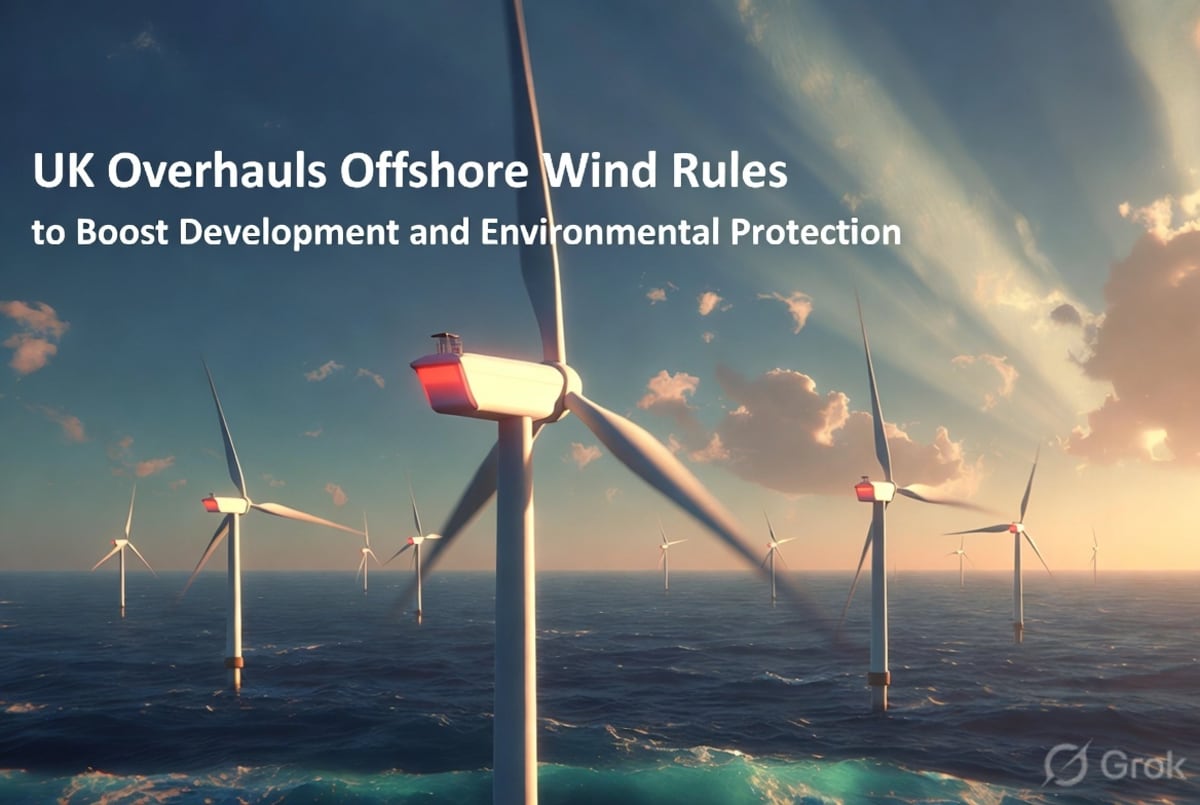
The United Kingdom has introduced significant legislative changes to fast-track the development of offshore wind farms, a move designed to enhance the nation's energy security and reduce consumer bills. The new regulations, which came into effect on May 21, 2026, aim to strike a balance between the urgent need for clean, homegrown power and the imperative to protect the country's vital marine ecosystems.
Broadening Environmental Compensation Measures
Central to the reforms are expanded options for developers to compensate for any unavoidable environmental impacts associated with offshore wind projects. Previously, the range of compensatory measures was more limited. However, the updated legislation, amending the Conservation of Habitats and Species Regulations 2017 and the Conservation of Offshore Marine Habitats and Species Regulations 2017, now allows for more strategic and diverse approaches. These include targeted efforts such as the protection of seabird nesting sites, the implementation of predator control measures near vulnerable colonies, and the restoration of native oyster populations. New guidance has also been issued to assist developers in selecting and effectively monitoring these compensatory actions, ensuring that the environmental mitigation is robust and meaningful.
Energy Security and Economic Imperatives
UK Energy Minister Michael Shanks highlighted the critical juncture at which these reforms are being implemented. "After two fossil fuel crises in five years, we are driving further and faster for clean homegrown power that we control to protect the British people and bring down bills for good," Shanks stated. He emphasized that the reforms are designed to accelerate the deployment of offshore wind capacity while simultaneously maintaining and strengthening protections for the marine environment. This initiative is seen as a key component in bolstering Britain's energy independence and resilience against global energy market volatility.
The legislation was confirmed by both the Department for Environment, Food & Rural Affairs and the Department for Energy Security and Net Zero, underscoring a coordinated governmental approach to energy and environmental policy. The changes are expected to provide greater certainty and clarity for the offshore wind industry, as articulated by Kat Route-Stephens, Head of Environment and Consents at RenewableUK. She noted that the updated rules will help wind farm developers plan, build, and operate projects in greater harmony with marine biodiversity.
Future Outlook and Industry Response
The new environmental compensation framework is part of a broader government strategy to increase renewable energy generation and meet ambitious climate targets. By streamlining regulatory processes and offering more flexible compensatory mechanisms, the UK government hopes to unlock further investment in offshore wind, a sector crucial for achieving net-zero goals. Industry stakeholders have largely welcomed the changes, recognizing the potential for increased project delivery while adhering to stringent environmental standards. The success of these reforms will be closely watched as the UK continues its transition towards a sustainable energy future, with a focus on ensuring that economic development does not come at the expense of ecological integrity. The coming years will reveal the full impact of these legislative updates on both the pace of offshore wind deployment and the health of the UK's marine ecosystems.