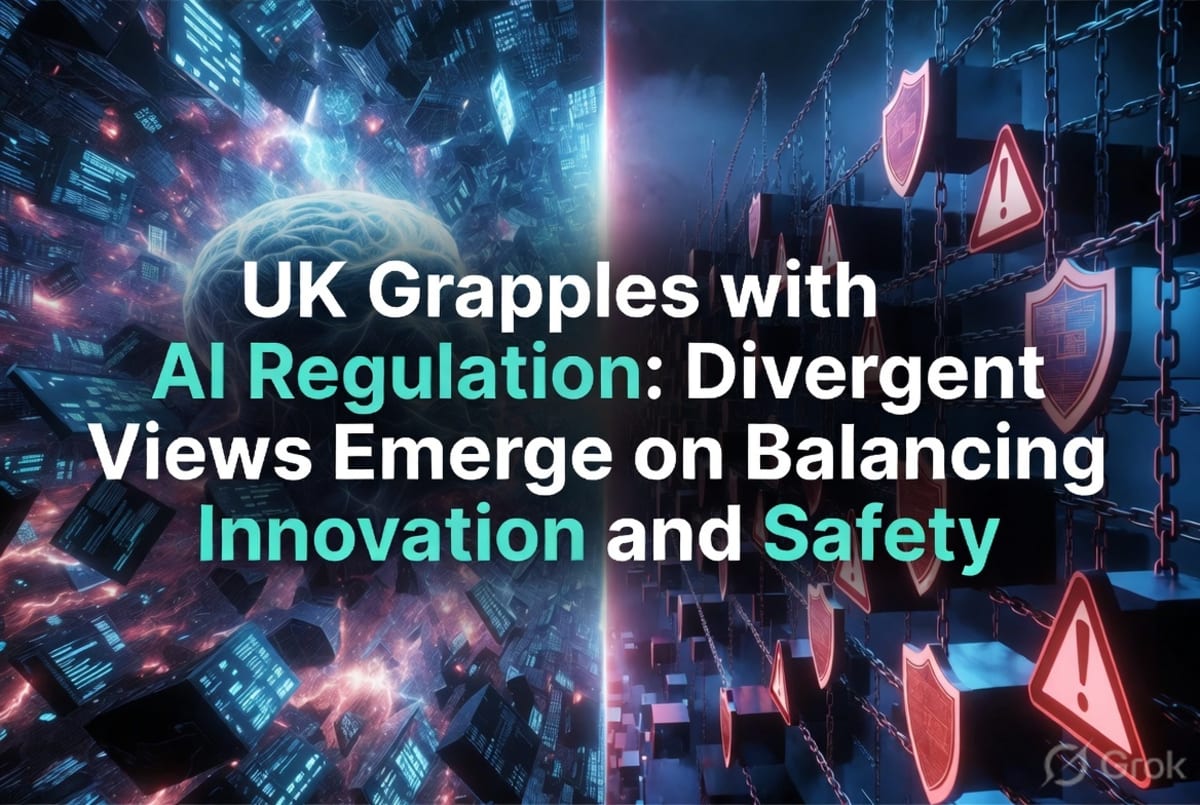
The United Kingdom finds itself at a critical juncture in its approach to Artificial Intelligence regulation, as a delicate balance is sought between fostering rapid technological advancement and ensuring robust safety and ethical guidelines. Recent developments highlight a growing divergence of opinions, with the government championing a "light-touch" strategy to encourage innovation, while various regulatory bodies and industry stakeholders express increasing unease about potential risks.
Government's Push for AI Dominance
The UK government, through initiatives such as the AI Opportunities Action Plan and the proposed AI Growth Lab, is actively working to position the nation as a global hub for AI development and deployment. Technology Secretary Liz Kendall has articulated a vision for the UK to "set the standards for how AI is used and adopted," emphasizing the technology's centrality to the nation's economic prosperity and national security. Plans include supporting British AI companies, particularly in hardware, and collaborating with international partners to establish global AI standards. The government's strategy also involves leveraging existing regulators, rather than creating a new overarching body, to govern AI use across different sectors. This approach aims to streamline the regulatory process and reduce confusion, allowing for a more agile response to the rapidly evolving AI landscape. The AI Growth Lab, in particular, is designed as a cross-economy sandbox to test AI products and regulatory reforms under real-world conditions, offering supervised, time-limited regulatory flexibility.
Regulators Sounding the Alarm
Despite the government's optimistic outlook, a number of key regulatory bodies are raising significant concerns. The Information Commissioner's Office (ICO) and the Equality and Human Rights Commission (EHRC) have voiced increasing worries about AI systems that may lead to discrimination or operate without adequate transparency. The ICO has specifically highlighted issues with automated decision-making in recruitment, emphasizing the need for greater human oversight in AI-assisted processes. Similarly, the Financial Conduct Authority (FCA) has flagged the rise of unregulated AI-driven financial guidance, such as AI chatbots offering financial advice, noting that existing regulatory frameworks may not be sufficient to prevent consumer harm. These concerns underscore a growing public unease about the pervasive use of AI in various aspects of life, from employment decisions to financial advice.
International Comparisons and Future Outlook
The UK's regulatory stance is being closely observed internationally, particularly in contrast to the European Union's more prescriptive Artificial Intelligence Act. While the EU's approach aims to protect fundamental rights, some in the UK tech sector fear that aligning too closely with EU regulations could stifle innovation and growth. Technology ministers have reportedly voiced opposition to adopting EU AI rules, arguing that the UK's more "laissez-faire" approach has attracted significant investment. However, the UK's own plans for AI regulation are not without their challenges. The government's commitment to developing an "AI Hardware Plan" and securing a significant share of the global AI chips market reflects an ambition to bolster domestic capabilities. Yet, the ongoing debate about the optimal regulatory framework suggests that the UK's path forward will likely involve continuous adjustments and a keen awareness of both the transformative potential and the inherent risks of artificial intelligence.