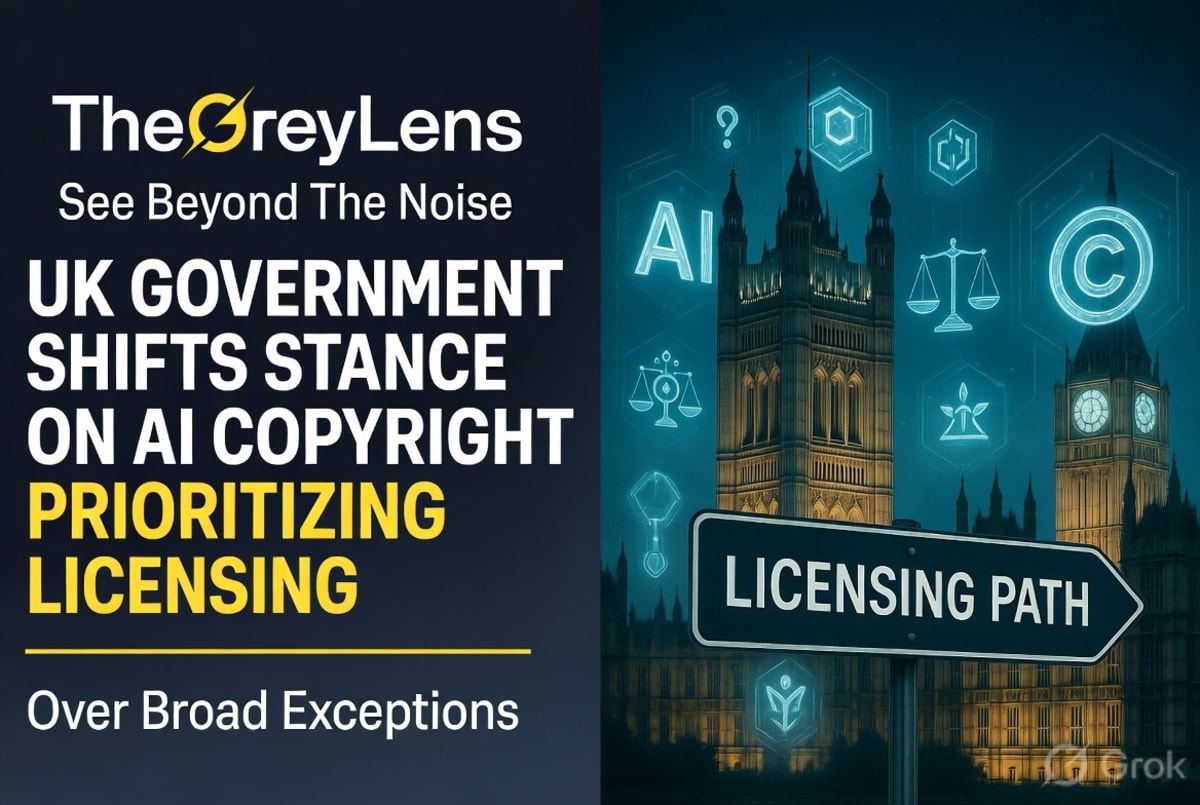
The United Kingdom government has officially confirmed it will not implement a wide-ranging text and data mining (TDM) exception that would permit artificial intelligence (AI) systems to be trained on copyrighted material without explicit rightsholder consent. This policy shift marks a significant departure from earlier considerations and directs the focus towards establishing robust licensing frameworks and encouraging voluntary transparency among AI developers.
Closing the Door on AI Training Exceptions
In a formal response to the House of Lords Communications and Digital Committee's inquiry into AI and intellectual property, the government stated its decision to abandon the pursuit of a broad commercial TDM exception. This means that AI developers utilizing UK-origin content – encompassing works such as books, journalism, music, and visual arts – can no longer rely on a statutory opt-out mechanism for training their models. The government's stated policy direction now centers on fostering licensing agreements, promoting best practices for AI developers, and emphasizing voluntary transparency, rather than introducing a statutory exception with enforcement mechanisms.
This development is not entirely unexpected, as signals from the UK government have consistently pointed towards a licensing-first approach over recent months. However, the formal confirmation on May 16, 2026, solidifies this stance, requiring AI developers who may have factored a broad TDM exception into their data strategies to re-evaluate their assumptions. The implications are particularly pertinent for those developing AI systems that incorporate UK-originated data, as the absence of a statutory exception creates potential liability exposure for unlicensed use, even as formal licensing rules are still being developed.
Regulatory Landscape and International Alignment
The UK's policy evolution aligns with a broader international trend towards greater protection for content creators in the age of AI. This move follows closely on the heels of the U.S. Supreme Court's denial of certiorari and the European Union's Generalised Partnership on AI (GPAI) transparency requirements, both of which underscore a growing emphasis on rightsholder protection across major jurisdictions. The UK government's decision to prioritize licensing and transparency is seen by many as a crucial step in ensuring a fair ecosystem for both AI innovation and the creative industries.
In parallel, the UK government is also advancing its broader AI regulatory agenda through the proposed "Regulating for Growth Bill." This bill aims to modernize how regulators oversee rapidly evolving sectors like AI, granting departments new powers to update or repeal outdated regulations and expanding the use of regulatory sandboxes for testing new technologies. While welcomed by many in the legal and technology sectors, commentators have highlighted the need for accompanying economic reforms and international coordination to ensure the effectiveness of these measures.
The Path Forward for AI Developers and Rightsholders
For AI developers, the immediate implication is the necessity to proactively audit their data provenance and engage in licensing discussions. The window for a generalized exception has closed, and the focus must now shift to securing the necessary rights for training data. This may involve direct negotiations with publishers, authors, artists, and other rights holders, or participation in emerging licensing collective schemes.
Conversely, this policy shift is expected to provide greater clarity and potential new revenue streams for copyright holders. The move towards licensing frameworks empowers them to negotiate terms for the use of their work in AI training, ensuring they are appropriately compensated for their intellectual property. The government's emphasis on voluntary transparency also encourages developers to be more forthcoming about the data used in their AI models, fostering greater trust and accountability within the AI ecosystem.
The coming months will be critical as the UK government works to flesh out the details of its licensing frameworks and guidelines for AI developers. Stakeholders across the industry will be closely watching as these policies take shape, with the aim of balancing innovation with the fundamental rights of creators in the rapidly evolving landscape of artificial intelligence.