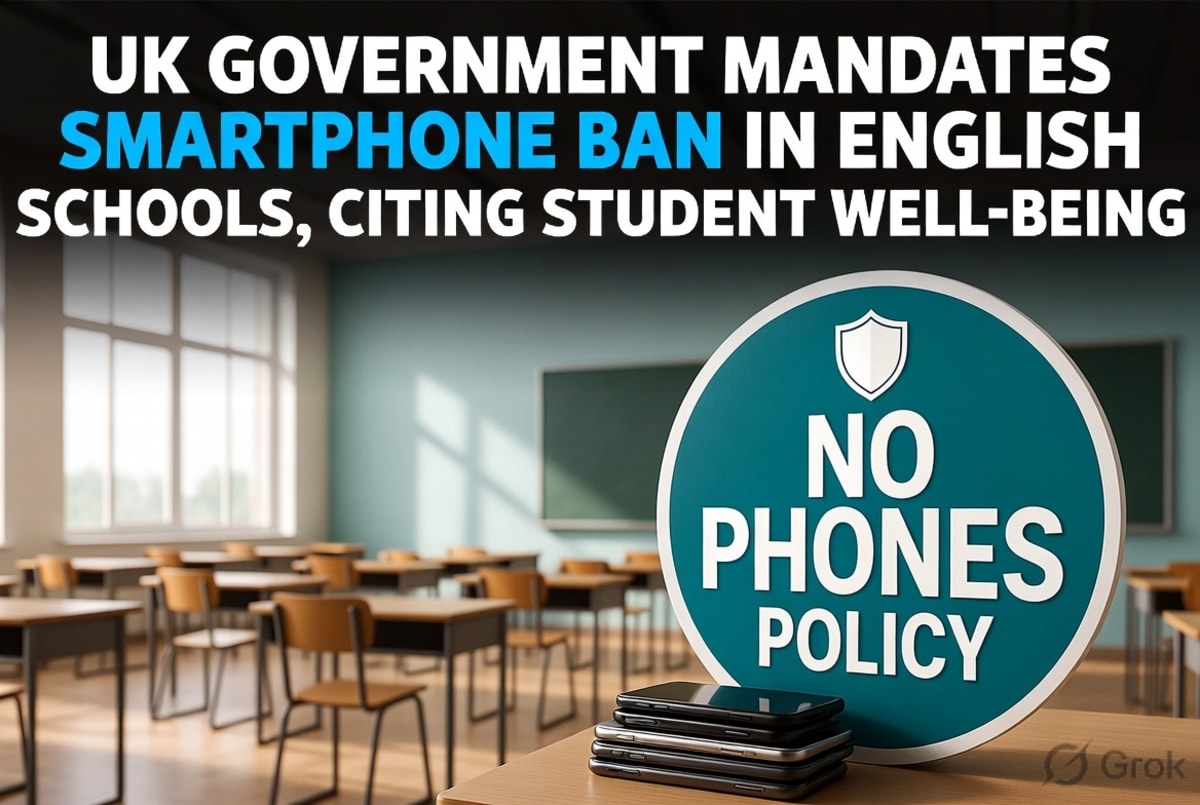
The United Kingdom is set to implement a legally binding ban on mobile phones in schools across England, marking a significant shift in policy for educational institutions. This move, embedded within the Children's Wellbeing and Schools Bill, transforms existing guidance into statutory law, underscoring the government's commitment to addressing the pervasive influence of smartphones on students. The legislation is designed to curb the negative impacts of social media on young people's mental health, concentration, and social skill development.
Statutory Enforcement and Ofsted Oversight
The new law will empower educational bodies by removing ambiguity and ensuring a consistent approach to smartphone policies nationwide. Previously, schools operated under guidance urging them to ban phones, but this new mandate elevates those recommendations to a legal obligation. Ofsted, the national education inspectorate, will now be responsible for monitoring schools' adherence to the ban, integrating compliance into its inspection framework. This oversight is expected to ensure that schools rigorously enforce the policy, a move welcomed by educators who have long grappled with the challenges of managing mobile phone use in classrooms.
Broader Implications for Children's Digital Engagement
This statutory ban is part of a wider governmental effort to reshape how young people interact with technology. Alongside the school ban, the government is actively consulting on plans to potentially restrict social media access for children under 16. This broader consultation, which opened in March 2026 and closes in May 2026, seeks public opinion on various measures, including banning social media use by children. The significant public response, with tens of thousands of submissions already received, indicates a strong societal interest in regulating children's digital lives.
Educators and child welfare advocates have highlighted concerns about the amount of time young people spend on smartphones, with some studies suggesting average usage can exceed 29 hours per week for 12-year-olds. The proposed legislation and consultations aim to mitigate issues such as addiction, distraction from learning, and the potential detriment to the development of essential social skills.
While the ban is currently specific to England, other parts of the UK have already implemented similar measures. The Scottish government allowed headteachers to ban mobile phones in 2024, and Wales has a similar policy, though not a national ban. This development in England reflects a growing trend across the UK and internationally to address the complex relationship between children, technology, and education.
Looking ahead, the enforcement of this ban and the outcomes of the ongoing social media consultations will be crucial in shaping the future of digital engagement for minors in the UK. The government's continued focus on this area suggests a long-term strategy to foster a healthier and more focused environment for young learners, balancing the benefits of technology with the need for protection and well-being.