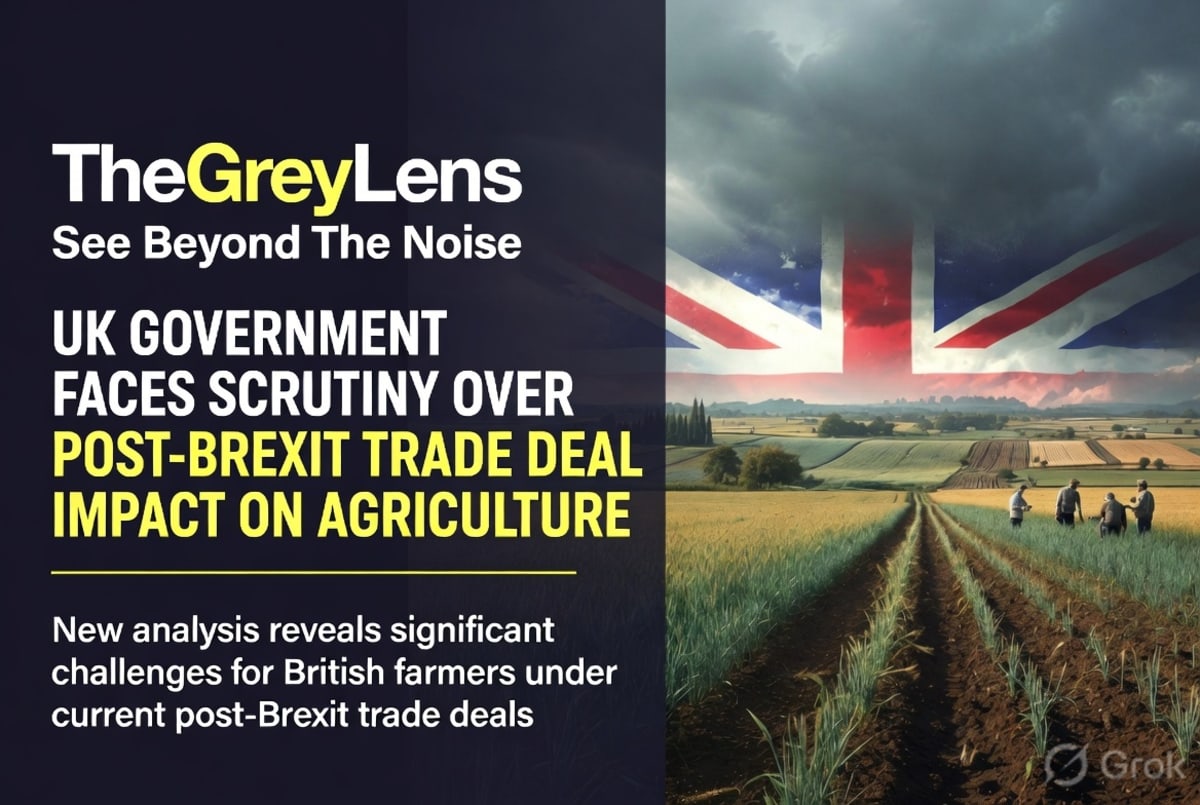
The United Kingdom's agricultural sector is grappling with unforeseen consequences of its post-Brexit trade landscape, with a recent wave of analysis highlighting growing pressures on farmers. The Department for Environment, Food & Rural Affairs (Defra) is under increasing pressure to address a complex web of challenges stemming from new trade arrangements, which have led to higher input costs and diminished export opportunities for many.
Rising Costs and Shifting Market Dynamics
Farmers across the UK are reporting substantial increases in the cost of essential inputs, including fertilizers, feed, and machinery parts. These price hikes are partly attributed to new customs procedures, increased shipping costs, and fluctuating exchange rates following the UK's departure from the European Union. For producers of perishable goods, such as horticultural crops and dairy products, the added layers of bureaucracy and potential delays at ports have created significant hurdles in accessing both domestic and international markets. "We're seeing our margins squeezed from both ends," commented one Devon-based farmer, who preferred to remain anonymous due to ongoing discussions with industry bodies. "The cost of everything we need to grow food has gone up, and it's harder than ever to get our produce to consumers at a price that reflects the quality and effort involved."
The impact is not uniform, with some sectors feeling the pinch more acutely than others. The National Farmers Union (NFU) has been vocal in its concerns, particularly regarding the livestock sector, which faces new veterinary checks and certification requirements for exports to the EU. These measures, while designed to maintain sanitary and phytosanitary standards, have translated into added expenses and longer lead times for businesses that previously enjoyed seamless access to their largest trading partner. Data released by the Office for National Statistics (ONS) last month indicated a 5% decrease in agricultural output value in the final quarter of 2025 compared to the same period in 2024, a trend many industry experts link directly to the evolving trade environment.
The Search for New Export Avenues
While the challenges of trading with the EU persist, attention is increasingly turning to the government's efforts to forge new trade agreements with countries outside the bloc. The Board of Trade, chaired by the Secretary of State for Business and Trade, has been actively pursuing deals with nations in the Asia-Pacific region and the Americas. However, the benefits of these new agreements for the agricultural sector are yet to be fully realised, and many farmers express skepticism about their immediate applicability to their specific needs. "We hear a lot about 'Global Britain' and new markets, but for many of us, the EU was our most natural and accessible market," stated Minette Batters, President of the NFU, in a recent industry forum. "While diversification is a long-term goal, the immediate reality is that we need practical solutions to the current trading difficulties."
Critics argue that the government's trade strategy has not adequately considered the unique vulnerabilities of the UK's food production system. The reliance on seasonal labour, the complex supply chains, and the high standards of British produce all present specific challenges that require tailored solutions. Some analysts suggest that a greater focus on bilateral agreements with key European partners, rather than a broad-stroke approach to trade, might have offered more immediate relief. Furthermore, the ongoing debate about food security has intensified, with a growing awareness that a robust domestic agricultural sector is crucial for national resilience, especially in the face of global geopolitical uncertainties.
Policy Re-evaluation and Future Outlook
The current pressures have ignited a debate about the future direction of agricultural policy in the UK. Calls are mounting for a comprehensive review of existing trade deals and for the implementation of targeted support mechanisms for farmers. This includes proposals for streamlining customs procedures, providing financial assistance for compliance with new regulations, and investing in infrastructure that can facilitate faster and more efficient trade. The Agriculture and Food Security Committee of Parliament is expected to release a report in the coming weeks, which is anticipated to outline a series of recommendations for the government.
Looking ahead, the UK agricultural sector faces a period of significant adaptation. The ability of farmers to navigate the complexities of the new trade environment will be critical to their survival and prosperity. The government's response to the growing concerns from the industry will be closely watched, as will its success in securing trade deals that genuinely benefit the nation's food producers. The long-term viability of British farming may well depend on its capacity to innovate, diversify, and effectively advocate for policies that support its unique role in the national economy and food security. The coming months will be crucial in determining whether the sector can weather the current storm and emerge stronger in a rapidly evolving global marketplace.