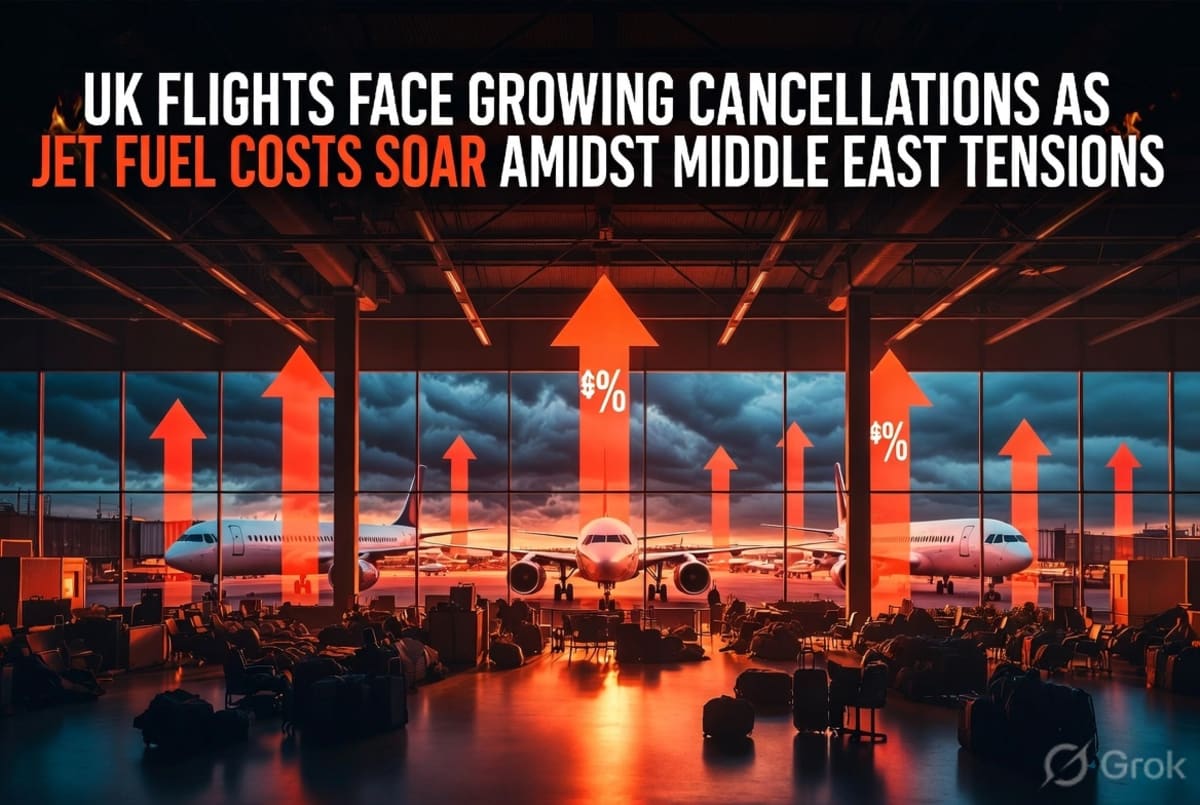
Travellers flying from the UK are facing a growing wave of flight cancellations and schedule reductions for May and June 2026, as the aviation industry grapples with escalating jet fuel costs and supply chain anxieties. Aviation analysts report that tens of thousands of seats have already been slashed from schedules, with a notable concentration of these cancellations affecting departures during the busy Whitsun holiday period.
Geopolitical Instability Fuels Aviation Crisis
The primary driver behind the widespread disruption is the ongoing conflict in the Middle East, which has severely impacted global oil supply routes and sent fuel prices to multi-year highs. The blockade of the Strait of Hormuz has significantly curtailed the flow of oil, a critical factor for aviation fuel. This has led to airlines facing substantially higher operating expenses, forcing many to make difficult decisions about their flight programs. Some carriers have warned of significant financial hits, with major airline groups anticipating billions of euros in additional fuel costs for the year.
Impact on UK Summer Travel Plans
While the total number of cancellations represents a small percentage of overall UK departures, the timing is particularly concerning for holidaymakers. Departures scheduled for the final week of May, coinciding with the traditional Whitsun break, are among those affected. This situation raises concerns about potential further disruptions as the summer travel season intensifies. Airlines are leveraging a two-week notice period to cancel flights and avoid compensation obligations, a strategy that allows them to adjust schedules proactively while mitigating financial penalties.
Government and Industry Responses
In response to the growing concerns, the UK government has been consulting with industry stakeholders to explore measures aimed at protecting summer travel. Plans include relaxing flight take-off and landing rules to provide airlines with more flexibility to lock in schedules earlier, thereby reducing the likelihood of last-minute cancellations. The government has also emphasized that passengers are entitled to re-routing or refunds if their flights are cancelled. However, industry data points to critically low jet fuel stocks and supply chain disruptions that continue to threaten travel. Some airlines, like easyJet, have stated they are not currently experiencing fuel supply disruptions and plan to operate as normal, while others, such as Lufthansa Group, have already announced significant flight reductions across their networks.
The broader economic climate also presents challenges, with a 'K-shaped' travel economy emerging, where luxury travellers continue to spend while lower-income consumers seek cheaper options or forgo travel. The UK's political instability and a weaker pound further complicate the landscape, creating a complex environment for both inbound and outbound tourism. As the situation evolves, travellers are advised to monitor their bookings closely and ensure their travel insurance adequately covers disruptions related to geopolitical events.