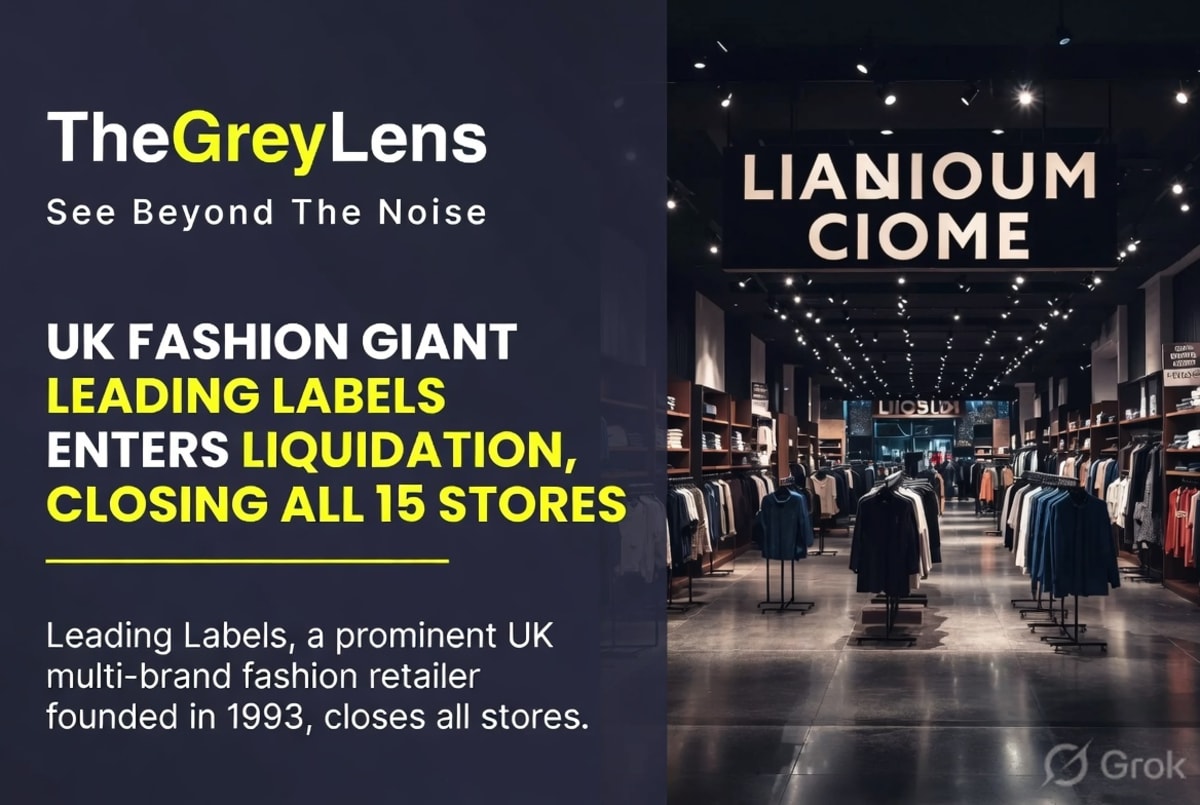
A significant player in the UK's fashion retail landscape, Leading Labels, has announced its entry into liquidation, marking the end of an era for the company founded in 1993. The decision will result in the immediate closure of all 15 of its remaining stores nationwide. Clearance sales have commenced across all locations, with all stock being sold off as the business prepares for permanent closure.
A Decade of Discounted Fashion
Leading Labels built its reputation over three decades as one of the UK's largest multi-brand fashion retailers, specializing in discounted menswear and womenswear. The company was known for offering popular brands such as Calvin Klein, Wrangler, and Ben Sharman, providing a value-oriented option for consumers. However, the company's financial struggles became apparent earlier this year, with its first Gazette notice issued on March 10, signaling impending insolvency. The appointment of Jemery Bleazard of XL Business Solutions as liquidator on May 26 confirms the company's irreversible path towards closure.
Geographic Footprint and Past Closures
With stores primarily located in the South East and the Midlands, Leading Labels had a substantial physical presence. However, the company's operational difficulties were not new. A branch in Cleethorpes, Lincolnshire, closed abruptly in 2024, with customers only notified by a landlord's notice posted on the door. More recently, in the months leading up to this announcement, the store in Bolton was also shut down. A spokesperson for The Market Place shopping center in Bolton attributed that closure to "internal difficulties," hinting at long-standing challenges within the company's structure and operations.
The liquidation of Leading Labels underscores the increasingly challenging retail environment in the UK, particularly for mid-market and discount fashion retailers. Factors such as evolving consumer shopping habits, increased competition from online retailers, and rising operational costs have placed immense pressure on brick-and-mortar businesses. While the exact reasons for Leading Labels' ultimate failure have not been fully detailed, the move into liquidation suggests an inability to navigate these complex market dynamics successfully. The closure of 15 stores will inevitably lead to job losses and a reduction in retail options for consumers in the affected areas, adding to the ongoing narrative of high street transformation.
The Wider Impact on UK Retail
The collapse of a retailer like Leading Labels is not an isolated incident in the current UK retail climate. Recent reports have highlighted a general downturn in clothing sales, with some analyses pointing to a 44% quarter-on-quarter drop in average sales revenue for UK clothing manufacturers in the first quarter of 2026. This decline has been linked to weaker business confidence amid market uncertainty, including geopolitical tensions in the Middle East. While Leading Labels operated in the retail sector rather than manufacturing, the underlying economic pressures affecting consumer spending and business viability are likely shared across the industry.
In contrast, some fashion brands are focusing on value and responsiveness to thrive. A report analyzing consumer search activities in late 2025 indicated that while consumers prioritize fashion spending, there's a noticeable shift towards affordability. Brands like Next and Primark have shown growth in brand search share, reflecting this trend. The rise of resale platforms like Vinted also points to a growing acceptance of secondhand fashion. The liquidation of a discount multi-brand retailer like Leading Labels, therefore, may indicate a failure to adapt to these evolving consumer preferences or an inability to maintain profitability even within the value segment.
As clearance sales commence, the fate of Leading Labels serves as a stark reminder of the volatile nature of the fashion retail industry. The coming weeks will see the winding down of operations, leaving a gap in the market that other retailers, both online and on the high street, may seek to fill. The long-term implications for suppliers and employees, as well as the broader impact on the retail property market, remain to be seen.