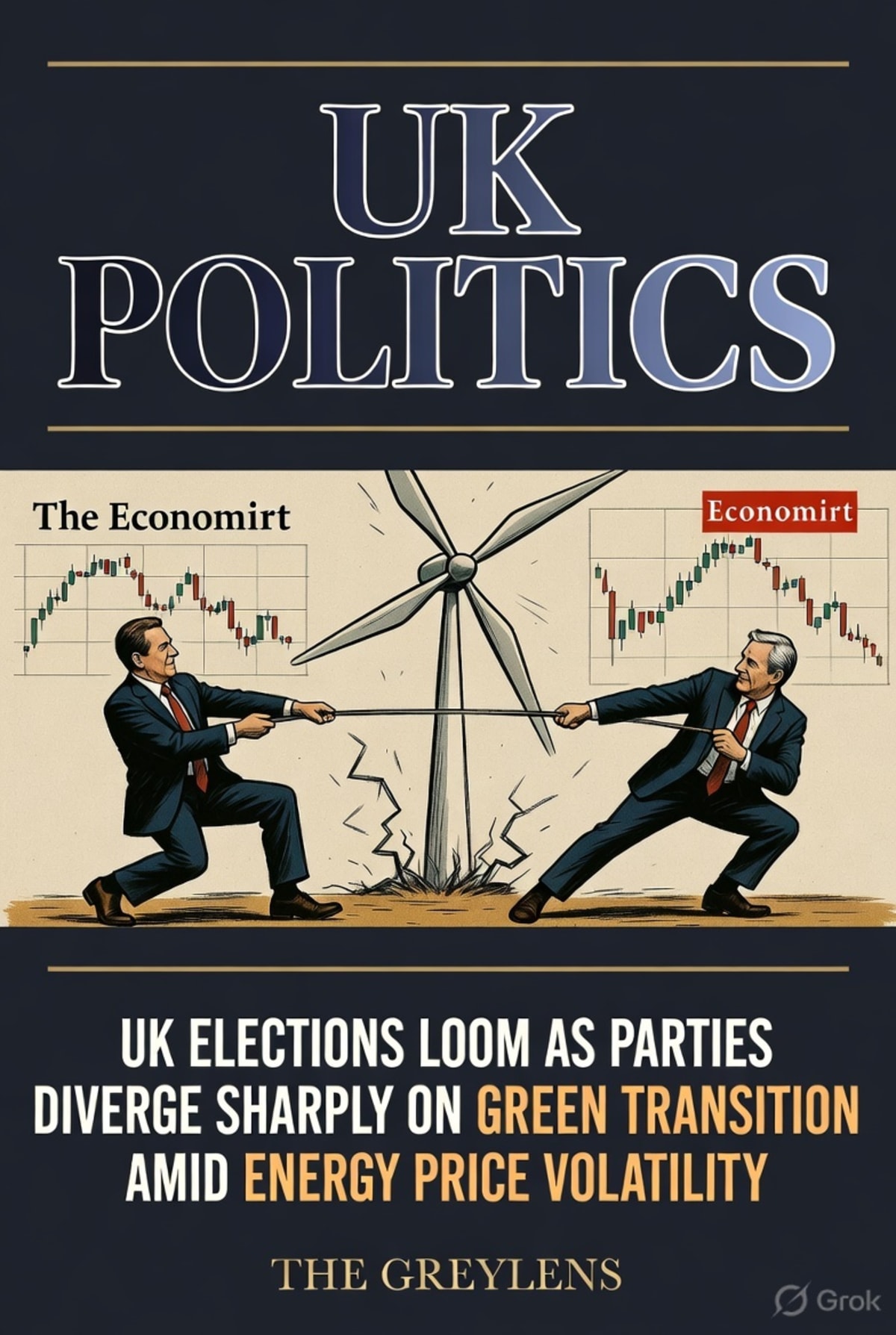
Navigating the Energy Landscape: Divergent Policy Paths
As the UK approaches crucial elections in May 2026, political parties are presenting markedly different approaches to the nation's energy policy and the transition to a greener economy. The Labour Party, currently in government, emphasizes accelerating the shift to renewable energy, aiming for 95% low-carbon electricity by 2030 and investing in renewable infrastructure, including a publicly owned clean power company, Great British Energy. Their strategy aims to reduce reliance on volatile fossil fuel markets and enhance energy independence. Conversely, the Conservative Party appears to be reassessing climate-related policies, with some factions suggesting a reduction or removal of renewable subsidies and a focus on reducing policy costs for consumers. The Green Party advocates for the most radical green transition, pushing for 100% renewable energy by 2035, a ban on new oil and gas licenses, and significant public investment in renewables and home retrofitting. In sharp contrast, Reform UK is championing an anti-net zero stance, proposing to ban new onshore wind and solar farms, abolish net zero targets, and prioritize an industrial strategy based on gas power. This stark ideological divide means that the outcome of the upcoming elections could significantly alter the UK's trajectory towards its climate goals.
Energy Price Volatility and Political Pressure
The ongoing volatility in global energy markets, exacerbated by geopolitical tensions and conflicts, continues to place significant pressure on UK households and businesses, making energy affordability a central political issue. The energy price cap, currently set at £1,641 per year for a typical household for April-June 2026, is scheduled for its next review on May 27, 2026. Forecasts suggest a potential rise in the price cap in July 2026, with some analysts predicting an increase of around £200 due to rising wholesale gas prices. This looming prospect of higher bills intensifies the political debate, with parties like Reform UK proposing to scrap green levies and VAT on energy bills to provide immediate cost relief. Other parties, while acknowledging the cost of living crisis, are framing the green transition as a long-term solution to energy security and price stability. The government's recent positioning of renewable energy expansion as a national security priority underscores the interconnectedness of climate goals, energy independence, and economic stability.
The Road Ahead: Electoral Stakes and Policy Futures
With local elections in England and devolved elections in Wales and Scotland taking place on May 7, 2026, the results will provide a crucial indicator of public sentiment regarding environmental and energy policies. The performance of parties like the Green Party, which has seen significant gains in recent elections, and Reform UK, with its anti-net zero platform, will be closely watched. The elections will not only shape local and devolved governance but also influence the national political discourse on climate change and energy security. The upcoming decisions on the UK's Seventh Carbon Budget, due in June 2026, will further set the course for long-term climate action, irrespective of the immediate electoral outcomes. The diverging policy platforms presented by the major parties mean that the future of the UK's green transition hangs in the balance, with significant implications for energy security, economic growth, and the nation's commitment to tackling climate change.
The upcoming elections in May 2026 will be a critical juncture for the UK's energy policy. As parties present their contrasting visions, voters will be faced with a clear choice between accelerating the green transition, maintaining the status quo, or a significant rollback of climate commitments. The interplay between energy price volatility, national security concerns, and electoral mandates will undoubtedly define the UK's path forward in the critical years ahead.