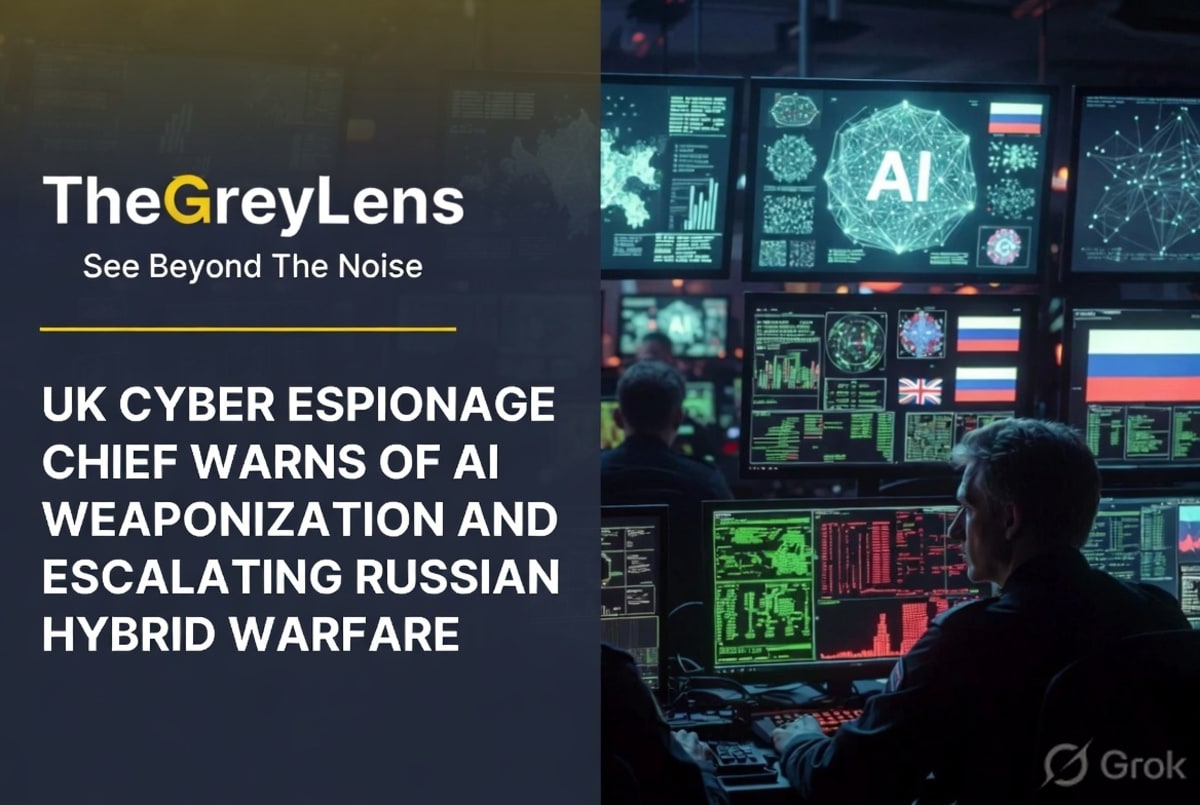
In a significant address delivered on May 31, 2026, Anne Keast-Butler, director of the UK's communications intelligence agency GCHQ, painted a concerning picture of the evolving global security landscape, characterized by the weaponization of Artificial Intelligence and an intensified campaign of hybrid warfare by Russia. Speaking at a historic World War II code-breaking center near London, Keast-Butler described AI as an "unstoppable force" with the potential for devastating consequences when deployed in conflict scenarios that fall below the threshold of conventional warfare. Her remarks come at a time when nations are grappling with the rapid advancement of AI technologies and their implications for national security.
AI as an Escalating Threat in the 'Gray Zone'
Keast-Butler emphasized that AI is already being integrated into a spectrum of hostile activities, creating a dangerous "gray zone" between peace and outright war. This zone is being exploited by adversaries, most notably Russia, which is reportedly scaling up its "daily hybrid activity" against the UK and Europe. The GCHQ chief indicated that these activities extend from the physical realm, targeting undersea telecommunications cables and energy pipelines, to the digital domain of cyberspace. The risk of miscalculation in this complex environment, she stated, is "as high as I've ever seen it." This sentiment is echoed by intelligence experts across Western nations who have noted a surge in alleged state-linked cyberattacks targeting critical infrastructure in countries like Sweden, Poland, Denmark, and Norway. The head of the UK's National Cyber Security Centre, Richard Horne, has previously identified Russia, China, and Iran as primary actors behind the most serious cyber threats facing the UK.
Russia's Intensified Hybrid Warfare and Ukraine Conflict Stalemate
The GCHQ director's warnings are set against the backdrop of the ongoing conflict in Ukraine. Keast-Butler noted that Russian forces are reportedly "going backwards on the battlefield," with new intelligence suggesting that Russian combat deaths since the full-scale invasion in February 2022 have approached a staggering 500,000 soldiers. Despite these battlefield setbacks, Russia continues its aggressive posture in the hybrid domain. Keast-Butler highlighted the focus of British intelligence on "exposing Russia's intent, motive and underwater capabilities" as a critical countermeasure to potential disruptions of vital undersea infrastructure. The ongoing hybrid activities are seen as a persistent challenge that demands a heightened sense of urgency from governments, corporations, and citizens alike. The interconnectedness of modern infrastructure means that cyberattacks can have far-reaching consequences, impacting not only national security but also economic stability and public services.
The Urgency of Cybersecurity in an AI-Driven World
Keast-Butler's speech also served as a call to action for increased vigilance and investment in cybersecurity. She suggested that the West risks losing the ongoing conflict in cyberspace against adversaries like Russia unless greater urgency is applied to cybersecurity measures. The rapid pace at which tech companies are releasing AI-driven innovations, with "untold consequences," adds another layer of complexity to this challenge. The algorithms powering these new technologies can have unforeseen impacts, and their development and deployment must be carefully managed. The speech implicitly calls for a more robust and coordinated global response to these evolving threats, emphasizing the need for international cooperation and the sharing of intelligence to effectively counter state-sponsored cyber warfare and the misuse of AI. The UK, through agencies like GCHQ, is actively working with allies to develop strategies and capabilities to address these multifaceted challenges. The ongoing efforts to understand and mitigate the risks associated with AI in warfare and cyber operations are critical for maintaining global stability and security in the coming years. The implications extend beyond military and intelligence spheres, touching upon the resilience of democratic processes and the integrity of information in an increasingly digital world. The proactive engagement of both public and private sectors will be crucial in navigating this new era of technological advancement and geopolitical tension.