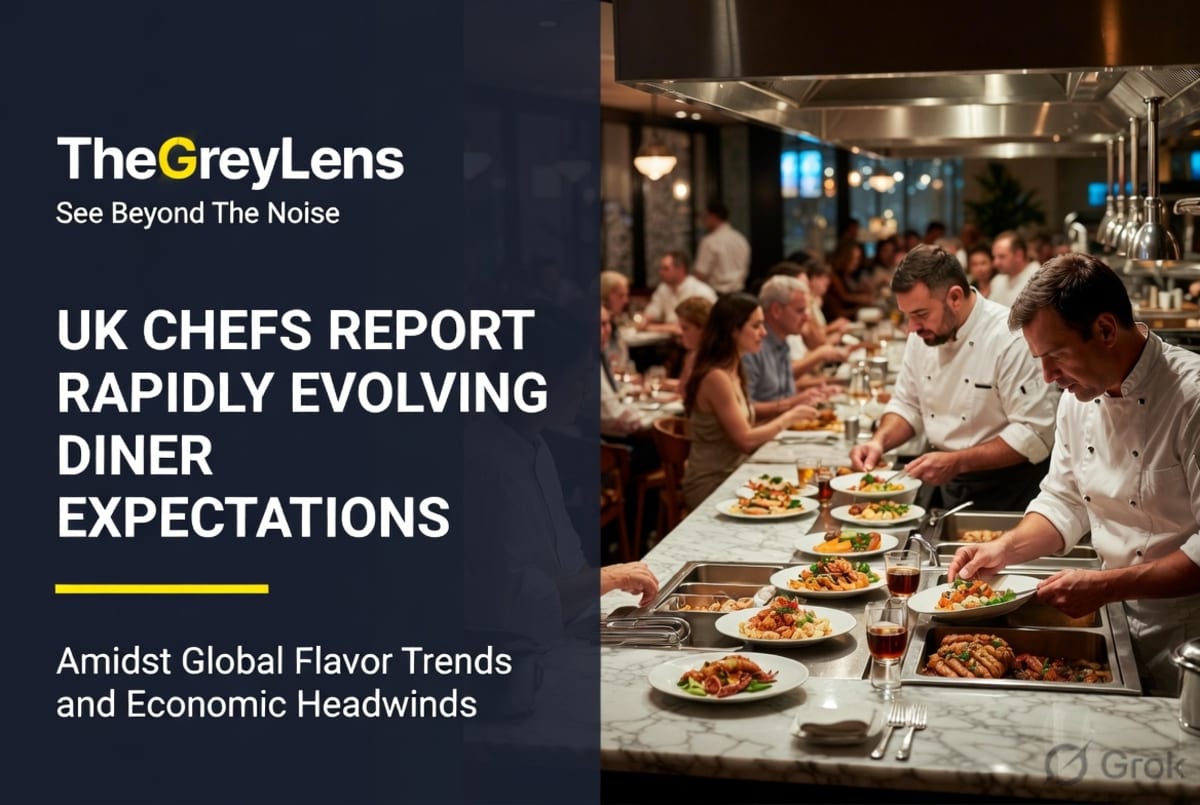
The UK food industry is experiencing a significant shift in consumer preferences and operational challenges, with chefs and restaurateurs noting a rapid evolution in diner expectations. A recent survey reveals that 85% of UK chefs and restaurant operators believe dining expectations are changing faster than ever, yet a considerable portion, nearly one-third, admit to serving dishes unchanged from five years ago. This indicates a creative and commercial tension within the industry, as operators grapple with balancing proven revenue streams against evolving tastes.
Shifting Palates and Culinary Influences
Diners are increasingly seeking out global flavours, with Korean and Japanese cuisines cited as major sources of inspiration for new dishes. Fermented and pickled ingredients are seeing a surge in popularity, with 53% of chefs actively incorporating them into their menus. Ingredients such as miso, koji, and seaweed are featuring prominently. This trend aligns with a broader consumer desire for 'natural' and 'minimally processed' foods, with 70% of chefs associating 'healthy' with these qualities. Fish and seafood are emerging as the fastest-growing proteins, appearing on 48% of menus. Furthermore, gluten-free diets have surpassed veganism as the number one dietary request, a significant shift in consumer priorities. The influence of 'flavours less travelled' is also evident, with Malaysian and South American cuisines gaining traction.
Economic Pressures and Industry Support
The economic landscape presents significant challenges for the UK hospitality sector. Over 90% of chefs and restaurant owners feel that the UK government is not doing enough to support the industry. This sentiment comes amidst rising costs, with one report highlighting that food prices are set to increase by more than 10% due to disruptions in global supply chains, particularly related to the Strait of Hormuz and ongoing geopolitical conflicts. Energy costs are also a major factor, directly impacting supermarket prices and leading to a decrease in consumer purchasing volumes. Food security experts have warned that the era of plentiful, cheap food in Western economies may be over, with volatility becoming the new norm. This challenging environment is also reflected in the supply chain, with the recent administration of A To Z Packaging Ltd, a food industry supplier that had been in business since 2003, underscoring the precariousness of some businesses. Despite these pressures, some sectors are showing resilience. M&S, for example, reported strong food sales, helping them reach a record market share, partly driven by their online grocery venture with Ocado. However, the company also noted increased input costs and regulatory headwinds for the upcoming year.
Sustainability and Evolving Dining Habits
Sustainability is a growing concern for consumers, with 80% of UK restaurant owners indicating a focus on sustainable and ethical sourcing in 2026. Local sourcing is identified as the number one provenance claim diners look for. However, a notable development is the retirement of the Michelin Green Star award, which recognized eco-friendly practices. This decision has been met with disappointment by chefs who felt it was a vital platform for promoting sustainability. Meanwhile, dining habits continue to evolve, with an increase in demand for late-night dining and a growing interest in 'loaded' dishes that offer value. While plant-based dining growth has seen a retraction in restaurants, it continues to rise in pubs and bars, with a shift towards whole vegetables. The industry is also seeing a trend towards quality-led menus, with operators prioritizing simple formats executed well using high-quality ingredients.
The future of the UK food industry appears to be one of adaptation and innovation, driven by changing consumer tastes for global flavours and healthier options, alongside the persistent economic and sustainability challenges. The industry will be watching closely to see how operators balance these competing demands in the coming months.