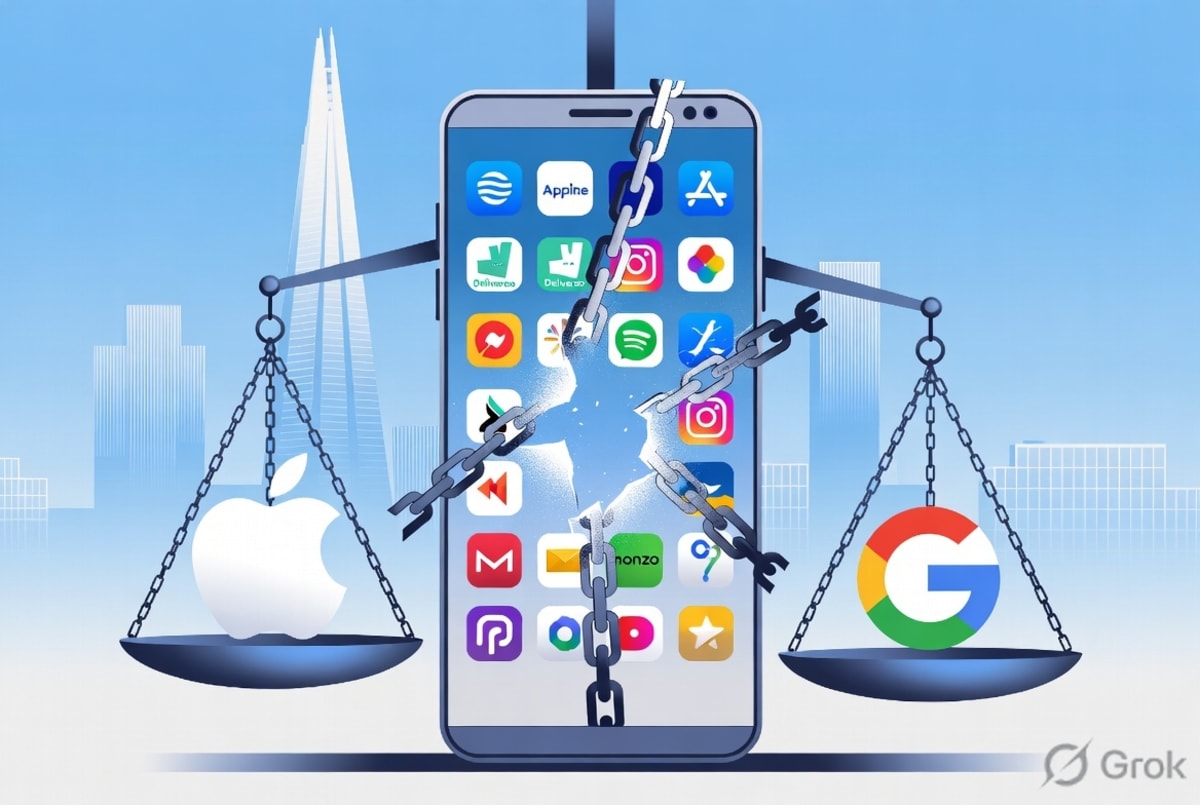
London, UK – In a significant development for the UK's digital economy, Apple and Google have pledged to introduce substantial changes to their app store operations following an investigation by the Competition and Markets Authority (CMA). The commitments, announced on Tuesday, represent the initial steps taken by the tech giants in response to the UK's more stringent digital markets regulation, which aims to foster greater competition and fairness within the mobile ecosystem.
CMA's Strategic Market Status Designation
The CMA had previously designated both Apple and Google as having \"strategic market status\" (SMS) due to their \"substantial, entrenched\" market power. This designation, which came into effect last year, grants the CMA enhanced powers to impose stricter rules on their mobile platforms. The authority's investigation highlighted that approximately 90% to 100% of UK mobile services run on either Apple's iOS or Google's Android operating systems, creating an effective duopoly. The app economy in the UK is a substantial contributor, generating an estimated 1.5% of the nation's GDP and supporting around 400,000 jobs. The CMA's intervention is geared towards ensuring these vital markets operate effectively to encourage business investment, innovation, and economic growth.
Key Concessions and Developer Benefits
The proposed changes from Apple and Google encompass a range of areas designed to benefit both app developers and consumers. These include modifications to data collection practices, the app review and ranking processes, and improved access to their mobile operating systems. Crucially, the commitments aim to prevent Apple and Google from unfairly prioritising their own applications over those of third-party developers. Furthermore, businesses will receive fairer terms for distributing their apps, including better access to tools that could enable them to compete more effectively with services like Apple's digital wallet.
Sarah Cardell, chief executive of the CMA, stated, \"These are important first steps while we continue to work on a broad range of additional measures to improve Apple and Google's app store services in the U.K.\" This indicates that further regulatory actions and commitments may follow as the CMA continues its oversight. Developers have long voiced concerns about the commission fees charged by Apple and Google on in-app purchases, and the new regulations seek to address these issues by ensuring users have a genuine choice over the services they utilize on their devices. Changes under consideration by the CMA have included allowing users to be \"steered\" out of app stores to make purchases directly from a company's website, a move that could significantly impact revenue streams for both tech giants.
A New Era for Mobile Regulation in the UK
These commitments mark the first significant changes proposed by the US tech giants in direct response to the UK's digital markets regulation, which itself is similar in scope to the European Union's Digital Markets Act. This regulatory framework carries the potential for substantial financial penalties for non-compliance. An Apple spokesperson commented that the company \"look[s] forward to continuing to work with the CMA on these matters, and to advancing important privacy and security innovations for users and great opportunities for developers.\" Google has yet to issue a detailed public statement on the specific commitments, though the company has previously expressed concerns that such regulations could be \"disappointing, disproportionate and unwarranted.\"
The broader context for these changes includes a growing awareness of the immense influence that mobile platforms wield over the digital economy. Industry analysis from Mobile UK highlights that mobile connectivity is now considered Critical National Infrastructure, driving significant economic growth and forming the foundation for competitiveness in the AI era. The sector is calling for \"pro-growth\" policies to unlock an estimated £230 billion economic boost, with proposals including aggregating public sector demand and deregulating net neutrality to foster innovation. The CMA's actions on app stores are part of a wider effort to ensure that the digital landscape in the UK supports a competitive and innovative environment for all players, from global tech giants to nascent app developers.
Looking ahead, the CMA will be consulting with market participants on these proposed commitments. The ultimate success of these changes will be measured by their tangible impact on fairness, transparency, and competition within the UK's app store ecosystem. Further scrutiny and potential additional measures are expected as the CMA continues to monitor the evolving digital markets and their influence on the wider economy. The ongoing evolution of mobile app trends, such as the integration of AI and spatial computing, also underscores the need for a dynamic regulatory approach to ensure these innovations benefit consumers and businesses alike.