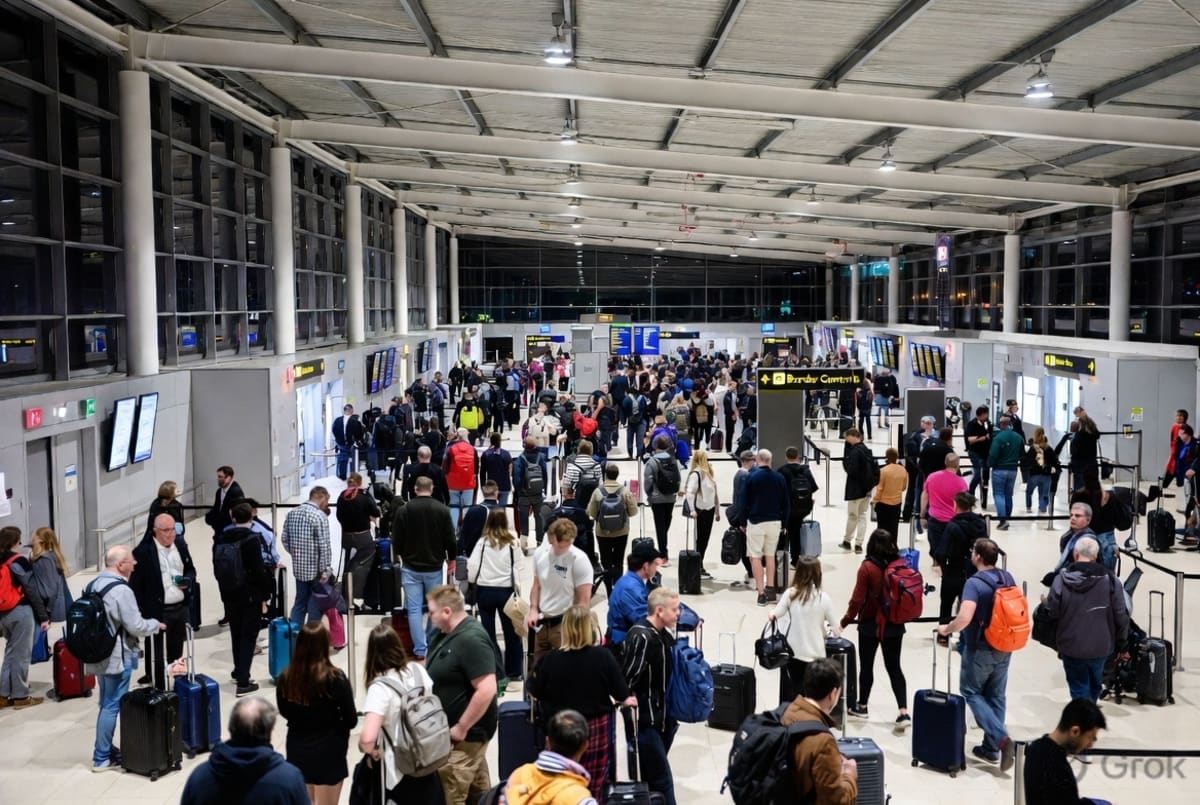
The United Kingdom's aviation network was thrown into disarray on Friday, May 30, 2026, as major airports reported a staggering number of disruptions. London Heathrow, the nation's busiest hub, bore the brunt of the chaos with 333 total disruptions, comprising 315 delays and 18 cancellations. This figure marks the most significant single-day impact at Heathrow since the current crisis began on February 28, 2026.
Across the country, the total count of flight disruptions reached 755, encompassing 734 delays and 21 cancellations at Heathrow, Gatwick, and Manchester Airport. This surge in operational gridlock has been exacerbated by the ongoing half-term holiday period, a time when travel demand typically peaks. The disruptions are affecting a wide range of airlines, including British Airways, Virgin Atlantic, easyJet, and Ryanair, impacting routes across transatlantic, Middle Eastern, Asian, and European skies.
The EU's Border Bottleneck
A significant contributor to the mounting delays, particularly for passengers traveling to continental Europe, is the European Union's new Entry/Exit System (EES). This system, designed to enhance border security by registering biometric data such as fingerprints and facial scans for non-EU travelers, requires additional checks at passport control upon entry and exit. While the EES aims to streamline processes, its implementation has led to considerably longer queues at airports across the Schengen Area.
European authorities report that nearly 80 million entries and exits have been recorded under the EES since its rollout. However, the Airports Council International (ACI Europe) surveyed 45 airports across 20 EU countries and found that EES-related delays were reaching up to three-and-a-half hours in some instances. This has prompted airlines and airport bodies to issue strong advisories to travelers. Wizz Air UK's managing director, Yvonne Moynihan, strongly recommended that passengers traveling between the UK and Europe arrive at airports at least three hours before their scheduled departure. She noted that while some airports have managed the transition smoothly with additional staff and self-service kiosks, others, particularly in popular destinations like Spain, Portugal, and France, are experiencing significant bottlenecks.
Travel experts are advising passengers to allow generous gaps between connecting flights and to keep essential items like water and chargers readily accessible while queuing. The cumulative effect of these new border procedures, coupled with existing pressures on the aviation sector, is straining summer travel plans for many Britons.
Cascading Disruptions and Systemic Strain
The impact of the disruptions is not confined to short-haul European routes. Heathrow's role as a critical transatlantic and Asia-Europe hub means that delays there have a cascading effect across the entire global network. Flights to major hubs such as New York JFK, Washington Dulles, and Chicago O'Hare have been affected, along with routes to Milan, Barcelona, Geneva, Stockholm, and Dublin.
Reports indicate that 17 flights were cancelled across four major UK airports on May 30, with Heathrow accounting for six of these cancellations. Airlines like British Airways, American Airlines, United, and JetBlue are among those experiencing widespread disruptions. This systemic strain is occurring against the backdrop of a broader, ongoing global aviation crisis, now in its 59th day, which has been linked to factors such as fuel supply concerns and aircraft maintenance backlogs.
In an effort to mitigate potential future disruptions, the UK government has been consulting with industry figures, including representatives from major airlines and airports. These discussions have focused on plans to provide airlines with more flexibility to adjust schedules early, thereby reducing the likelihood of last-minute cancellations. Measures being considered include allowing airlines to consolidate routes or hand back slots without penalty, with the aim of providing greater certainty for passengers and businesses during the busy summer season. Transport Secretary Heidi Alexander has emphasized the government's commitment to working with the industry to stay ahead of any problems, stating that while there are no immediate fuel supply issues, preparations are underway to ensure long-term certainty for travelers.
The Broader Impact on UK Travel
These widespread disruptions come at a time when the UK travel industry is already facing significant challenges. While consumer spending on travel has shown resilience, with a 2.4% rise in 2025 and an average annual spend per person of £1,455, the overall number of travelers has seen a slight decline. Factors such as increased air passenger duty (APD) rates, which rose by 13% in April 2026, and the removal of business rates relief for travel agents are adding to the cost pressures within the sector.
Furthermore, there are concerns about the long-term trajectory of UK tourism. Reports suggest a potential decline in visitor numbers, with some analysts describing it as an "active suffocation of an industry" due to budget cuts for tourism promotion agencies and a perceived lack of focus on enhancing the visitor experience. The UK's high cost of living, including expensive accommodation and dining, is also cited as a deterrent for both international and domestic tourists.
Looking ahead, the summer travel season is expected to remain challenging. The combination of peak demand, new border control systems, and the ongoing effects of global aviation pressures means that travelers are being advised to remain patient and well-prepared. While Greece has implemented measures to relax checks for British citizens at its borders to avoid disruption, the broader situation across Europe and within the UK suggests that vigilance and flexibility will be key for holidaymakers throughout the summer. The coming weeks will likely see continued monitoring of airport operations and passenger flows as the industry navigates these complex dynamics.
The situation at UK airports underscores the intricate web of factors affecting modern travel. From the macro-level impact of geopolitical events and new EU regulations to the micro-level challenges of peak season demand and operational strain, passengers are advised to stay informed and allow ample time for their journeys. The coming months will be crucial in determining whether the industry can effectively manage these pressures and ensure smoother travel experiences for all.