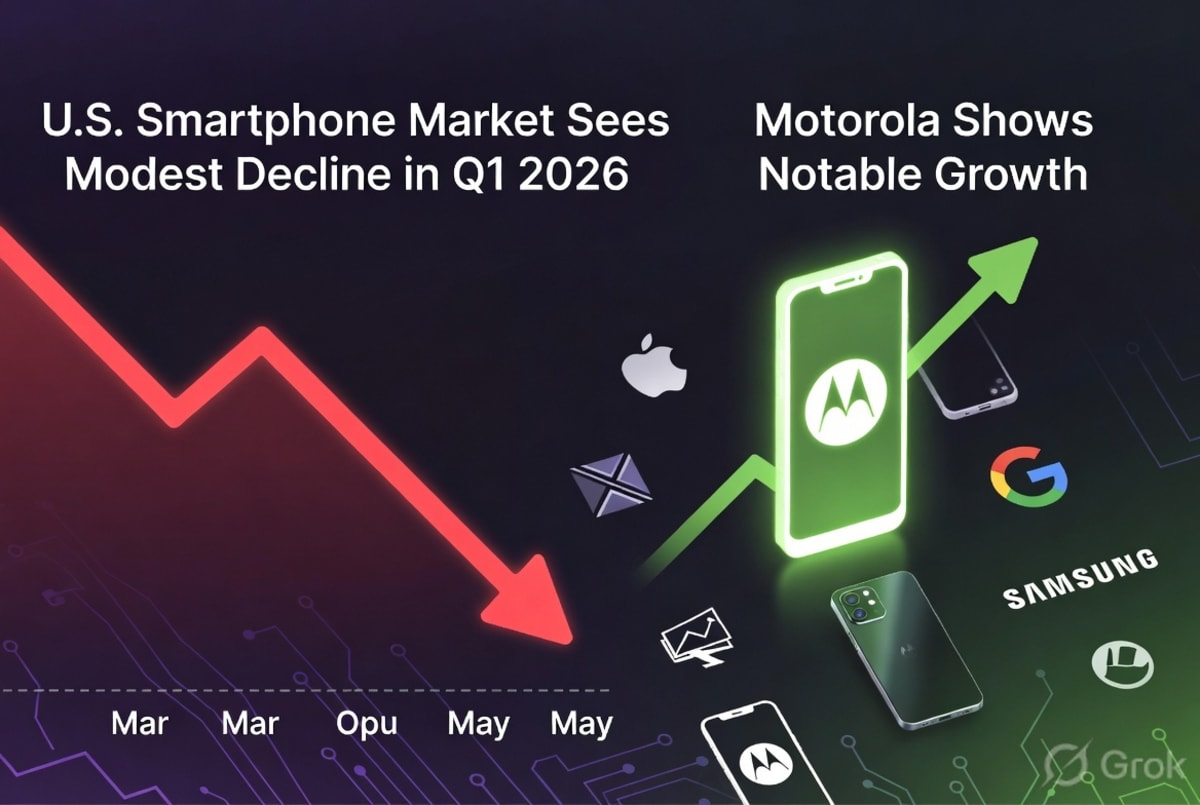
The U.S. smartphone market faced a challenging first quarter in 2026, with overall shipments dipping by 3% compared to the same period in the previous year. Research firm Omdia reported that a total of 33.4 million units were shipped nationwide during 1Q26. This modest decline, however, masks a more complex market dynamic where rising component costs, particularly for memory and storage, coupled with a more restrained approach to carrier upgrades and delayed product launches, significantly pressured vendors.
Despite the overall market contraction, Apple maintained its leading position, though its shipments also saw a 3% year-over-year decrease. The Cupertino-based company benefited from a delayed launch of Samsung's flagship Galaxy S26 series, which limited direct premium Android competition. Apple's iPhone 17 series accounted for a significant 70% of its total shipments, with continued promotional activity for older models like the iPhone 15 bolstering demand in the lower price tiers.
Samsung secured the second spot in the market, experiencing a 5% year-over-year decline in shipments. The late arrival of its Galaxy S26 devices contributed to this dip, although the series reportedly showed strong early traction with pre-orders up nearly 25% compared to its predecessor. During the first quarter, Samsung heavily relied on demand for its Galaxy A-series devices, particularly the Galaxy A17, which are largely driven by prepaid market segments.
Motorola's Unexpected Surge
In a market characterized by declines, Motorola stood out as the only major Android vendor to achieve positive growth, reporting an impressive 18% year-over-year increase in U.S. smartphone shipments for 1Q26. This significant uptick was primarily fueled by the company's refreshed Moto G portfolio, which accounted for over 70% of Motorola's total sales in the quarter. The brand's strategy of offering competitive mid-range devices appears to be resonating with U.S. consumers, especially in a market where premium devices are becoming increasingly expensive and carrier upgrade incentives are less aggressive.
Industry analysts suggest that Motorola's growth is a testament to its focused product strategy and its ability to capitalize on market gaps left by competitors. While Motorola's overall market share remains smaller compared to Apple and Samsung, its substantial growth rate in a contracting market is a significant development. This performance may also be partly attributed to the broader market's lack of compelling new offerings in the mid-range segment from other manufacturers.
Factors Driving Market Contraction
Several intertwined factors contributed to the overall slowdown in the U.S. smartphone market during the first quarter of 2026. Rising memory and storage costs have directly impacted manufacturing expenses, leading to increased device prices or reduced margins for manufacturers. Furthermore, carriers have adopted a more restrained upgrade environment, potentially due to economic uncertainties or a strategic shift in their subsidy models. This means consumers may be holding onto their devices longer or facing less enticing upgrade offers.
Delayed device launches for key premium models also compressed sell-through periods, impacting overall shipment numbers. For instance, the delayed arrival of Samsung's flagship devices meant that a crucial sales window was missed or shortened. Conversely, anticipated price increases for the second quarter drove some channel pull-forward for budget models, offering a slight offset to the overall decline.
Omdia's analysis indicates that these pressures are likely to persist throughout 2026, with a forecast predicting a 4% decline in U.S. smartphone shipments for the full year. The report also highlights the emerging trend of AI-native devices, suggesting that artificial intelligence integration could reshape consumer perceptions of smartphone upgrade value in the longer term, although immediate market substitution is not expected.
Mobile App Landscape: Banking and Federal Initiatives
Beyond hardware sales, the mobile app ecosystem continues to evolve. In the financial sector, a recent JD Power study revealed that while banks are rapidly expanding the use of AI-powered virtual assistants in their mobile apps, these tools often struggle with complex customer scenarios. Despite these AI-related friction points, overall satisfaction with digital banking and credit card mobile apps remains strong, driven by core digital experiences like seamless login, modern design, and intuitive navigation. Chase ranked highest in mobile banking app satisfaction among national banks, while American Express led in credit card mobile app satisfaction.
In a notable government initiative, the Trump Accounts app was launched on May 28, 2026. This app serves as the primary interface for a new federal program designed to help children save money for their future. Eligible children born between 2025 and 2028 will receive a $1,000 contribution from the U.S. government, with funds to be invested in the stock market. Parents and guardians can manage these accounts through the app, which is available on major mobile app stores. The Treasury Department has emphasized vigilance against scams, stating that legitimate communications will only come via email from a specific Treasury address.
Looking ahead, the U.S. smartphone market faces ongoing challenges, with component costs and carrier strategies likely to continue influencing sales. The emergence of AI in mobile devices and evolving app functionalities in sectors like finance will shape consumer choices and expectations. Motorola's recent growth suggests that a focused strategy on value and performance can still carve out significant market share even in a mature and competitive landscape. The full impact of AI-driven features on smartphone upgrade cycles remains a key area to watch as the year progresses.