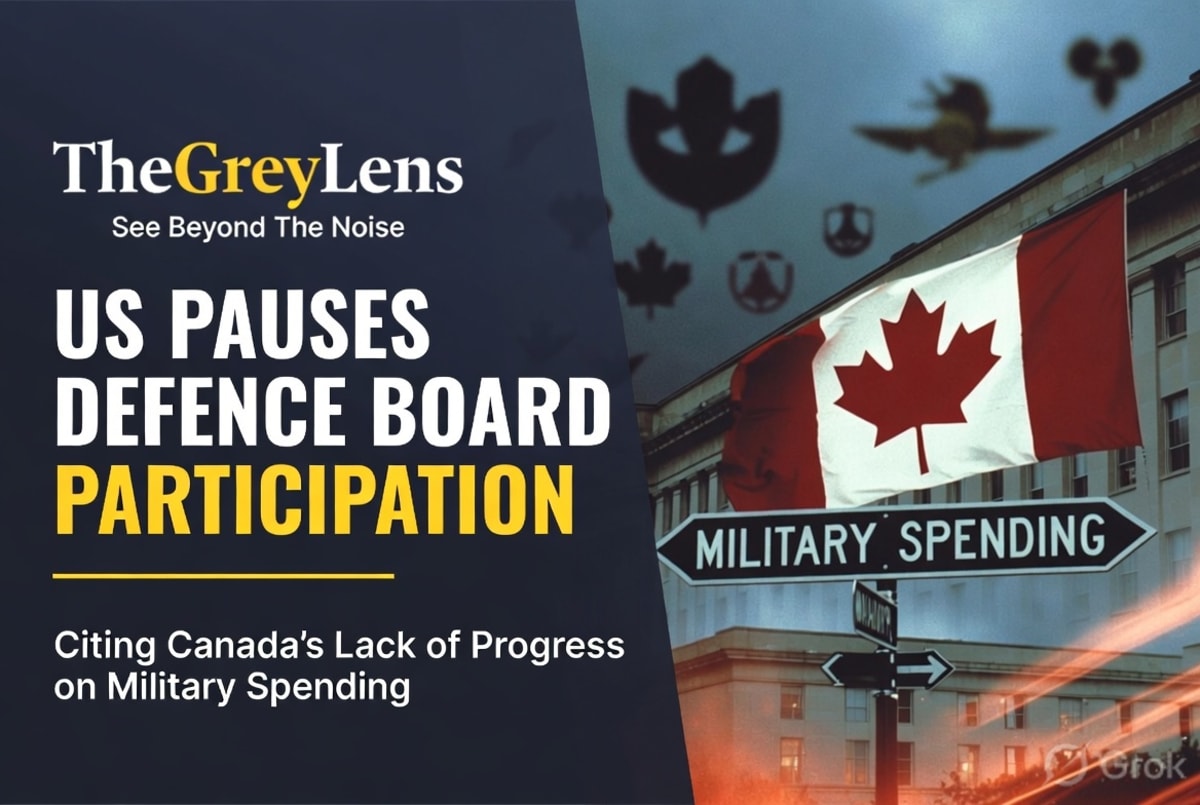
The United States has temporarily halted its involvement in a long-standing joint defence board with Canada, a move announced on Monday, May 18, 2026. The Pentagon cited a lack of "credible progress" from Canada on its defense spending commitments as the primary reason for pausing participation in the Permanent Joint Board on Defence (PJBD), an advisory body focused on North American continental defense since 1940.
Accusations of Stalled Military Investment
U.S. Undersecretary of War for Policy, Elbridge Colby, stated that "only by investing in our own defense capabilities will Americans and Canadians be safe, secure, and prosperous." He further articulated that "Canada has failed to make credible progress on its defense commitments." Colby's statements, made via social media, implicitly linked the U.S. decision to Prime Minister Mark Carney's recent emphasis on alliances beyond the United States, particularly in the context of ongoing trade disputes and political rhetoric. Colby suggested that the gap between Canada's stated intentions and its actual defense investments could no longer be overlooked, emphasizing the need for "shared defense and security responsibilities".
Canada Highlights Increased Defence Spending and Northern Strategy
In response to the U.S. announcement, Canadian Defence Minister David McGuinty provided a list of new government spending commitments aimed at bolstering the Canadian Armed Forces. These include significant military investments in Canada's North and the procurement of new under-ice submarines, underscoring Canada's commitment to continental defense and Arctic sovereignty. Canada maintains that it is always prepared for constructive discussions regarding the strengthening of mutual security. The government's recent budget allocations reflect a strategic focus on modernizing military capabilities and expanding presence in strategically important regions.
The pause in participation by the Pentagon comes amidst a backdrop of shifting geopolitical alliances and evolving security challenges. The PJBD has historically served as a crucial forum for coordinating defense strategies and addressing shared threats between the two North American neighbours. The U.S. administration's move signals a potential strain on the bilateral defense relationship, prompting scrutiny of each nation's contributions to collective security.
Broader Implications for Bilateral Relations and Security
This development raises questions about the future of Canada-U.S. defense cooperation and the broader implications for North American security. While the U.S. has expressed disappointment, Canada's emphasis on its strategic investments, particularly in the Arctic, signals a commitment to its own defense modernization. The coming weeks will likely see further dialogue between Ottawa and Washington to address these concerns and determine the path forward for the Permanent Joint Board on Defence. The situation underscores the ongoing importance of defense spending and burden-sharing within allied nations, particularly in an era of heightened global uncertainty and evolving security paradigms.