

Washington, D.C. — May 14, 2026
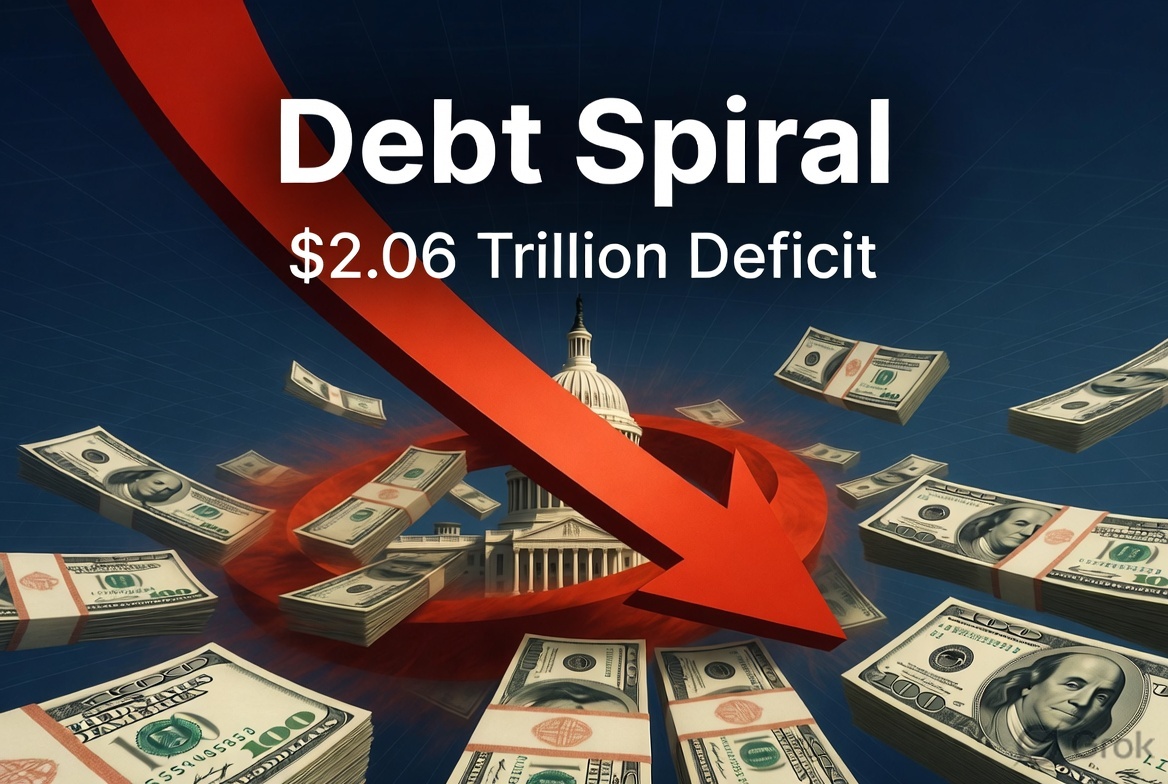
The U.S. Treasury Department’s latest Quarterly Refunding Documents have delivered a sobering update on the nation’s fiscal trajectory. According to projections from the Office of Management and Budget (OMB), the federal government is expected to run a deficit of $2.06 trillion in fiscal year 2026, which ends on September 30, 2026. This figure exceeds earlier estimates from the Congressional Budget Office and underscores a growing gap between government revenues and expenditures.
To put the scale into perspective: a $2.06 trillion annual deficit equates to more than $166 billion in new borrowing every month. This means the Treasury must issue fresh debt at a pace of roughly $5.5 billion per day to finance ongoing operations and meet existing obligations.
A Structural Challenge, Not a Temporary Crisis
What distinguishes the current fiscal situation is its structural nature. Previous episodes of massive deficits — such as those during the 2008 global financial crisis and the COVID-19 pandemic — were largely driven by one-time emergency spending. Those short-term surges eventually moderated as economic conditions normalized.
In contrast, today’s deficit is increasingly embedded in the federal budget’s baseline. Mandatory spending on programs such as Social Security, Medicare, and Medicaid continues to rise due to an aging population and expanding healthcare costs. Combined with sustained discretionary spending on defense and other priorities, these factors have created a persistent imbalance that shows little sign of self-correction under current policies.
Interest Payments Emerge as the Primary Driver
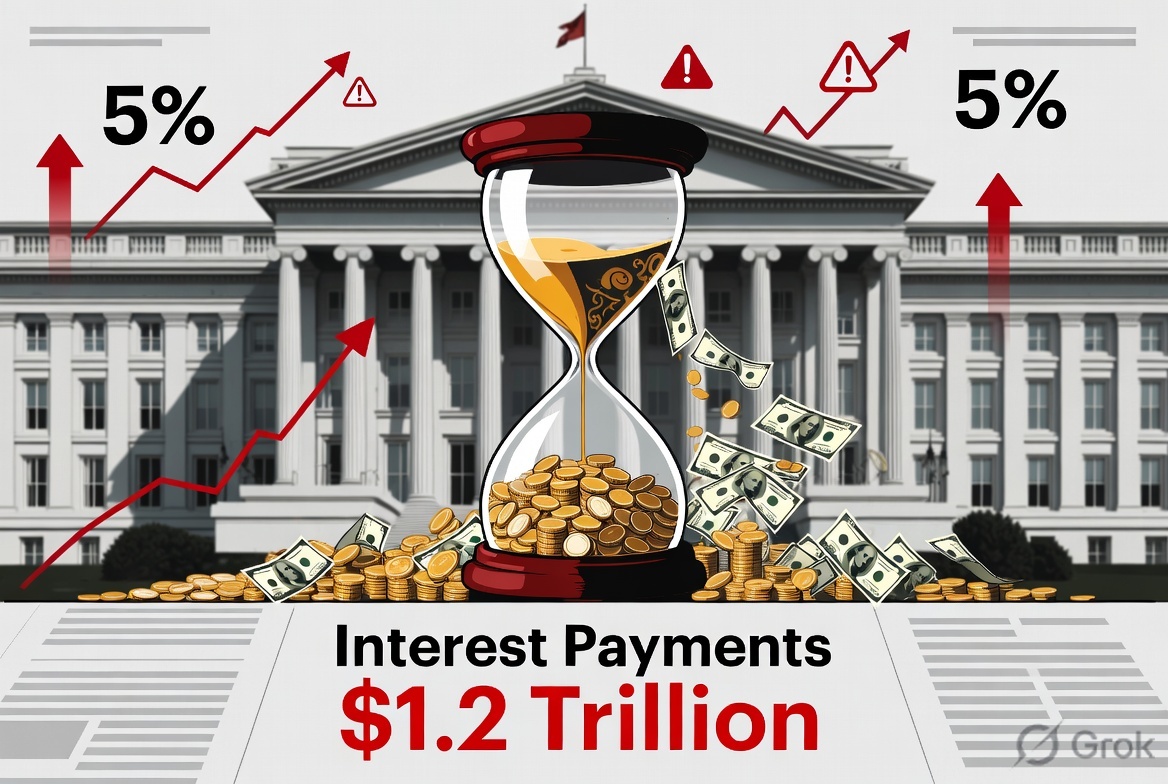
One of the most concerning elements highlighted in the Treasury documents is the explosive growth in interest payments on the national debt. Annual net interest costs have now surpassed $1.2 trillion and represent the fastest-growing component of the federal budget.
As lower-interest debt issued during the era of near-zero rates matures, the Treasury is refinancing it at significantly higher prevailing rates — currently near 5 percent. This refinancing cycle is intensifying the burden. Each new issuance not only adds to the principal but also locks in higher future interest obligations, creating what economists have termed a “debt spiral.”
In simple terms: the government is increasingly borrowing money simply to pay the interest on previously borrowed money. This dynamic reduces fiscal flexibility and crowds out funding for other national priorities.
Key Figures at a Glance
These numbers reflect a new fiscal reality where interest payments alone are projected to consume a larger share of federal revenues than many major discretionary programs in the coming years.
Broader Economic Implications
The rising debt burden carries significant long-term risks. Higher interest costs leave less room in the budget for productive investments in infrastructure, education, research and development, or national security. Over time, sustained large-scale government borrowing can compete with private sector access to capital, potentially slowing economic growth and productivity.
Financial markets have so far absorbed the heavy volume of Treasury issuance without major disruption, supported by the U.S. dollar’s status as the world’s reserve currency and strong global demand for safe assets. However, analysts caution that this tolerance is not unlimited. Should investor confidence wane or interest rates rise further, the cost of servicing the debt could accelerate even more rapidly.
The Path Forward
The latest Treasury data arrives at a critical juncture. With trillions of dollars in existing debt scheduled to mature in the coming years, policymakers face mounting pressure to address the underlying drivers of the deficit. Options include reforming entitlement programs, adjusting tax policies, or implementing meaningful spending restraint — all of which carry political challenges.
Without substantive action, projections suggest deficits will remain elevated, pushing the debt-to-GDP ratio higher and increasing the risk of a more constrained fiscal future. Future generations may ultimately bear the cost through higher taxes, reduced public services, or slower economic opportunities.
As the Treasury continues its borrowing operations to bridge the monthly gaps, the Quarterly Refunding Documents serve as a clear reminder: America’s fiscal path is no longer shaped solely by external shocks — it is increasingly defined by choices made in Washington. The question now is whether lawmakers will muster the resolve to confront these structural imbalances before they become even more entrenched.