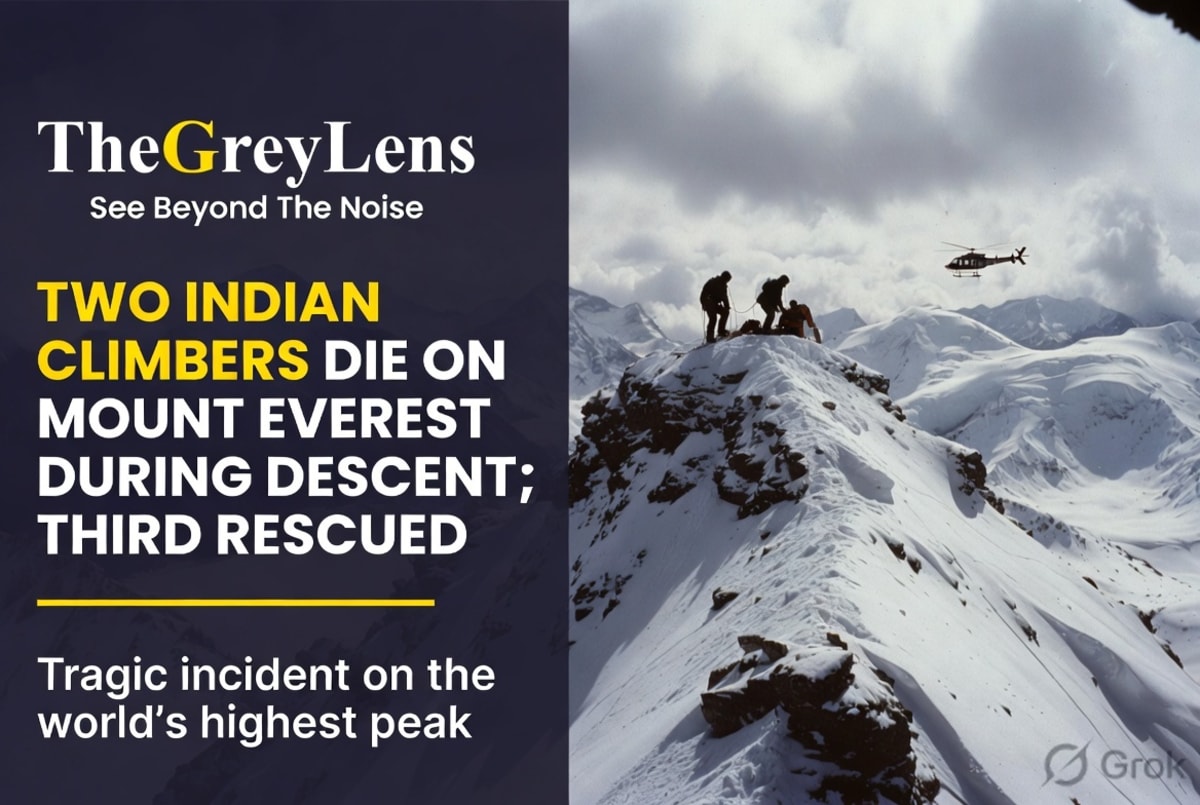
The perilous slopes of Mount Everest have claimed the lives of two Indian mountaineers, Arun Kumar Tiwari and Sandeep Are, during their descent after achieving their summit goals. The tragic incidents, which occurred on May 21 and May 20 respectively, have underscored the extreme dangers inherent in high-altitude climbing and brought the total death toll on the world's highest peak this season to five. A third Indian climber is reportedly in the process of being rescued from the South Col region.
Summit Success Followed by Tragedy
Both Arun Kumar Tiwari and Sandeep Are had successfully reached the summit of Mount Everest on May 21 and May 20, according to expedition officials. However, their triumphant ascents turned to tragedy as they fell seriously ill during their descent. Tiwari reportedly died near the notorious Hillary Step, just below the summit, while being assisted by Sherpa climbers. Are suffered from severe snow blindness immediately after reaching the peak. He was subsequently rescued from the South Summit area by a team of five Sherpa rescuers and brought down to Camp II, where he later succumbed to his condition. Efforts are underway to bring Are's body back to Kathmandu. The identities of the climbers and the specific circumstances of their illnesses are being confirmed by expedition operators.
Mount Everest's Deadly Season Continues
These latest fatalities add to a grim tally for the 2026 climbing season on Everest. Earlier this season, three Nepali climbers also lost their lives on the mountain. Among them were Phura Gyaljen Sherpa, who died after falling into a crevasse near Camp III, and Bijay Ghimire Bishwakarma, who died of a suspected cardiac arrest in the Khumbu Icefall on May 10. Lakpa Dendi Sherpa also died on May 4 after falling near Gorak Shep. Expedition organizers and officials have pointed to a confluence of factors contributing to the high number of casualties, including overcrowding on the routes, challenging weather conditions, and altitude-related health complications. Despite advancements in rescue operations, Everest remains one of the world's most dangerous climbing destinations. The sheer volume of climbers attempting to summit, particularly during favorable weather windows, has raised concerns about safety and the potential for bottlenecks in critical sections of the mountain. Reports from the ground indicate a record number of climbers reached the summit via Nepal's southern route in the days leading up to these tragedies, with preliminary figures suggesting over 275 ascents on a single day. This surge in traffic, coupled with the inherent risks of the environment, creates a precarious situation for all involved.
Calls for Regulation and Safety Enhancements
The recurring tragedies on Everest have reignited discussions about the need for stricter regulations and improved safety protocols. Some experts and officials have called for measures to limit the number of climbers allowed on the mountain during peak seasons and to implement more rigorous quality checks for both climbers and guiding services. The focus on adventure tourism safety has also been a theme in India, with recent seminars discussing risk management and the need for higher safety standards across the sector. While these discussions are crucial for the future of mountaineering, the immediate concern remains the safe retrieval of deceased climbers and the continued rescue efforts for those in distress. The delicate balance between enabling the dreams of adventurers and ensuring their safety on one of the planet's most unforgiving environments remains a critical challenge for the international mountaineering community.