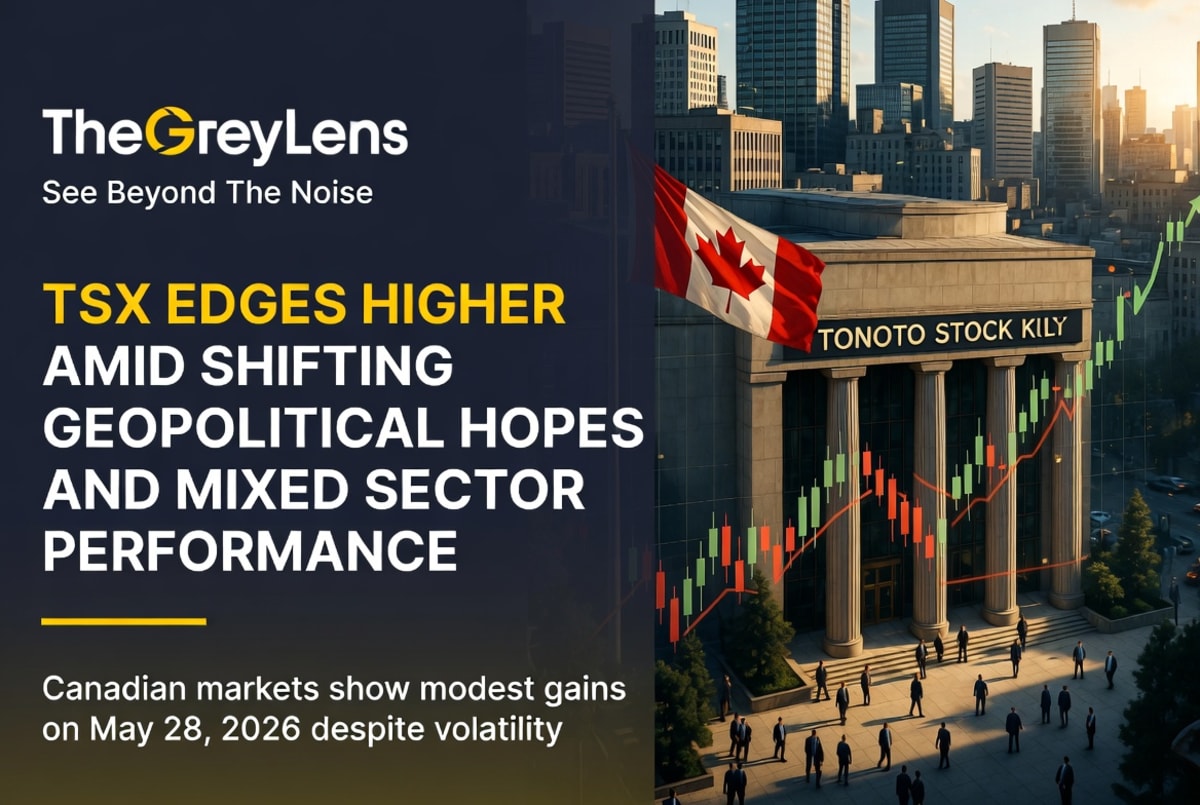
The S&P/TSX Composite Index registered a slight increase on Thursday, May 28, 2026, as markets reacted to evolving geopolitical tensions and a diverse array of corporate and economic signals. The index closed up 29.12 points at 34,441.17, a move that followed a more significant dip the previous day and reflected a cautious optimism stemming from potential diplomatic breakthroughs in the Middle East.
Geopolitical Winds Shift Market Sentiment
Significant market movements were tied to the ongoing situation between the United States and Iran. Reports emerged of a tentative agreement to extend a ceasefire, a development that injected a degree of optimism into global markets. Steve Locke, chief investment officer for fixed income and multi-asset strategies at Mackenzie Investments, noted that "Today's trading, it really reflects a few things. Obviously, we have large geopolitical issues that are continuing to work their way through market pricing with a lot of hope that we'll see a truce and ceasefire in the conflict in the Middle East around the Strait of Hormuz." This potential easing of tensions offered a counterpoint to earlier anxieties that had weighed on commodity prices, particularly oil. The prospect of a de-escalation also provided a backdrop for a rebound in gold prices, which had seen some losses. Mining stocks, including Agnico Eagle, Wheaton Precious Metals, and Barrick, experienced gains as gold pared its earlier declines.
Sectoral Divergence: Tech and Metals Shine, Banks Mixed
The technology sector provided a notable boost to the TSX. Companies such as Shopify, which gained 7.4%, and Constellation Software, up 4.0%, tracked positive trends in their U.S. counterparts. This strength in tech was mirrored by gains in base metal stocks, contributing to the overall upward trajectory of the Canadian index.
However, the performance of major Canadian banks presented a more mixed picture. While RBC traded little changed despite reporting higher quarterly profits bolstered by trading revenue, and TD Bank showed muted movement after stronger adjusted earnings, other financial institutions experienced declines. CIBC lost 2.7%, and BMO was down 1.2%. Notably, National Bank of Canada saw a significant drop of 4% following its fiscal second-quarter earnings report. Despite posting year-over-year profit growth and increasing its dividend by 6%, concerns about a slight decline in its common equity tier-one (CET1) ratio and softer performance in its capital markets segment seemed to outweigh the positive news for investors.
Economic Undercurrents: Inflation Fears and Commodity Volatility
Underpinning some of the market's caution were persistent concerns about inflation and the volatility of commodity prices. Data indicating an acceleration in U.S. PCE inflation to a three-year high in April reinforced expectations of a hawkish stance from central banks, a factor that can influence interest rate policies and broader market sentiment. The earlier volatility in oil prices, driven by the conflict impacting the Strait of Hormuz, had a significant influence on the energy sector and broader inflationary pressures. While the tentative U.S.-Iran agreement offered some relief, the underlying economic sensitivities remained a key consideration for market participants.
Looking ahead, market observers will be closely monitoring further developments in U.S.-Iran relations, as well as upcoming corporate earnings reports, particularly from the remaining major Canadian banks. The direction of commodity prices, especially oil and gold, will also be crucial in shaping sector performance. Investors will be seeking clarity on the sustainability of the recent geopolitical de-escalation and its impact on global economic stability and inflationary trends. The performance of technology stocks will also remain a key area to watch, given their significant contribution to recent market gains. The TSX's ability to maintain its upward momentum will likely depend on a confluence of factors, including sustained positive geopolitical news, resilient corporate earnings, and a clearer outlook on inflation and interest rate trajectories.