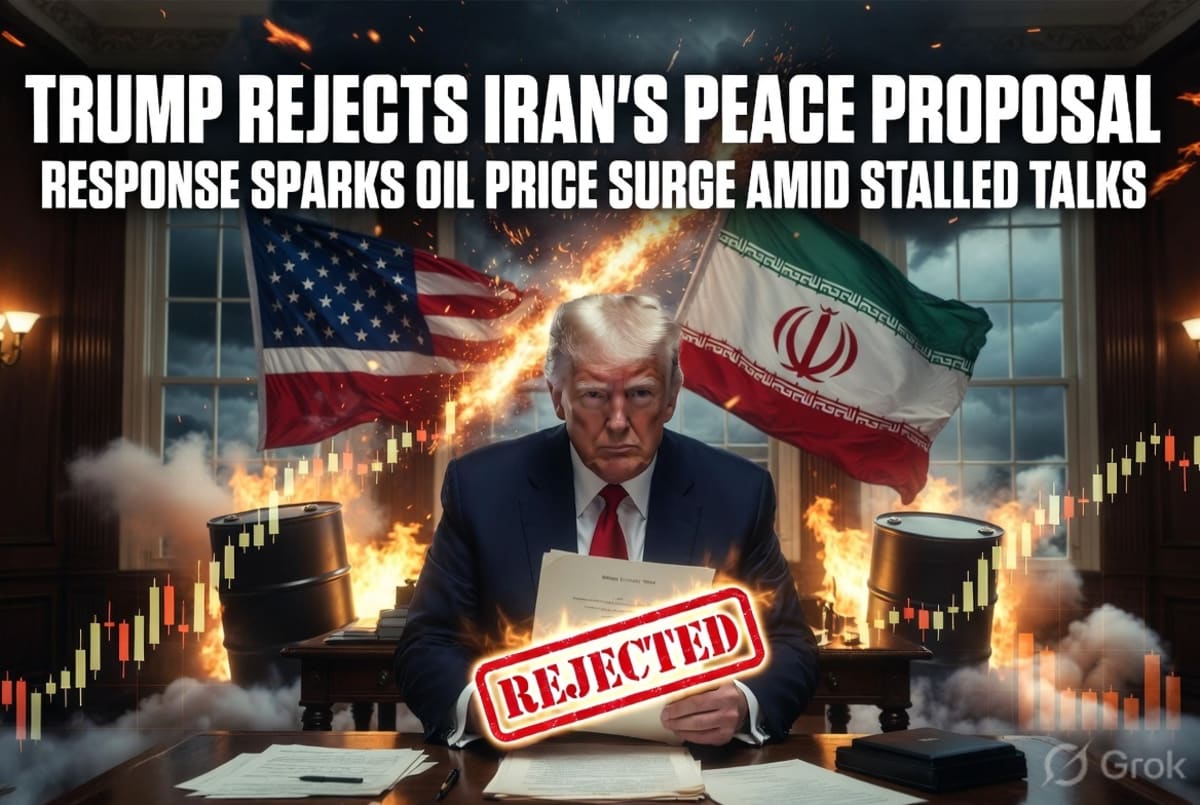
In a decisive move that sent tremors through global markets, President Donald Trump on Monday rejected Iran's response to a U.S. peace proposal, declaring it "TOTALLY UNACCEPTABLE." The swift dismissal, announced via social media, has effectively stalled nascent negotiations aimed at ending the 10-week-old conflict and has sent oil prices climbing sharply. The ongoing stalemate continues to paralyze shipping through the crucial Strait of Hormuz, a waterway vital for global energy transport.
Iran's Counter-Offer and the U.S. Stance
Days after the U.S. floated an offer to re-open negotiations, Iran on Sunday presented its response, which reportedly focused on ending the war on all fronts, particularly in Lebanon, where U.S. ally Israel is engaged with Iran-backed Hezbollah militants. According to Iranian state media, Tehran's proposal also included demands for compensation for war damages and an assertion of Iranian sovereignty over the Strait of Hormuz. Further demands from Iran included an end to the U.S. naval blockade, guarantees against further attacks, the lifting of sanctions, and the cessation of the U.S. ban on Iranian oil sales, as reported by the semi-official Tasnim news agency. President Trump's immediate and unequivocal rejection on his social media platform, Truth Social, offered no further details but signaled a firm stance against the terms presented by Tehran. The U.S. had initially proposed an end to hostilities before addressing more contentious issues, including Iran's nuclear program.
Market Reaction and Geopolitical Fallout
In the wake of Trump's rejection, oil prices jumped approximately $3 a barrel on Monday. This surge reflects growing concerns over the protracted conflict and its impact on global energy supplies. The Strait of Hormuz, which before the war carried one-fifth of the world's oil supply, has become a central pressure point, with its continued closure having significant economic repercussions. The war's unpopularity with U.S. voters, who are facing sharply higher gasoline prices less than six months before nationwide elections, adds another layer of complexity. International support for the U.S. position has also been limited, with NATO allies reportedly refusing to commit ships to open the Strait of Hormuz without a comprehensive peace deal and an internationally mandated mission.
Uncertainty Ahead for Diplomatic and Military Paths
With diplomatic efforts hitting a deadlock, the threat to shipping lanes and regional economies remains high. Recent days have seen escalations in fighting around the Strait of Hormuz, underscoring the volatility of the situation. The United Arab Emirates reported intercepting two drones originating from Iran, while Qatar condemned a drone attack on a cargo ship. The path forward remains unclear, with no immediate indications of fresh diplomatic initiatives or military actions. The continued paralysis of the Strait of Hormuz, coupled with the rejection of Iran's response, suggests a prolonged period of tension and potential escalation in the region.