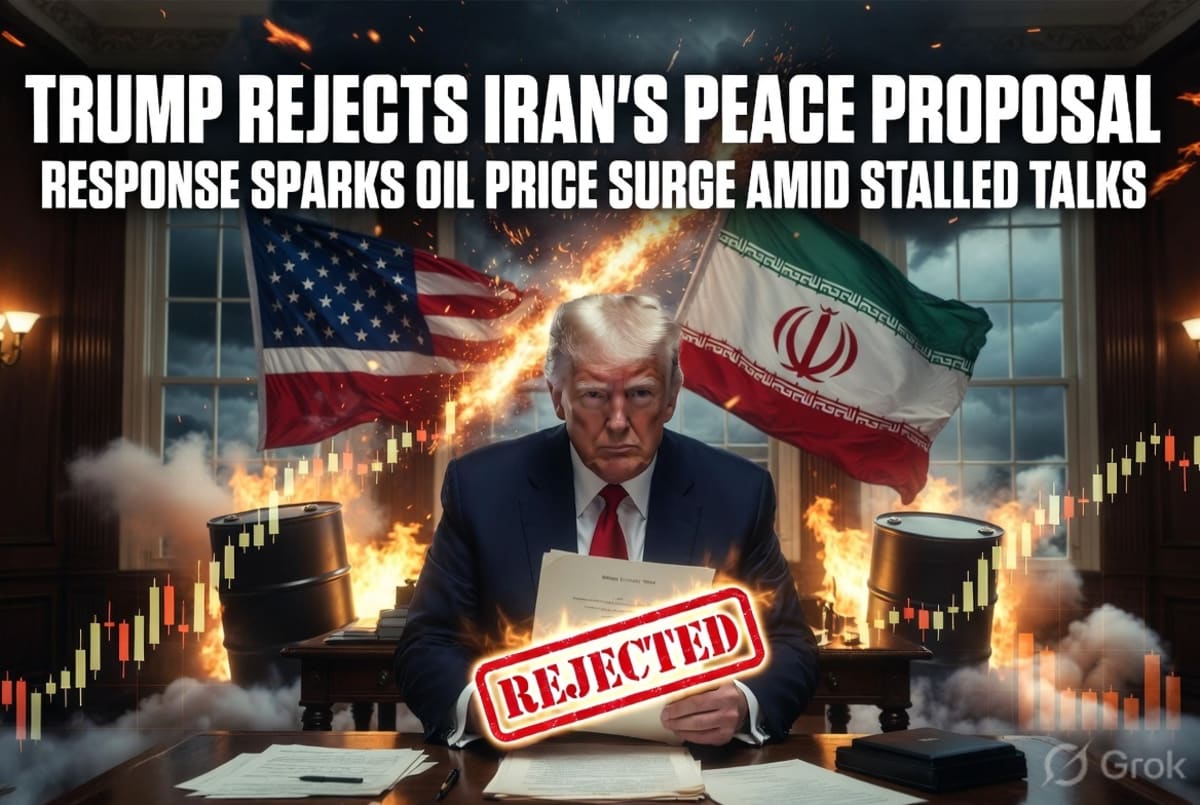
Diplomatic Impasse Sends Oil Prices Soaring
Global oil prices experienced a sharp increase on Monday, May 11, 2026, following President Donald Trump's declaration that Iran's response to a U.S. peace proposal was "totally unacceptable." This rejection has heightened supply fears, particularly as the Strait of Hormuz, a critical chokepoint for global oil transit, remains largely closed due to the ongoing conflict. Brent crude futures saw a significant jump, trading at $103.12 a barrel, while U.S. West Texas Intermediate (WTI) crude futures also climbed, reaching highs of $100.37 earlier in the session. The market had previously seen losses on hopes for an imminent end to the 10-week-old conflict, but Trump's firm rejection has dashed those expectations, signaling a potential for prolonged instability.
Iran's Proposal and U.S. Rejection
Iran's counter-proposal, delivered via Pakistani mediators, reportedly focused on demands such as an end to military operations, the release of frozen assets, and the lifting of sanctions and blockades on its ports. However, the U.S. administration, led by President Trump, found the offer to be "unacceptable" and "a piece of garbage," with Trump stating he "didn't even finish reading it." A key sticking point appears to be Iran's nuclear program, with the U.S. insisting on significant curbs, while Iran seeks to discuss sanctions relief and maritime security first. The U.S. had presented a 14-point memorandum last week, which included a framework for further talks on Iran's nuclear program and reopening the Strait of Hormuz. The divergence in demands highlights a deep diplomatic impasse, with both sides appearing far from an agreement.
Global Market Impact and Future Outlook
The continued closure of the Strait of Hormuz, through which approximately a fifth of the world's oil and gas supply normally passes, is a major driver of the current oil price surge. The disruption has led to an estimated loss of about 1 billion barrels of oil over the past two months, with analysts warning that market stabilization will take time even if transit resumes. The situation is further complicated by vessels disabling their Automatic Identification Systems to avoid detection, hindering real-time cargo tracking. Looking ahead, President Trump is scheduled to meet with Chinese President Xi Jinping later this week, where Iran is expected to be a topic of discussion. China's role as a major buyer of Iran's sanctioned crude oil gives Xi Jinping potential leverage. Analysts predict oil prices will likely remain elevated, potentially staying above $100 per barrel as long as negotiations remain inconclusive and transport disruptions persist. The fragile ceasefire is described as being on "life support," and there is a growing consideration within the Trump administration for a resumption of military operations if diplomatic efforts continue to stall.