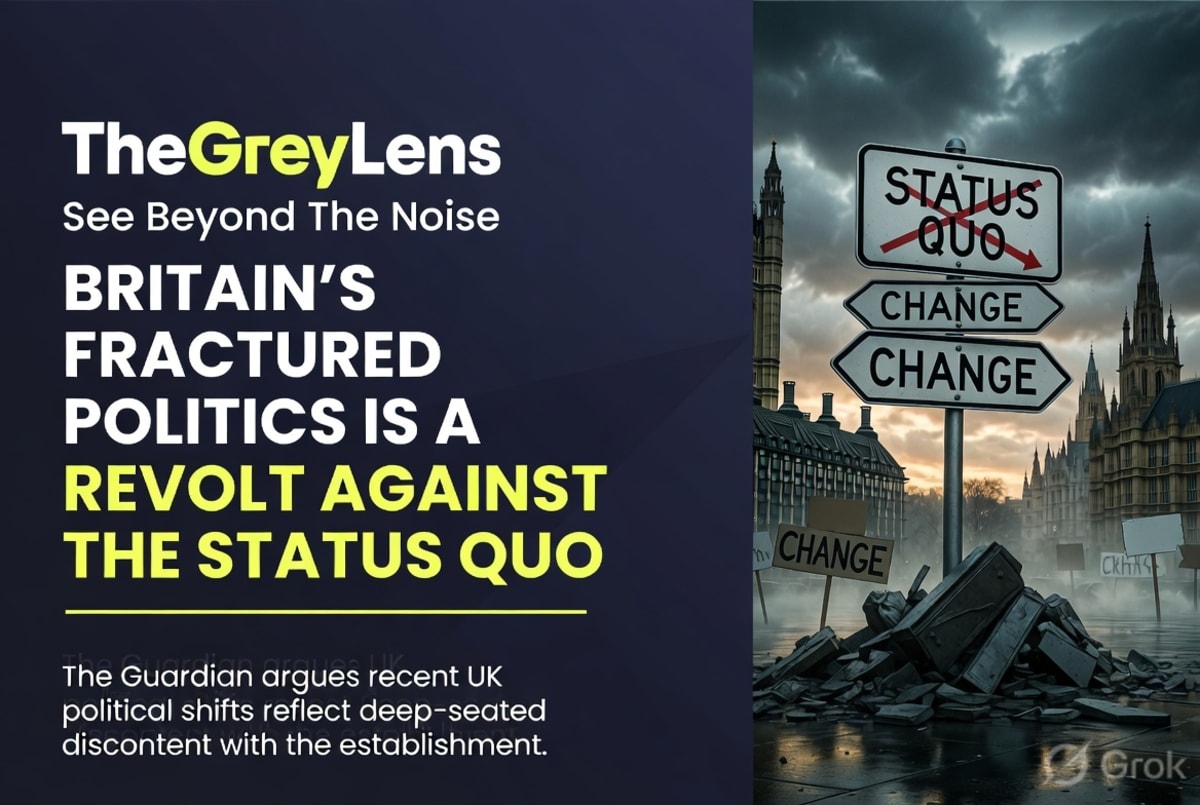
The recent surge in political fragmentation across the United Kingdom, marked by unexpected electoral results and a palpable sense of voter discontent, signals a profound revolt against the entrenched status quo. This sentiment, as articulated in a recent editorial by The Guardian, suggests that the electorate is no longer content with the traditional offerings of established political parties, pushing towards a more unpredictable and dynamic political future.
A Mandate for Change, Not Just a Protest
The editorial posits that the current political climate is not merely a transient protest but a genuine expression of a desire for fundamental change. Voters, tired of what they perceive as a stagnant and unresponsive political system, are actively seeking alternatives that better reflect their concerns and aspirations. This disillusionment spans across various demographics and regions, indicating a widespread dissatisfaction with the direction of the country. The piece highlights that this sentiment is driving a re-evaluation of political allegiances, with voters more willing than ever to explore options outside the conventional political spectrum. The implications of this shift are significant, potentially reshaping the electoral map and forcing political parties to fundamentally rethink their strategies and platforms to reconnect with an increasingly disengaged populace.
The Erosion of Traditional Party Loyalties
A key aspect of this political revolt is the noticeable erosion of traditional party loyalties. For decades, voters in the UK have often adhered to long-standing party affiliations, passed down through generations or rooted in class identity. However, The Guardian's analysis indicates that these ties are weakening, allowing for greater flexibility and a more issue-driven approach to voting. This phenomenon is particularly evident in the rise of smaller parties and independent candidates who are able to tap into specific grievances or offer a fresh perspective. The editorial emphasizes that this decline in party loyalty makes the political landscape more volatile, as parties can no longer rely on a predictable base of support. Instead, they must constantly work to earn the trust and confidence of voters who are open to persuasion and driven by a desire for tangible solutions to pressing issues.
Navigating the Uncharted Waters of UK Politics
The path forward for the UK's political establishment is undoubtedly complex. As the electorate continues to express its desire for change, political parties will be compelled to adapt or risk further marginalization. The Guardian's editorial suggests that the current wave of political discontent is a wake-up call, demanding greater transparency, accountability, and a more inclusive approach to governance. The coming months and years will likely see a continued reordering of the political landscape, as new alliances form and established powers grapple with the evolving demands of a populace eager for a break from the past. The challenge for all political actors will be to navigate these uncharted waters with a genuine commitment to addressing the underlying causes of this revolt and building a more responsive and representative political system for the future.