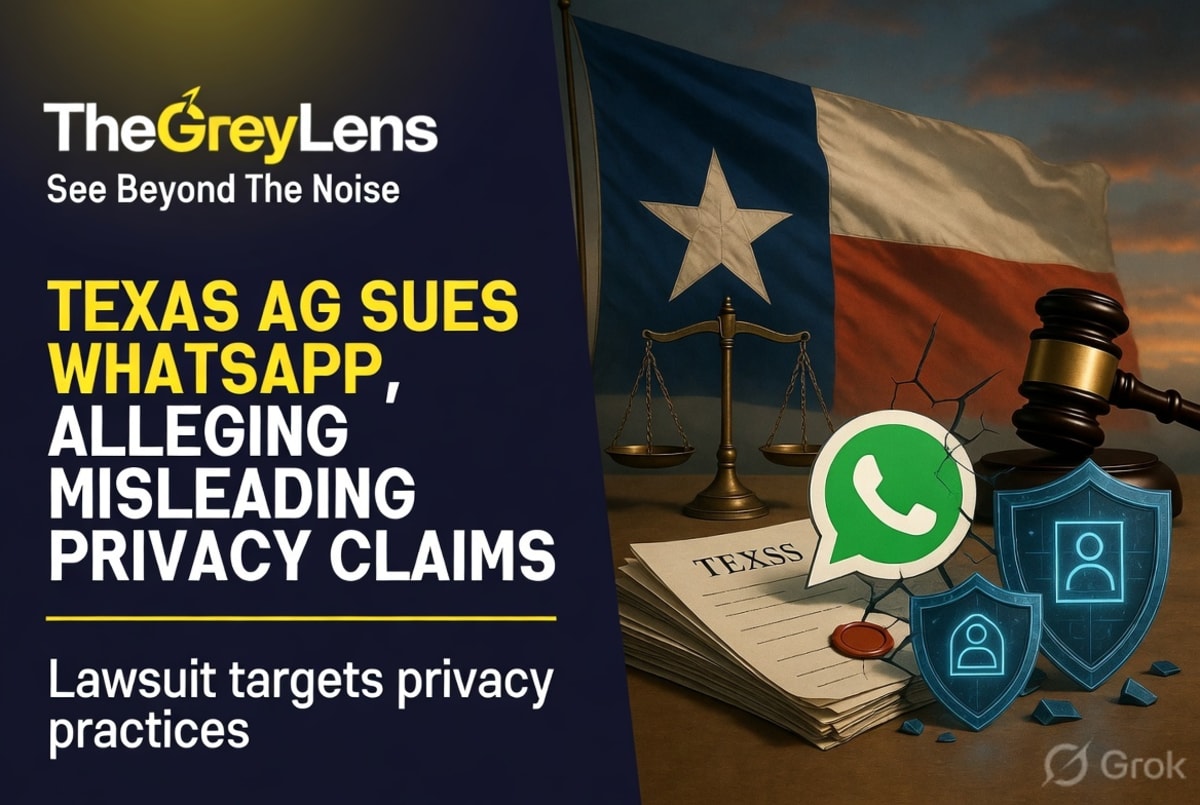
Texas Attorney General Ken Paxton has initiated legal action against WhatsApp and its parent company, Meta, alleging that the popular messaging application has been deceptive regarding the privacy of user communications. The lawsuit, filed in Harrison County District Court on Thursday, contends that despite WhatsApp's prominent advertising of end-to-end encryption, the company and Meta possess the capability to access a vast majority of messages sent through the platform.
Allegations of Deceptive Trade Practices
Attorney General Paxton asserts that WhatsApp's claims of complete message privacy, where only senders and recipients can view content, are false. The suit, which cites a Bloomberg article as a basis for its claims, alleges that Meta and WhatsApp have violated the Texas Deceptive Trade Practices Act by making these misleading representations. According to the complaint, a "tiered permissions system" has been in place since at least 2019, granting varying levels of access to WhatsApp content to a significant number of Meta employees, contractors, and even overseas workers, particularly in India.
Paxton's office is seeking an injunction to prevent Meta and WhatsApp from accessing Texans' communications without explicit consent. Additionally, the lawsuit seeks civil penalties of $10,000 per violation of the Texas Deceptive Trade Practices Act. The core of the lawsuit revolves around the discrepancy between WhatsApp's public messaging about its privacy features and the alleged internal practices that allow for message monitoring.
WhatsApp's Encryption and Meta's Access
WhatsApp has long promoted its use of end-to-end encryption, a security feature designed to ensure that only the intended recipients can read messages. This encryption is meant to prevent even WhatsApp itself from accessing the content of these communications. However, the Texas lawsuit suggests that this advertised security is not absolute, and that Meta, through its operational structure, can in fact view a substantial portion of user data. The allegations point to a system where access is not as restricted as publicly presented, raising significant concerns about user privacy for the millions of Texans who rely on WhatsApp for their daily communications.
The legal challenge comes at a time when data privacy and the practices of major technology companies are under increasing scrutiny. The lawsuit demands transparency and accountability from Meta regarding its handling of user data on the WhatsApp platform. The outcome of this case could have far-reaching implications for how messaging applications communicate their privacy policies and how user data is managed across the industry.
Looking Ahead: Legal Ramifications and User Trust
This legal action by the Texas Attorney General's office underscores the ongoing tension between technological innovation, user privacy, and corporate transparency. As the case progresses, it will be crucial to examine the evidence presented by both sides regarding Meta's and WhatsApp's access to user communications. The court's decision will not only determine the legal liability of the companies involved but also significantly impact consumer trust in encrypted messaging services. The broader implications could lead to stricter regulations or industry-wide changes in how privacy is implemented and communicated to users worldwide. The lawsuit also follows a recent Meta settlement concerning the alleged harms of social media to school districts, highlighting a pattern of legal challenges faced by the tech giant. This development is one to watch closely as it unfolds in the coming months.