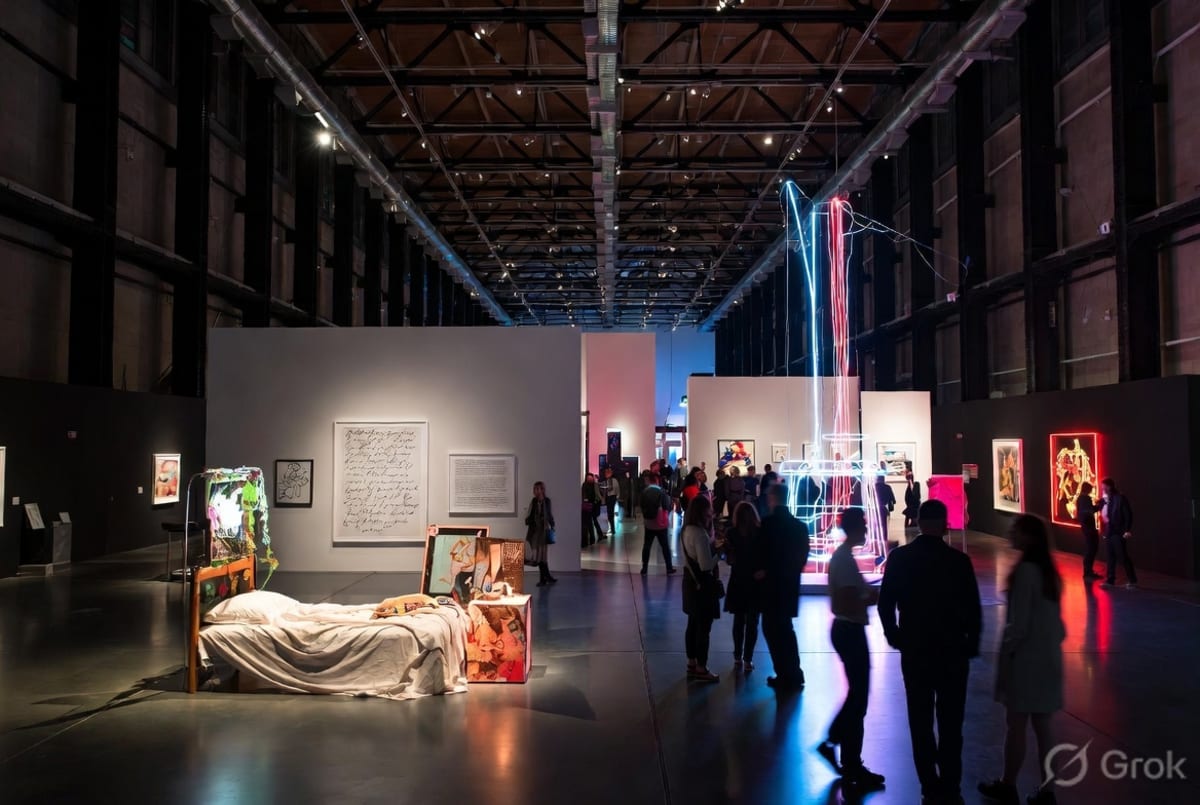
London, UK – May 31, 2026 – Tate Modern has opened its doors to "Tracey Emin: A Second Life," a major retrospective exhibition spanning four decades of the artist's prolific and often provocative career. The exhibition, which began its run on April 30, 2026, offers an in-depth exploration of Emin's diverse artistic output, from her early works to her most recent creations, examining themes of trauma, healing, and autobiography.
A Journey Through Four Decades of Artistry
"Tracey Emin: A Second Life" is billed as the largest survey exhibition of the artist's work to date, featuring over 100 pieces that encapsulate her raw and confessional approach. The exhibition delves into Emin's personal history, touching upon her childhood in Margate, her experiences in art school, and significant life events including bereavement, rape, sexual assault, abortions, and a cancer diagnosis in 2020. The retrospective is structured to guide visitors through what the Tate describes as Emin's "first life to her second life, post illness and surgery," highlighting her resilience and transformation. The exhibition showcases her wide-ranging artistic mediums, including paintings, drawings, photography, videos, installations, textiles, neons, and sculpture. Notable works include a bronze Death Mask, cast when Emin was 39, and "Ascension," a stark bronze of her body created in 2024. The exhibition also features photographs of her stoma, a candid reflection on her health journey following surgery with bladder cancer.
Emin's Unflinching Exploration of the Female Body and Identity
A significant focus of "A Second Life" is Emin's exploration of the female body and its complexities. The exhibition features large, immersive canvases that confront viewers with the naked, sexual, mourning, and broken body, drawing parallels to the intensity of religious ecstasy and the works of Artemisia Gentileschi. Critics have noted the raw and personal nature of Emin's work, with some suggesting the exhibition is less a retrospective of her art and more a retrospective of the artist herself. The exhibition includes never-before-seen pieces, such as the quilt "The Last of the Gold" (2002), and a corridor displaying new photographs of her stoma. The exhibition's thematic approach, avoiding room-by-room categorization, creates a continuous journey through her 40 years of creativity and life experience. Reviews have praised the exhibition for its unflinching examinations of societal ills, evoking a range of emotions from despair to hope, and cementing Emin's status as a significant voice in contemporary British art. The exhibition also highlights Emin's lifelong commitment to painting, presenting her recent works as the culmination of her artistic journey.
A Landmark Exhibition and Its Impact
The retrospective at Tate Modern is a landmark event, solidifying Tracey Emin's position as a major figure in contemporary art. Her career, marked by early recognition as one of the "Young British Artists," her controversial Turner Prize-nominated "My Bed" (1998), representing Great Britain at the Venice Biennale, and her subsequent damehood, has consistently challenged artistic conventions. The exhibition's title, "A Second Life," reflects her personal journey through illness and surgery, emphasizing her ability to openly address health issues and disability within her art. The exhibition runs until August 31, 2026, offering ample opportunity for the public to engage with the breadth and depth of her influential body of work. The exhibition is supported by Gucci and other partners, with tickets priced at £20, with concessions available and free entry for Tate Members.
The exhibition's critical reception has been largely positive, with publications like The Guardian awarding it four stars and describing it as "intimate, dark and claustrophobic," while Time Out gave it five stars, calling Emin "a master of reflecting society back at itself, warts and all." The exhibition continues to draw significant attention, underscoring Emin's enduring impact on the art world and her ability to connect with audiences on a deeply personal level. The retrospective is a testament to her resilience and her unapologetically human approach to art-making, offering a powerful reflection on life, love, and loss.