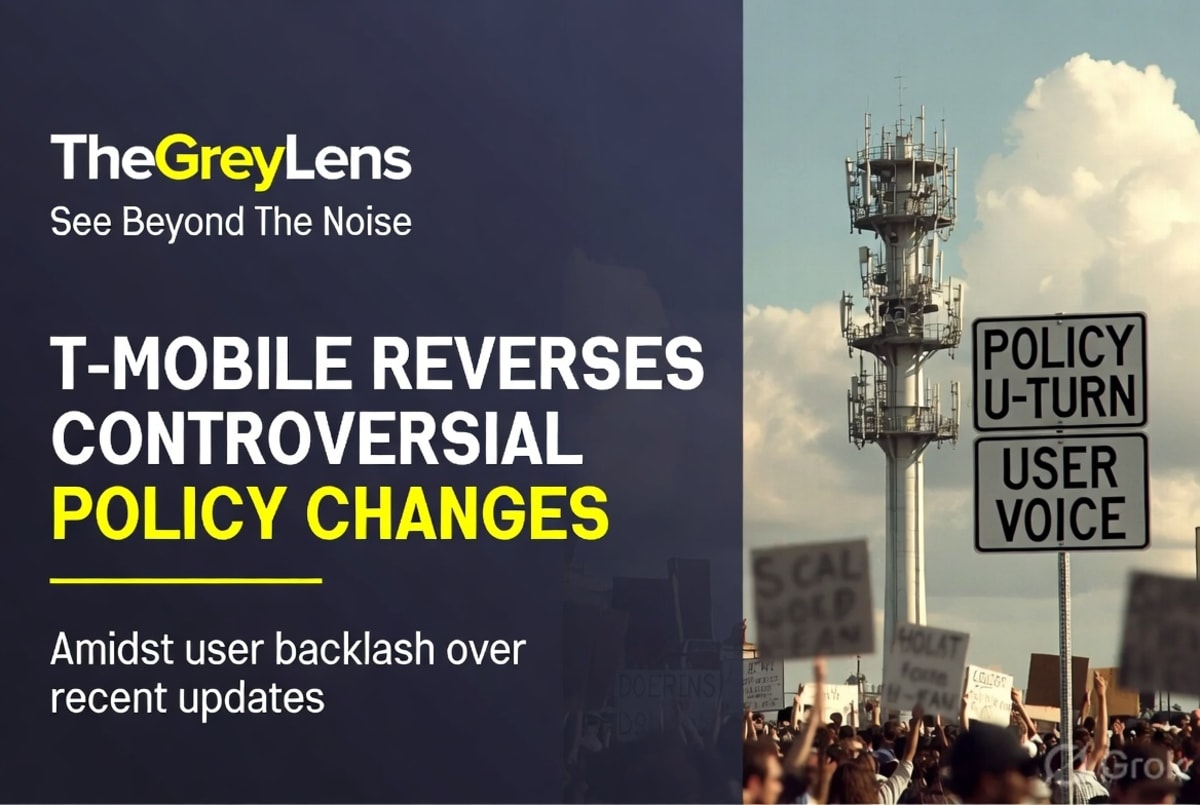
WASHINGTON D.C. – In a significant concession to its customer base, T-Mobile has reversed two controversial policy changes that had sparked considerable backlash among its subscribers. The telecommunications giant, often touting its \"Un-carrier\" ethos, found itself on the defensive as users voiced strong opposition to new rules impacting device promotions and free line eligibility. The swift reversals suggest that the company's strategic adjustments, intended to streamline operations or boost profitability, have instead led to a tangible cost in customer loyalty and potential market share.
The Un-carrier's Strategic Retreat
The first of the two policy shifts to be rescinded involved the halving of device promotion limits per account. Previously, customers could take advantage of up to four device promotions simultaneously. In April, T-Mobile reduced this limit to two, a move that reportedly frustrated many customers seeking to upgrade multiple devices or take advantage of limited-time offers. This change was met with significant online commentary and appears to have directly influenced customer decisions, with many expressing their intent to switch carriers over the perceived reduction in value. The company's decision to reinstate the previous four-promotion limit, implemented in May, suggests a direct response to this negative customer feedback and a recognition that this particular change was detrimental to customer satisfaction.
More significantly, T-Mobile also backtracked on a policy that had largely blocked its numerous free line customers from accessing device discounts. Free lines, a popular perk that has been a cornerstone of T-Mobile's customer acquisition and retention strategy for years, were suddenly rendered less valuable for those looking to acquire new devices. This policy change was particularly contentious, as it directly impacted a segment of the customer base that had been loyal to the carrier. However, following intense customer and employee feedback, T-Mobile amended this policy to include an exception for long-standing customers. This nuanced adjustment indicates a recognition that while a blanket policy might be desired for efficiency, preserving value for loyal customers remains paramount.
Quantifying the Cost of Discontent
A recent poll conducted among T-Mobile users sheds light on the potential impact of these policy changes. Of the 505 respondents, a substantial 55% believed that T-Mobile was actively losing customers due to these new restrictions. Another 33% theorized that the more restrictive promotional limits were directly driving potential switchers into the arms of rival carriers. Only a small fraction, 12%, expressed skepticism about the company's motives, suggesting that T-Mobile had genuinely listened to feedback. This data strongly suggests that the carrier's actions were perceived negatively by a significant majority of its user base, potentially leading to churn and a loss of new customer acquisition opportunities. The financial implications of such customer attrition, especially in a highly competitive market, are considerable and likely factored heavily into the decision to reverse the policies.
Industry analysts have noted that while T-Mobile has invested heavily in network improvements, particularly with its 5G infrastructure, it cannot afford to alienate its customer base through unfavorable policy changes. The carrier's