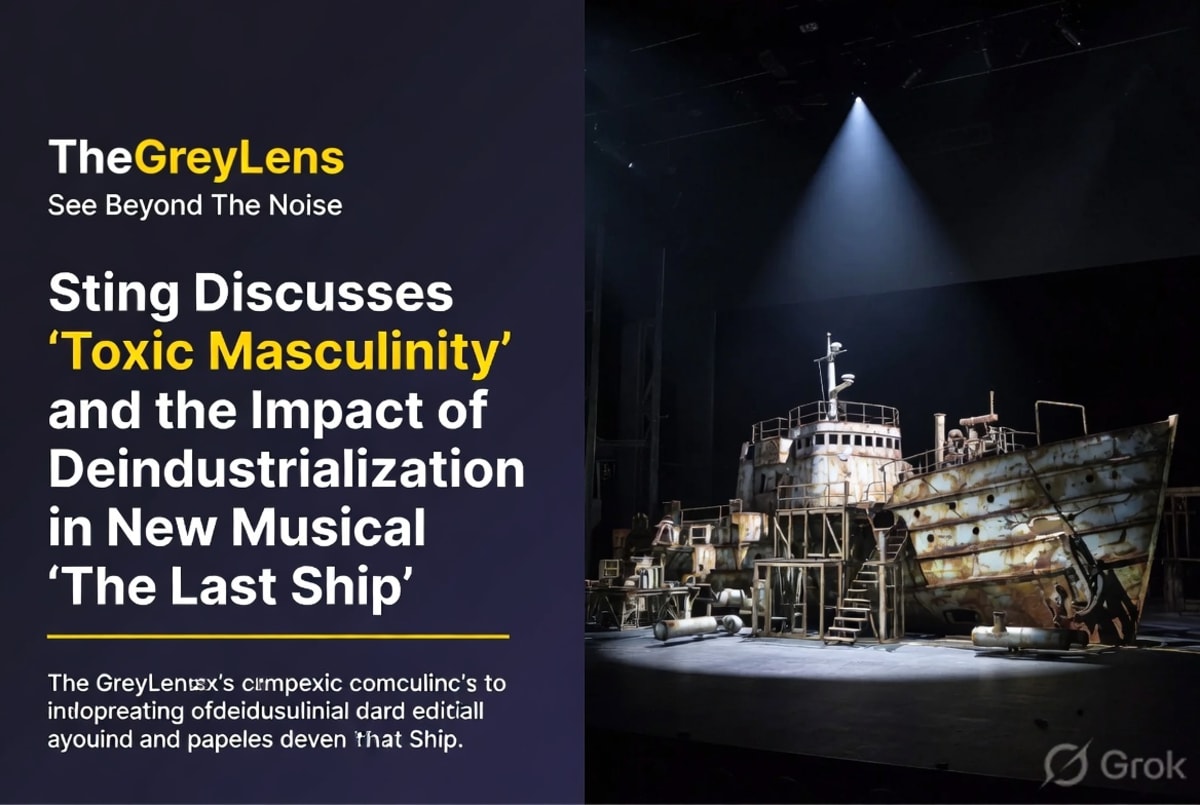
Musician and songwriter Sting has drawn a connection between the decline of manual labor and the rise of "toxic masculinity" in contemporary society. His comments come as his musical, 'The Last Ship,' is set to debut in London's West End this autumn. The show, which centers on the fate of shipyard workers in the face of deindustrialization, offers a backdrop for Sting's reflections on societal shifts and male identity.
Deindustrialization and the Erosion of Male Identity
Sting, born Gordon Sumner, elaborated on his observations in a recent interview, suggesting that the loss of physically demanding jobs has left many men without a clear outlet for their natural strength and energy. He stated, "I work with my hands every day as a musician, and I'm lucky. It's a rare thing for modern men to actually use their hands and use their strengths to do anything. We've lost something there." He posited that this lack of physical productivity might be contributing to societal issues, adding, "I don't have any answers, but maybe the toxicity in society at the moment is [a result of the fact] that we've lost that direction for our energy, that male strength. It's rare we have to use it."
The musical 'The Last Ship' is particularly poignant in this context, as it is set in a shipyard town reminiscent of Swan Hunter's in Wallsend, where Sting spent his formative years. The closure of such shipyards during the deindustrialization of the 1970s and 80s, a period Sting refers to as a time when "Britain's wealth was created in the coalfields and the steel towns and the mill towns and the shipyards," is a central theme. The show explores the identity crisis faced by male characters who see their livelihoods and sense of purpose disappear with the decline of industry.
Artistic Resonance and Ongoing Legal Matters
'The Last Ship' first premiered in Chicago in 2014, followed by a Broadway run, before its upcoming West End engagement at the Theatre Royal Drury Lane. Sting not only wrote the music for the production but will also star in it. The musical's narrative delves into the emotional and social impact of industrial decline on working-class communities, particularly the men whose identities were intrinsically linked to their labor.
While discussing his creative endeavors, Sting also briefly addressed ongoing legal proceedings. The singer is reportedly involved in a high court dispute concerning alleged unpaid royalties with his former bandmates from The Police, Stewart Copeland and Andy Summers. The court has been informed that Sting has already paid over £500,000 to his former bandmates since the legal action was initiated. When questioned about the case, Sting offered a concise response: "It doesn't make any sense. That's all I'm willing to say."
West End Premiere and Future Prospects
The West End run of 'The Last Ship' is scheduled to commence on September 22nd and conclude on October 3rd. Tickets for the production are set to go on sale starting midday on May 28th. The musical's arrival in London signifies a significant moment for the acclaimed artist, allowing audiences to engage with his reflections on societal change, masculinity, and the enduring power of community through the medium of theatre. The production aims to spark conversations about the lasting effects of deindustrialization and the evolving landscape of male identity in the UK.