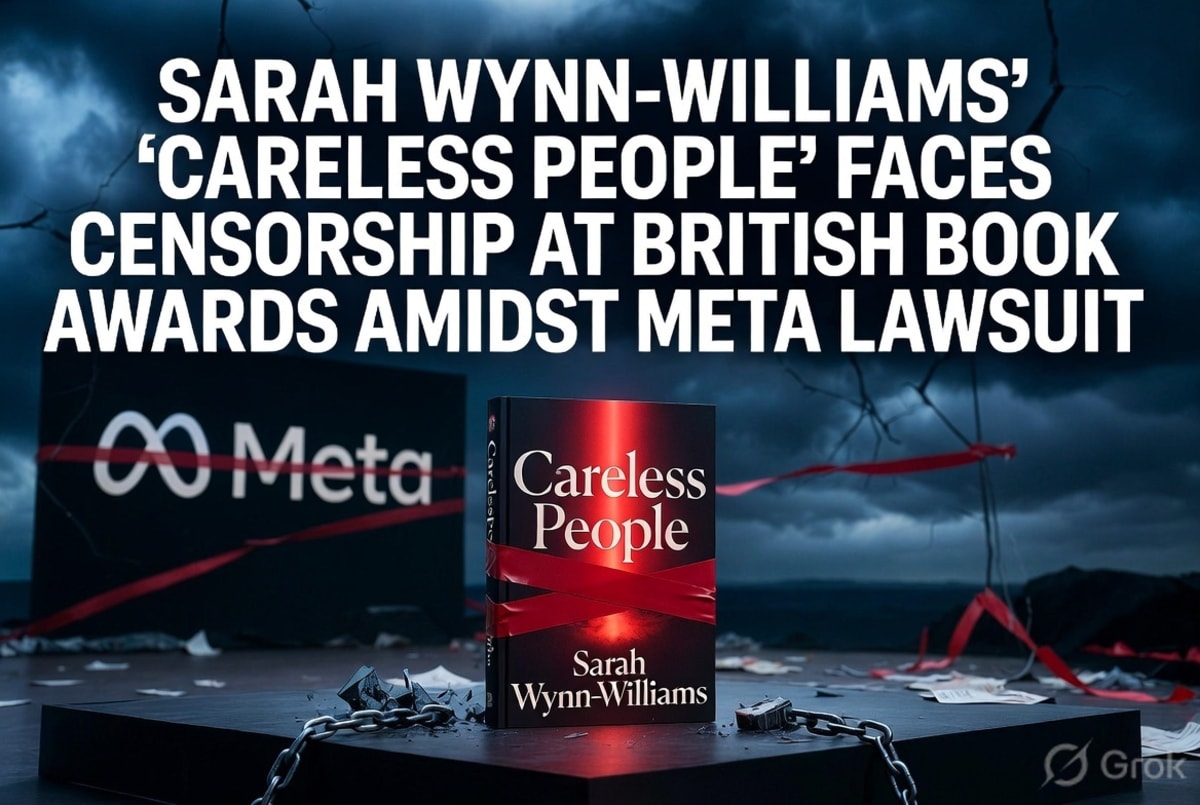
The recent British Book Awards in the UK saw an unusual turn of events as images of Sarah Wynn-Williams' acclaimed book, "Careless People," were conspicuously blurred during the ceremony. This measure was a direct result of legal pressure from Meta, the parent company of Facebook, which has filed a lawsuit against Wynn-Williams. The author, a former staffer at Facebook, is reportedly being sued for allegedly violating a non-disparagement agreement signed upon her departure from the company in March 2025.
Legal Tangle Overshadows Award Recognition
Despite the legal entanglements, "Careless People" was recognized at the awards, securing wins for Audiobook: Nonfiction Book of the Year and, jointly with "Nobody's Girl" by Virginia Roberts Giuffre, the Freedom to Publish award. However, Meta's legal team reportedly made an "extraordinary late move" to prevent any visual representation of the book, arguing that Wynn-Williams "can't be in the vicinity of the book." This led to the author being positioned in front of blurred imagery of her own work during the event, a situation that highlights the increasing complexities of legal disputes impacting authors and the publishing industry.
The Bookseller reported that Wynn-Williams faces a substantial fine of US$50,000 (approximately A$69,000) for each breach of the non-disparagement order. This legal battle stems from the book's publication in March 2025, and the ongoing arbitration case with Meta underscores the stringent conditions often imposed on employees departing from major tech corporations. The publication of "Careless People" has clearly stirred significant legal challenges for Wynn-Williams, impacting her ability to promote her award-winning work.
Broader Implications for Publishing and Free Speech
This incident raises pertinent questions about the intersection of corporate legal power, authorial freedom, and the visibility of published works. The ability of a large corporation like Meta to exert such influence over the public presentation of a book, even one that has received awards, is a significant development. The case of "Careless People" could set a precedent for how non-disparagement agreements are enforced in the context of published works and public appearances.
While the focus has been on Wynn-Williams' specific legal situation, the broader implications for the publishing industry are noteworthy. The Freedom to Publish award, which "Careless People" shared, is intended to celebrate works that champion open expression. The circumstances surrounding its presentation, however, cast a shadow over this ideal, prompting discussions about the boundaries of legal restrictions on authors and the potential for such actions to stifle discourse. As the legal proceedings continue, the literary world will be watching closely to see how this case unfolds and what it means for the future of publishing and authorial rights.