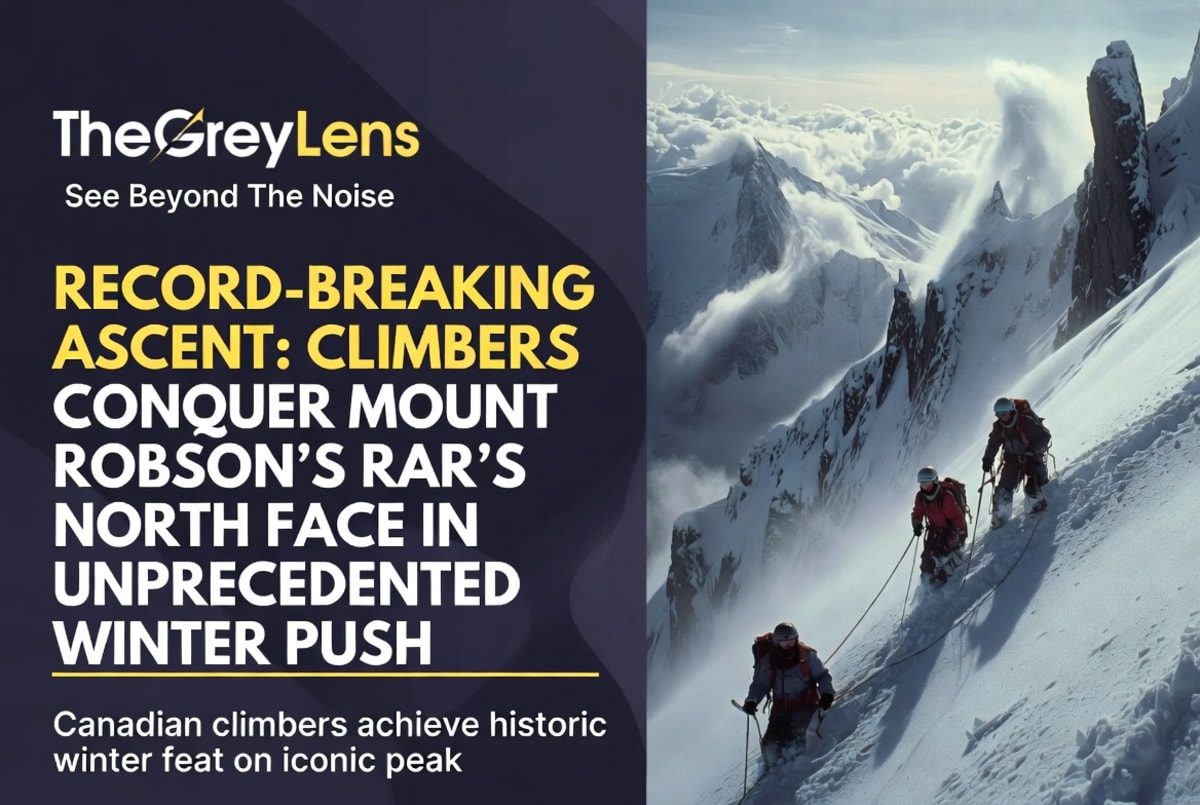
In a remarkable display of skill, endurance, and mountaineering prowess, Louis Rousseau and Chloé Dubois have etched their names in Canadian climbing history. The duo successfully summited Mount Robson, the highest peak in the Canadian Rockies, via its notoriously difficult North Face, completing the ascent during the harsh winter months. This achievement marks the first time this challenging route has been conquered during the unforgiving winter season, a feat that has eluded climbers for decades. The expedition, which began in late February, concluded just days ago, with the climbers returning to the valley floor after a grueling and technically demanding ascent.
The Perilous North Face in Winter
The North Face of Mount Robson presents a formidable obstacle even in ideal summer conditions. Characterized by sheer ice walls, unpredictable avalanche zones, and extreme cold, it demands exceptional technical climbing skills, meticulous planning, and unwavering mental fortitude. Undertaking this ascent in winter amplifies these challenges exponentially. Temperatures can plummet well below -30 degrees Celsius, with wind chills making conditions feel even more severe. The shorter daylight hours of winter further compress the available time for climbing, forcing climbers to operate on tight schedules and often through the night. The risk of avalanches, a constant threat in the Rockies, is significantly heightened by winter snowpack dynamics. Rousseau, a veteran of numerous high-altitude expeditions, described the conditions as "brutal but breathtaking." He noted that "every pitch was a battle against the elements and the mountain itself. The ice was brittle in places, and the wind was relentless, constantly trying to force us back down." Dubois, a rising star in Canadian alpinism, echoed these sentiments, emphasizing the psychological toll. "There were moments of doubt, certainly," she stated. "When you're hanging on a tiny ice screw, with the wind howling and your fingers numb, you have to trust your training, your partner, and your equipment implicitly. It’s a test of will as much as a test of skill."
Strategic Planning and Execution
The success of this expedition was not a matter of luck but of meticulous preparation. Rousseau and Dubois spent over a year planning, studying weather patterns, avalanche reports, and the specific nuances of the North Face in winter. They meticulously selected their gear, prioritizing lightweight yet extremely robust equipment capable of withstanding extreme cold and repeated stress. Their ascent involved a combination of ice climbing techniques, mixed climbing, and navigating steep snow slopes. They utilized advanced ice axes and crampons to ascend near-vertical ice formations and employed sophisticated rope systems for safety and efficiency. The team established several bivy sites on the face, allowing them to rest and regroup during the ascent, a critical strategy for managing energy and exposure in such a hostile environment. According to a preliminary report from the Alpine Club of Canada, the duo employed a "fast and light" approach, minimizing their reliance on fixed ropes and heavy supplies. This strategy, while increasing risk, allowed for greater mobility and a quicker response to changing weather conditions. The technical difficulties encountered included navigating several sections of verglas (thin, treacherous sheets of ice) and crossing a large, potentially unstable snow slope near the upper reaches of the face. Dubois highlighted the critical role of their communication and trust. "We had to be in constant communication, reading each other’s signals and anticipating needs. One person’s mistake could have jeopardized both of us, so that trust was paramount."
A New Benchmark for Canadian Alpinism
The winter ascent of Mount Robson's North Face is being hailed as a significant milestone for Canadian alpinism. It demonstrates the growing capabilities of Canadian climbers and their ability to tackle some of the world's most demanding alpine objectives. The achievement is particularly noteworthy given the increasing accessibility of information and training in modern alpinism, yet the inherent dangers and extreme conditions of such expeditions remain. Experts in the field suggest this ascent could inspire a new generation of climbers to push their limits, while also underscoring the importance of safety and environmental respect. Dr. Evelyn Reed, a professor of Outdoor Recreation and Tourism at the University of Alberta, commented that "this kind of achievement showcases not only peak physical condition but also an incredible depth of experience and psychological resilience. It pushes the envelope of what is considered possible in alpine environments within Canada, particularly during the winter." The success of Rousseau and Dubois could also draw increased attention to adventure tourism in the Canadian Rockies, though the extreme nature of this particular climb means it remains accessible only to a select few. The duo plans to share their detailed expedition report and experiences at upcoming mountaineering symposiums, providing valuable insights into high-altitude winter climbing techniques and risk management. They have also expressed a desire to mentor aspiring climbers, emphasizing the importance of gradual progression and thorough preparation before attempting such ambitious objectives.
The immediate future for Rousseau and Dubois involves a period of recovery and debriefing. They have indicated that while this was a crowning achievement, their passion for exploration continues. Both climbers are reportedly already discussing potential future expeditions, though they remain tight-lipped about specific plans. The mountaineering community will undoubtedly be watching closely to see what challenges they tackle next, inspired by their groundbreaking winter conquest of Mount Robson's North Face. The success of this expedition serves as a potent reminder of the wild beauty and extreme challenges that persist within Canada's vast mountain ranges, beckoning those with the courage and skill to explore them.