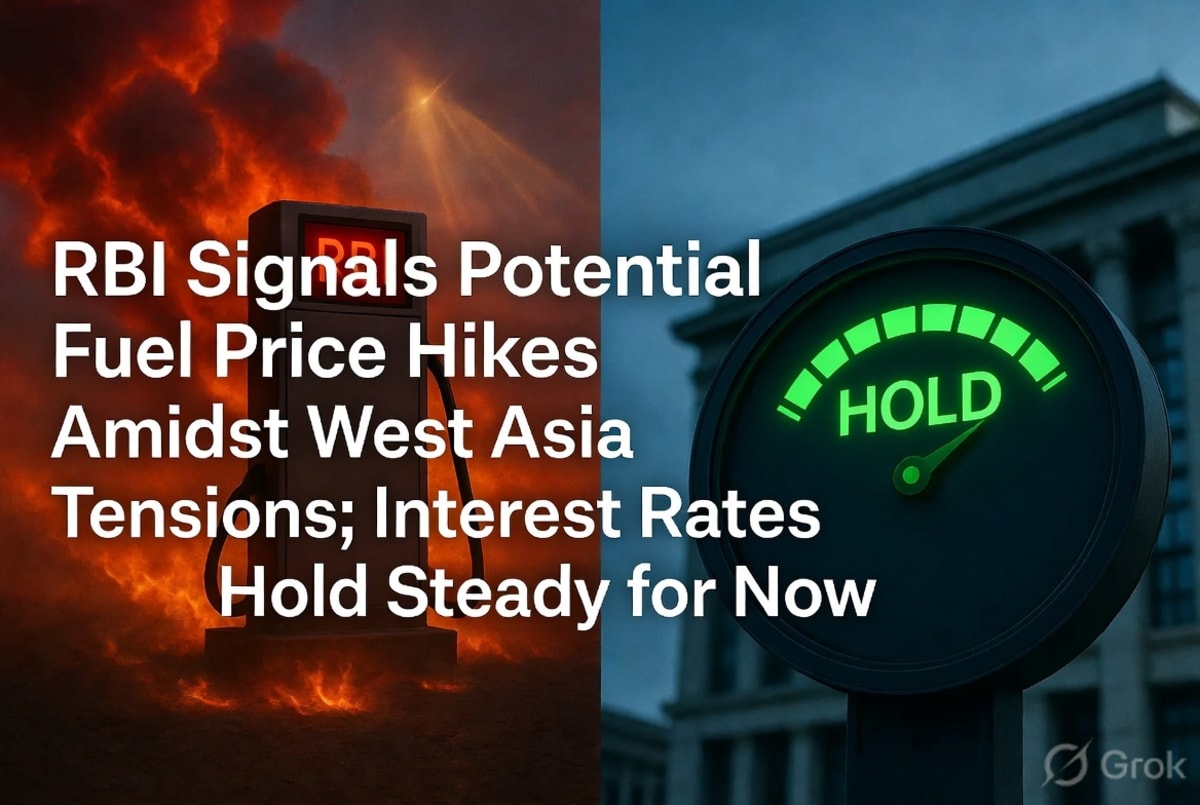
New Delhi – The specter of rising fuel prices looms over India as Reserve Bank of India (RBI) Governor Sanjay Malhotra signaled a potential pass-through of elevated global crude oil costs to consumers. Speaking at an international conference in Zurich on May 13, 2026, Governor Malhotra stated that while the government has been absorbing the impact of sustained high crude prices, this situation is unlikely to remain tenable indefinitely. "If this is to continue for a longer period of time... it's a matter of time that the government will actually pass on some of these price increases," he remarked, highlighting the growing strain on the balance sheets of state-run fuel retailers.
The current stability in petrol and diesel prices, with rates administratively frozen despite global market fluctuations, represents a significant financial burden. This has been managed through measures such as reduced duties. However, the prolonged West Asia crisis, which has been a key driver of increased crude oil prices, is pushing the limits of this absorption mechanism. Economists are closely watching for any government announcements on excise duties or fuel price revisions, which could signal a shift in policy.
Monetary Policy Stance: A Balancing Act Amidst Inflationary Concerns
Despite the potential inflationary impact of rising fuel costs, the consensus among economists is that the RBI will maintain the status quo on its policy repo rate at the upcoming June 5, 2026 monetary policy meeting. All 12 economists surveyed anticipate the central bank will hold the repo rate steady at its current level of 5.25%. This decision reflects a cautious approach, with the RBI having maintained this rate since February 2026, following a series of rate cuts in the preceding year.
However, the outlook for later in the fiscal year is less certain. Three out of the surveyed economists believe that rising inflation, exacerbated by factors such as potential El Niño disruptions to food supplies, a depreciating rupee, and elevated crude oil prices, could prompt the RBI to implement rate hikes in the second half of fiscal year 2026-27. ANZ Bank economists, for instance, anticipate two 25 basis point hikes in the fourth quarter of 2026, while Kotak Mahindra Bank sees risks of an earlier tightening cycle, potentially as early as October.
Conversely, the majority of economists expect the RBI to maintain a prolonged pause, believing that while inflation may rise, it will likely stay within the central bank's comfort range and its forecast of 4.6% for FY27. Governor Malhotra has previously emphasized that the RBI's monetary policy cannot fully offset supply-side shocks like oil price hikes but aims to anchor inflation expectations. The central bank's approach is increasingly data-dependent, with future decisions to be made on a meeting-by-meeting basis.
Lending Rates Show Stability, Mortgage Market Competitive
The banking sector is currently experiencing a period of stable lending rates. Bank of Baroda announced on May 11, 2026, that it would maintain its Marginal Cost of Funds Based Lending Rate (MCLR) unchanged across all tenors, effective May 12, 2026. This decision means that borrowing costs for its customers will remain steady, reflecting the bank's assessment of current funding expenses and market conditions. Specific MCLR rates for various tenors, such as overnight at 7.80% and one year at 8.70%, remain in place.
Similarly, Indian Bank recently adjusted its short-term Treasury Bills Linked Lending Rates (TBLR) downwards by 5 basis points for tenors up to six months, effective May 3, 2026. However, crucial benchmark rates, including the MCLR and the RBI's policy repo rate, remain unaffected by this move. This indicates a localized adjustment by the bank rather than a broader shift in the interest rate environment.
The home loan market continues to be highly competitive, with starting interest rates as low as 7.10% p.a. offered by public sector banks (PSUs) for eligible borrowers. The RBI's steady repo rate of 5.25% has contributed to this stable environment. PSUs have been gaining significant market share in housing loans, driven by aggressive strategies and competitive pricing. A strong credit score remains paramount for borrowers seeking the most favorable rates, with scores of 800 and above often qualifying for the best discounts.
What Lies Ahead: Inflationary Pressures and Policy Vigilance
The coming months will be critical for assessing the trajectory of inflation in India. The next RBI monetary policy review on June 5, 2026, will be closely scrutinized for any indications of a policy shift, particularly in light of the evolving geopolitical situation and its impact on commodity prices. While the immediate outlook suggests a continued pause in interest rates, the persistent threat of imported inflation, driven by rising crude oil and other commodity prices, may force the central bank's hand later in the fiscal year. The RBI's commitment to managing inflation within its target band while supporting economic growth will be tested as it navigates these complex domestic and global economic crosscurrents.