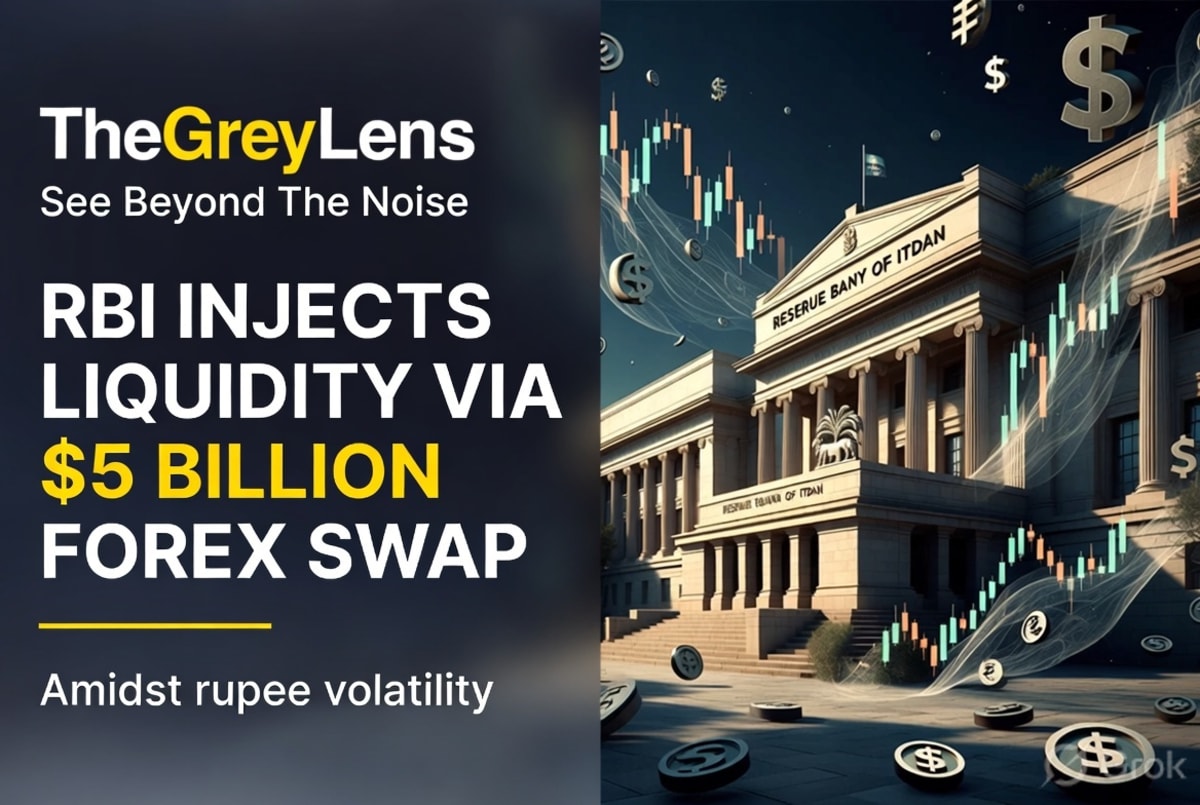
The Reserve Bank of India (RBI) has launched a substantial liquidity infusion measure through a $5 billion USD/INR buy/sell swap auction, a move aimed at bolstering the banking system and stabilizing the Indian rupee. The auction, set to take place on May 26 with settlement on May 29, 2026, carries a three-year tenor, with the reverse leg maturing in May 2029. This operation involves Authorised Dealer Category-I banks selling US dollars to the RBI and repurchasing them later through a market-based premium mechanism.
Addressing Rupee Weakness and Liquidity Strain
This strategic intervention by the RBI follows a period of sharp pressure on the Indian rupee, which touched a record low against the US dollar. Factors contributing to this volatility include escalating crude oil prices, a strengthening US dollar globally, and broader market uncertainties. Analysts suggest that this $5 billion swap auction is designed not only to inject much-needed rupee liquidity into the financial system but also to ease pressure in the forward currency market. The central bank's action is expected to support credit flow and maintain comfortable funding conditions for banks, which have been experiencing liquidity strain amid steady credit demand.
Monetary Policy Stance Remains Steady
In parallel with these liquidity management operations, the RBI's Monetary Policy Committee (MPC), in its review concluded on May 15, opted to maintain key policy rates unchanged. The benchmark repo rate was held steady, and the Cash Reserve Ratio (CRR) remained at 4.5 percent. This decision reflects a cautious and data-dependent approach by the central bank, balancing concerns over inflation with the imperative to support economic growth. The MPC acknowledged the resilient domestic consumption and slightly revised its GDP growth outlook for FY27 upwards to a range of 6.2%-6.5%. Inflation projections for Q2 FY27 were estimated between 5% and 5.5%. The committee's communication emphasized continued vigilance on inflation, particularly underlying price pressures in non-food categories, while also noting the need to support growth amid uncertain global conditions.
Banking Sector and Deposit Rate Trends
The banking sector is also observing shifts in deposit rates. With tighter liquidity conditions and rising wholesale funding costs, several banks have begun to adjust their fixed deposit rates. One-year certificate of deposit (CD) rates have seen an uptick, signaling increased short-term borrowing costs for lenders. While a broad-based retail fixed deposit rate hiking cycle has not fully materialized, some banks, including Bank of India, have revised their FD rates, offering attractive returns, particularly for senior citizens. The banking system's liquidity surplus has narrowed significantly, prompting lenders to mobilize deposits more aggressively. Analysts anticipate that wholesale funding pressures and sustained credit demand will likely lead to a gradual increase in retail fixed deposit rates in the coming months, although larger banks with strong low-cost CASA franchises have so far maintained a more measured approach to repricing retail deposits.
The RBI's proactive measures, including the forex swap auction and the steady monetary policy stance, underscore its commitment to maintaining macroeconomic stability and financial sector resilience amidst evolving economic landscapes.